x
Reading the Research: A Dose of Nature
x
In the main, it follows three people with ID, and tells the finished story of a fourth. I was pleasantly surprised to see that two of the three living subjects are dark-skinned. The movie points out that black and brown people are twice as likely to receive ID diagnoses, so was quite appropriate.
My opinion of IQ is known, but I\’ll summarize it quickly. The Intelligent Quotient test was never meant to be a catch-all measure of a person\’s value or chances of success in life. It was created to measure one thing: your ability to learn in a standardized school environment, with standard school subjects.
This is good information to have, naturally, in a society where schooling is mostly verbal/textwall-y and also compulsory. However, it\’s hardly the whole picture. It\’s missing things like:
![]() |
| This is the whole thing. The plaque just says the case was donated. |
![]() |
| Diamond doves, from Australia. Just two of these in the whole case. |
![]() |
| Food is in the red bowl. |
![]() |
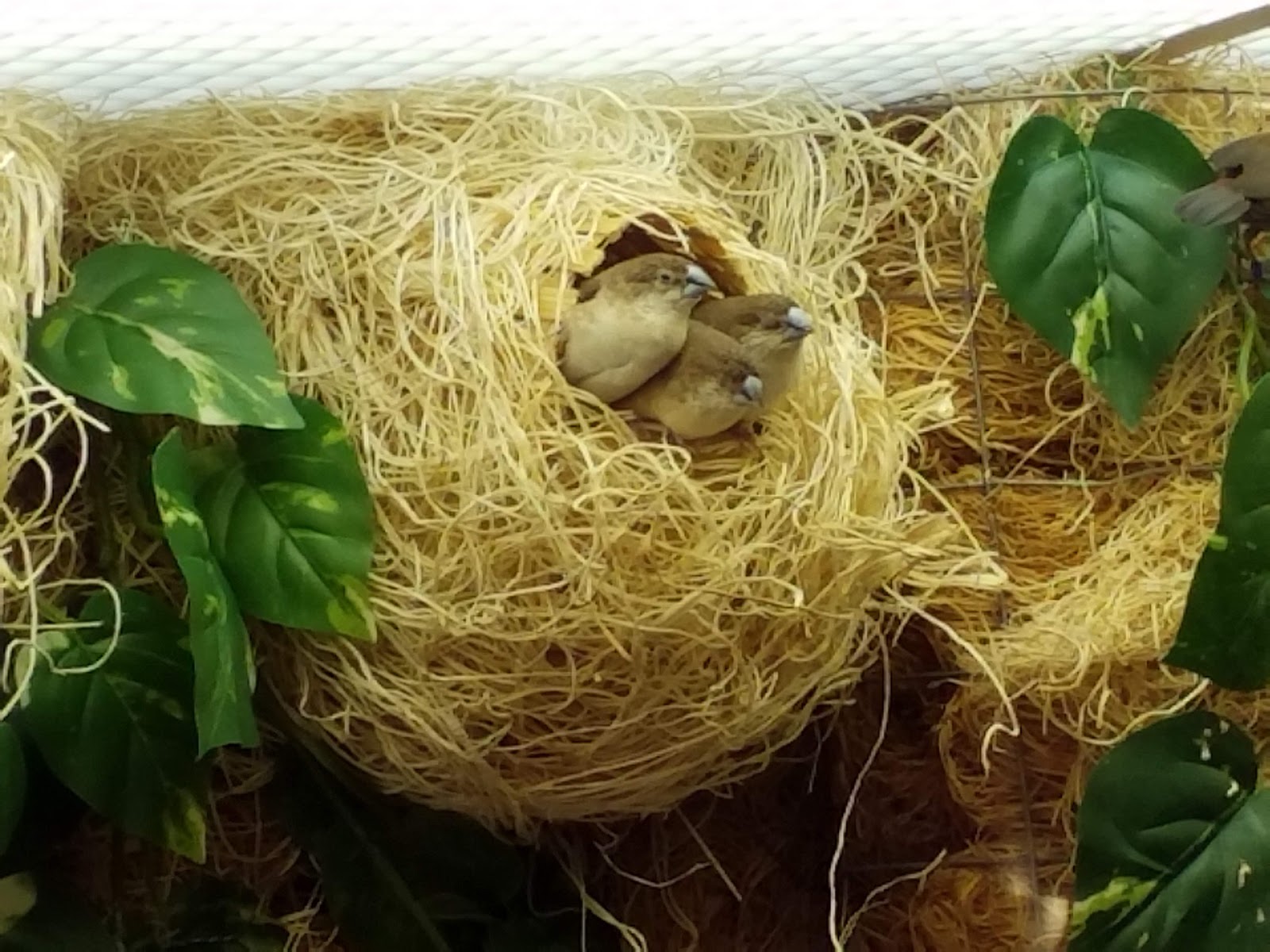
| I think these are Society Finches, or Bangladesh Finches. They\’re fairly nondescript, though, so I\’m honestly not sure. |
![]() |
| Another shot of the nests and greenery. |
So I spent a good amount of time just watching these fly around. For all that they\’re so accessible to look at, they seemed surprisingly ill-at-ease with being approached. The calmest were the diamond doves, which is maybe not surprising since they\’re relatives with the common city pigeon. The finches and finch-like birds kept a close eye on anyone approaching the case, though, and flew away from the immediate area of visitors.
I couldn\’t identify every type of bird in the case, but I\’m pretty sure about the diamond doves and the orange-cheeked waxbills. The society finches I\’m not sure about, since they\’re a created species and come in many many colors. And there was one more type of finch-like bird in there that was basically just dark brown in color, and I had no idea how to look up what species it was.
While doing all this research, I found a site that was pushing pet bird ownership, and proposed doves or finches as an acceptable alternative to owning a parrot or parrot-like bird. Doves and finches aren\’t as handle-able or affectionate as parrots, but they\’re a great deal quieter in their vocalizations. I\’m somewhat interested in the idea, as dove cooing can be relaxing, but it bears a lot more consideration before I go see about getting a pair of doves, a cage, and food.
Today\’s article is encouraging, but really got me wondering whether it would have made a difference for my life, specifically. Researchers at the University of South Australia have put together a program to help sports coaches include and teach special needs kids. Included are supports for sensory issues, introductions to the equipment, literal language rather than jargon, and visual teaching methods.
So, this is good, right? Well… I personally have a very low opinion of sports overall. I\’m sure some of that is sour grapes, because I\’ve had maybe one positive experience when being a part of a sports team. It was my local soccer team in grade school, and we won second place or something. Every other team or pickup group I\’ve been a part of was… let\’s say \”a miserable experience\” and move on.
Is that because the coaches and other children had no idea how to teach me or handle my unusual autistic self, and as a result I was excluded and outcast even more than usual? Is it because my personal klutziness didn\’t lend itself well to being a sports star? Is it because I\’m heavily introverted and usually extroverts do better in team sports?
Probably the answer is D) All of the Above, As Well as Other Unlisted Factors. Would a program like this have helped make team sports a more positive experience for me? Probably. Would that have generated less negativity towards exercise and sports in general? Probably. Would it make me struggle less in other aspects of life? Perhaps, if the team sports resulted in friendships and personal connections.
It\’s a moot point in regards to my life specifically, but it\’s not moot when it comes to autistic kids present and future. So I\’m glad, if a bit dubious, that programs like these are being developed.
I actually have other issues with team sports, but those objections are more philosophical in nature and not so easy to address in broad brush strokes. I dislike tribalism in the extreme, because I\’m almost invariably excluded from the \”in group\” in such situations. I also think sports that involve a lot of body contact or outright fighting (American football and boxing, for example) are barbaric, and the fact that these athletes\’ bodies and brains are wrecked in a decade or so is really horrifying. That second objection shouldn\’t exclude less vicious sports from existing (baseball comes to mind). I guess e-sports might eventually rise to prominence as well, though those will be considerably less healthy for the players than the kind you run around outside doing.
Fortunately for everyone who loves sports, I will likely never be put in charge of which sports live and which die. And perhaps, with programs to help coaches teach autistic kids, more autistic people in the future won\’t hate sports the way I do.
(Pst! If you like seeing the latest autism-relevant research, visit my Twitter, which has links and brief comments on studies that were interesting, but didn\’t get a whole Reading the Research article about them.)
Advocacy comes in a lot of forms. The kind I do is mostly the socially-acceptable type. I go through the appropriate channels to speak to the appropriate people. I politely make an annoyance of myself while asking for change. Sometimes, this even pans out into actual change.
I am massively privileged in my ability to do this. I am, at first glance, a \”functional adult,\” sufficiently \”normal,\” and as such, granted the basic respect most humans give a stranger. I am fully verbal most days, and my autistic oddities can, on shallow inspection, be shrugged off as simply eccentricities rather than disabilities. As such, people sometimes listen to me. What I do is the most acceptable form of self-advocacy.
The author of this article has clearly led a very different life. They have experience with institutions, with nonspeaking people, and with oppressive support services. This makes their words very important to understand.
\”All behavior is communication\” is a noteworthy philosophy here. Babies cry if they\’re wet or hungry or in pain. The fact that they have no words for their distress doesn\’t make it any less communication. If a child never develops sufficient speaking capabilities to be \”normal\” that does not impede their ability to communicate. It only impedes our ability to understand.
Another note about self-advocacy, and advocacy in general: it generally does not make you friends. This is even true with the most polite self-advocacy that I do.
Most recently, I advocated for myself, the restaurant workers, and my family, when I found us in an excessively loud restaurant environment. I measured the sound levels in the room and found they were around 90 decibels. Also known as \”gives you hearing loss in less than 2 hours\” ranges. Now, this was vastly unpleasant to me, so I put in earplugs… but my family couldn\’t hear each other talk… and the restaurant workers would naturally have shifts longer than 2 hours, so they\’re pretty much doomed to hearing loss.
The waitress appreciated my concern, but her manager really didn\’t. So I\’m sitting there wishing I could just melt into the floor, and the guy is explaining to me that the restaurant environment is \”important\” and other peoples\’ enjoyments matter also. I have a hard time making an ass of myself on purpose, but I really should have. The noise level really didn\’t drop much at all after I complained.
Can you imagine if I\’d instead had a meltdown at the table? Bet it would have dropped the noise level really really fast, with all those people stopping their conversations to stare, and the musicians pausing their routine to to do same. But the interruption would likely have only been temporary, with my family being asked to leave, I\’m sure. Still, if the reason was known (for example, if I was screaming \”it\’s too loud!\” repeatedly), it might make people think.
Both methods are self-advocacy. One is distinctly less socially-acceptable than the other, but both are valid forms of communication. They don\’t become invalid just because someone refuses to listen to them, or doesn\’t understand.
Please, read this article and its examples of advocacy. If you have nonspeaking or low-verbal people in your life, consider their behaviors in the light of self-advocacy.
This is field garlic. We didn\’t gather a whole lot, because it\’s wise to try just a bit of a new food before eating a ton of it. But in this case, it\’s pretty much just like green onions, so I\’m not too worried. I\’m more concerned that I won\’t finish it before it rots, honestly. But I guess it\’s an invasive species in this area, so if it rots, it\’s not really the end of the world.
I had kind of an interesting experience aside from going foraging yesterday, also. I was developing the precursor to a tension headache due to stress and shoulder misalignment, and I happened to A) have peppermint oil around and B) remember my doctor insisted it was excellent for headaches. So I put some on the back of my neck and a bit above my upper lip. Basically as soon as I had done that, my headache stopped.
It was so sudden, I was startled. Though appreciative, obviously. I looked it up later, and it seems you\’re supposed to mix the peppermint oil with coconut, olive, or some other less reactive oil before applying it to your skin. Otherwise you can get rashes or have breathing difficulties or other things. Still, considering I needed to run out the door shortly after that, it was a really nice find. I have a couple bottles of peppermint essential oil, so the next time I get a tension headache, I guess I\’ll know what to try first. Works way faster than regular painkillers, too.
This is one of those rare autistic points of view on meltdowns. Because they’re mistaken for tantrums in small children (they’re not tantrums and shouldn’t be treated that way), and are considered extremely socially unacceptable, few people are willing to talk about them. The vast majority of those that are willing, are professionals or parents, as the author mentions.
Professionals and parents have valuable things to tell us about meltdowns. But nothing replaces firsthand experience. Unlike most of the things I link on this blog, this article is not a textwall. It includes comics and artistic illustrations, each of which includes an accessible text description.
A sidenote about accessible text descriptions: they’re meant for the blind or otherwise visually impaired. The idea being, if you can’t see the picture very well (or at all), you can instead read the description of the picture and get the gist of what it’s trying to convey. But like closed captioning, they can help populations they weren\’t intended to help. As a person with vision corrected to 20-20, I should reasonably have no use for text descriptions of pictures. However, possibly due to the weirdness of my brain’s detail processing, I find it can be useful to read someone else’s interpretation of what’s happening in a picture.
This is especially true for art, and I found the descriptions invaluable in this article. They pointed out details I’d completely missed when I looked at them myself. For depictions of this particular subject, it was valuable to have those descriptions around.
Even after reading this description, I’m uncertain as to whether I’ve experienced meltdowns in my life. I have had the immense privilege of having my own room when I was young, and usually having someplace reasonably safe to flee if I can’t handle things while out of the house. Sometimes that’s just the bathroom, but if it works, it works. This lets me escape situations when I’d start getting agitated the way the author describes here. At worst, I’ve socially-ineptly had to shoo a friend out of my room, or had to go sit in the car instead of socializing with my family members. My actions in both those situations hurt feelings, but don’t really compare to the situations and pain the author describes here.
I do think I experience the building up sensations and low energy effects described here. They just don’t end in an explosion, they end in me hiding until I calm down. Or canceling everything in my day so I can go home. Again, I have the privilege of making those decisions to leave. Not everyone does. Especially children, who have far fewer choices in life than adults.
Regardless, I found this point of view piece very educational, and I hope you do too.
My bike is fixed! I had sent it to the shop a couple weeks ago to get it tuned, because it needed tuning last year and I just… didn\’t. It\’s somewhat inexcusable, but I was so busy using it that I just didn\’t want to go without it for the week or two it\’d take to have it worked on. It was expensive to do, frustratingly. So I\’ll probably look up some how-tos for bike care rather than have it professionally done every year.
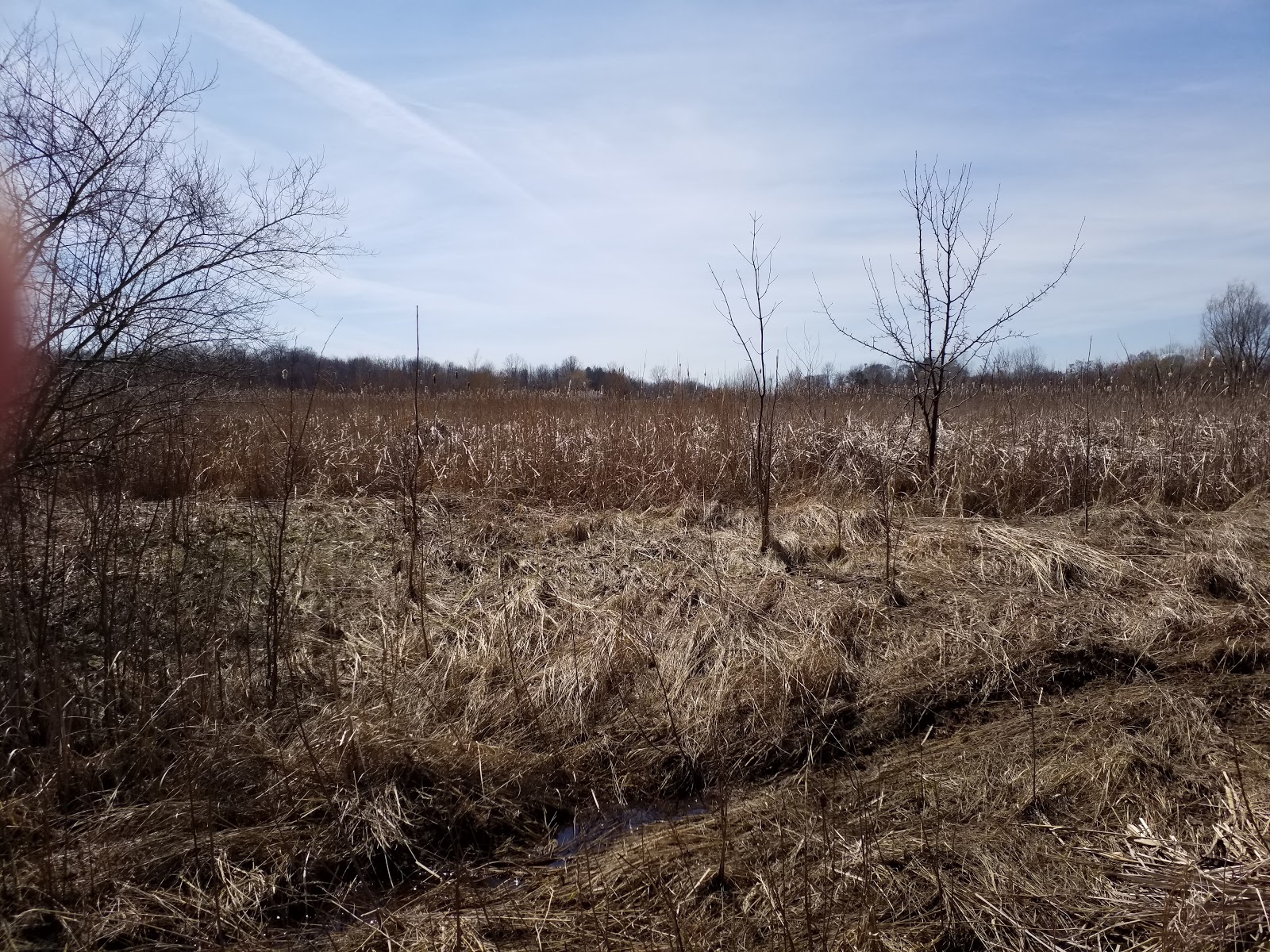
Fortunately, it paid off. The bike functions quite smoothly now, and I\’ve been out twice on it already. Spring is only just beginning around here, and all the plants are pretty much dead still. I did manage to locate a small sea of cattails, so my friend and I will definitely be back to that area. I\’m excited for this whole foraging thing. It\’ll combine exercise with food. The latter is more my forte than the former, but y\’know, baby steps.
![]() |
| The very professional finger slightly over the lens. I am such a good photographer. XD |
Also health-related, I picked up a new meditation app. Remember I mentioned like a month ago about the deer-human theory of stress? Where healthy creatures, like deer, are calm most of the time, and go into fight/flight when there\’s a threat, but shift back to calm once the situation is over? And humans don\’t, because we\’ve created a world where you can\’t club all your problems to death. Or at least, clubbing your debts to death wouldn\’t solve your problems for very long. The idea with meditation was to retrain people to shift themselves back to calm, stepping back from the stress of their problems for a short time.
I\’ve tried meditation in the past. I\’ve found it rather like trying to cage a hummingbird with a whisk. I was somewhat hampered by the lack of instruction and free content, and grew discouraged with my lack of progress. This particular app seems to incorporate social media with tons of free content. So I\’ll give it a go.
Another issue with it is my sitting posture. I have had awful posture basically my whole life. So it\’ll be a goal this time around to find a way to sit such that I\’m comfortable, but my back doesn\’t hurt after a while. I\’ve gotten around this in the past by simply lying on my bed. Hard to get a stiff back if it\’s resting comfortably on a supportive sleeping surface. Still, I\’d like to have better posture overall. It\’d probably reduce my need for chiropractic work.
Lastly, I\’ve been sick for almost a week now. I think it might\’ve started as \”oh boy, there\’s mold in the house again…\” but it proceeded to turn into some kind of sinus issue. It\’s made me a bit more of a shut-in than is normal. Several of my weekly activities include contact with elderly people, and I can\’t get past the thought of getting someone\’s grandparent sick. Peoples\’ health can become fragile as they age, and what mildly inconveniences me could kill someone else.
Anyway, I haven\’t been a complete shut-in. I\’ve done my grocery shopping, met with friends, gone to church, and attended a meetup for autistic adults. So I think I\’m still doing okay. I\’m sure such a limited schedule would kill some extroverted people, but I\’m highly introverted and still feel fairly satisfied with my social life. So meh. I\’m calling it good enough.
I\’d be curious to see what the adoptee outcomes would have been like if they\’d been given probiotics while developing. At present, I routinely take two different probiotics, which seem to help me digest things better as well as support my mood. Perhaps the probiotics would increase the diversity of the kids\’ digestive tracts, and help their brain function look more like the traditionally-raised children?
I\’m not certain you can do that kind of long term study ethically, though. Often if you\’re testing a new treatment, you have two groups. One receives the treatment immediately and is compared to the second, which receives the treatment after the study is done. You are therefore not permanently withholding treatment from anyone, which is more ethical than what I was suggesting. The issue is that it can take a good while to mend the biodiversity of a gut.
Basically, it\’s not a quick or cheap research idea. Hopefully something like it will come through the pipeline sooner or later, because there\’s still a distinct lack of understanding about the subject in most places I\’ve been recently.