Hospital Rooms are the Worst: Observations from a visiting autistic

I went to visit my grandmother a few months ago in two different hospitals.  As such, I got a chance to observe a bit of what being in a hospital room entails.  I\’ve had the very good fortune to not be hospitalized after the age of 3, so I don\’t have any firsthand experience to draw on.

Also, full disclosure: I am not a medical professional and have very little experience with why the system is designed the way it is.  Still, the experience was sufficiently, um… enlightening, that I thought I\’d share a bit of my observations.

Before I begin, I should note that I have no real complaints about the medical care my grandmother received, and the hospital staff I dealt with seemed neutrally helpful at absolute worst.  Most were warm and caring.  The corridors of the hospitals were fairly well-marked, even containing artwork and large windows to let in natural light.  I really can\’t complain about most of the experience.

I did want to highlight a few things, though, because first and foremost, I super duper do not ever want to have to stay overnight in a hospital room.  There are so many reasons for this.  We\’ll start with the easy ones.

Hospital rooms are noisy.  The doors to these rooms are often kept open.  If the patient can\’t get up by themselves, that\’s even less negotiable.  That means people walking by, whether they\’re staff or visitors, are clearly audible to my sensitive ears.  The air conditioning unit/heater was also very loud.  If the person is kept on oxygen, that machine also erratically makes noise aside from the puff of oxygen every 5 seconds.  I can\’t imagine having to try to sleep with that on.  And lastly, my grandmother was on an IV.  The IV was automated, to a point, and itself made this faint, but highly erratic scratchy-clicky noise.  It\’s probably highly ignorable to most people.  Not to me.

Also on the sensory end of things, the temperature.  It was the middle of winter when I visited, so while the room itself seemed warm upon arrival, I quickly found, sitting still and visiting, that I became cold.  For people who are stuck recuperating in a bed, this would mean they\’d be cold all the time.  Yes, the hospital might provide blankets, but I\’ve never yet had a nice warm comfortable blanket provided by a hospital for any procedure.  \”Easily washable\” and \”highly comfortable\” simply don\’t mix, I guess.

Then there\’s of course the various things that come with your care in the hospital.  The oxygen puffs I mentioned?  Besides being loud, they are also cold.  Y\’know how it\’s painful and annoying to have a frozen nose when you\’re walking around outside?  With the magic of modern medicine, you can have an icy nose while you\’re inside, too.  Then there\’s the IV in your hand, which can hurt as well as leaving you tethered to a bag on a pole.  You may not be able or allowed to get out of bed to stretch your legs, as well.

Distinctively disturbing-to-me, also…  hospital rooms are depersonalized, to the point of being oppressive (to me).  Neither room my grandmother inhabited during her stays was small.  And yet, there was little-to-nothing personalized.  All the surfaces were filled with hospital equipment, with almost no place for flowers, get-well-soon cards, or even personal possessions.  The second room had no window at all.  And both rooms were cluttered with medical equipment, to the point of barely being able to have visitors sit near the patient.

The staff, nice as they were, rarely if ever knocked on the door before entering. And this could happen at any time, including the hours when you should be sleeping.  There was a guy that walked in without a word, installed a piece of equipment in the room using power tools, and proceeded to waltz back out again.  I can\’t say for sure that this was normal, but nobody in the room batted an eye about it.

Finally, there was a certain amount of forced passivity about the whole experience.  You can be confined to a single room, with few or none of your personal possessions.  You do as you\’re told, eat what\’s put before you, and pretty much just sit in bed until you\’re well enough to leave.

I dunno if it\’s clear why I find all of this horrifying from how I\’ve written this post, but I\’ll explain.

From a sensory standpoint, a good place to heal and rehabilitate is not a noisy, chilly one.  With random noises and people going by at all hours, I wouldn\’t be able to sleep well, which would in turn slow my recovery as well as degrade my sanity.  Also, I get miserable when I get cold, so I would spend most of my time miserable and under scratchy, unpleasant hospital blankets.

As an autistic person, and to a lesser extent, as a human being, I prefer comfortable, familiar surroundings.  That means the having the weird light blue faux-fur blanket in my computer chair, my tablet and computer, a plastic glass with filtered water, and roughly a dozen other things, minimum.  Guess how many of those would fit in one of these hospital rooms?  (If you guessed \”just the tablet, maybe,\” you win!)  I\’d quickly become miserable without these things, assuming the cold didn\’t already make me feel miserable.

I would be constantly removing the itchy, chilly nose-pump oxygen thing, and probably getting yelled at by the staff for doing that.  I\’d probably want the IV removed as soon as it started aching, as well, which is super unhelpful considering why they use them.  I would probably become embarrassed and annoyed by the computer screen with the readout of my pulse, blood pressure, and whatever else other medical details they cared to track via the equipment.

But in the end, what would probably be most poisonous to me would be the forced passivity.  I like being independent.  I like having the ability to say \”I\’m going to get up and take a walk now\” and then going and doing it.  Hospital rooms seem very geared against that kind of personal agency.

I recognize that this is partially by design.  Medical care is hard to give effectively, particularly in cases when you don\’t know why the patient is sick or injured in the first place.  Then, too, the patient may not be cooperative.  In some cases the person has to be kept still, lest they make a back injury worse, or fall due to poor balance, or injure themselves.  I\’m sure there are other complicating factors I haven\’t thought of.

To me, though, the hospital\’s first priority doesn\’t seem to be the patient\’s mental wellbeing, but rather their physical wellbeing.  I imagine, in the future, these things will be considered two parts of the same thing, but they aren\’t at the moment from what I can tell.  As a person with an education in psychology, I don\’t approve… but as I noted above, I know very little about how or why these systems were developed the way they are.

I expect, when I end up in a hospital, I will have many very annoying questions for the staff.  
Legwork and Life, week of 4/3/19

This is Legwork and Life, where I track the legwork and opportunities in my career as an autistic advocate, and also describe parts of my adult autistic life, including my perspectives on everyday problems and situations.

So hey, remember last week\’s mention of a genetic test I did?  Turns out the results are bad news for my eating habits.  Though not new bad news, I guess.  In essence, I need to be avoiding processed foods like the plague, especially anything \”fortified.\”  This includes basically everything with white flour, because that is almost invariably fortified.  Stop and think about that for a moment.  How much of the grocery store just got put off-limits?  

I\’m really, seriously thinking about verbally narrating a trip through each aisle of the grocery store, wherein I mention each category of food and explain why I can\’t have it.  It\’d be a thoroughly depressing experience, but maybe educational?  Not sure.  Maybe it\’d be better done as a series of pictures, because I\’ve been underwhelmed by every experience I have of myself on TV or recorded audio.  

Anyway, it won\’t kill me if I eat these fortified foods, but it will start screwing with me the more I eat.  The offending chemical is \”folic acid,\” which you\’ll note is normally a healthy thing.  In fact, it\’s vitamin B-9.  Hence it\’s in fortified foods.  My particular system simply doesn\’t digest it properly, so it builds up in my system and does bad things.  The specific bad things vary by the person, but everything from digestive issues to fatigue to depression can result.  

This isn\’t really a new diet change, as I mentioned.  In general, it\’s wise to choose whole grains, fruit, and vegetables over TV dinners, mac\’n\’cheese/quick pastas, and other heat-and-eat options.  But of course, I\’m a stressed autistic person with depression and an anxiety disorder.  As such, I\’m going to want easy options for meals.  I make do somewhat with leftovers and frozen meals, but sometimes I just want something tasty, hot, and fresh.  Most restaurants are closed to me as well.  

Basically, my eating habits are kind of a mess and it\’s extra bad for my health compared to other people.  Yay…

In happier news, spring continues to advance.  The pond is entirely unfrozen now, which lets me see the wind rippling the water\’s surface.  Also, it rained and shredded up the algae-blooms that froze near the surface last year.  You could kind of see those in the heron picture last week.  So hopefully being outside will be a bit safer for a while yet.  Lawn care hasn\’t started, thankfully.  

I went on a walk Friday of last week, in lieu of my usual exercise.  It was nice, and I enjoyed the sunshine, but it also reminded me of why I prefer biking.  Having the uncertainty of social interaction with every person I pass is extremely uncomfortable.  I tried to be friendly to the two older dark-skinned ladies in ethnic garb out of general goodwill, but the awkwardness made me so anxious that I couldn\’t meet the eyes of the next three people I passed.  On a bike, I\’d simply summon a polite/friendly smile for each and be gone almost before they\’d even had time to register it.  My bike\’s in the shop, but hopefully tomorrow it\’ll be available for pickup.  

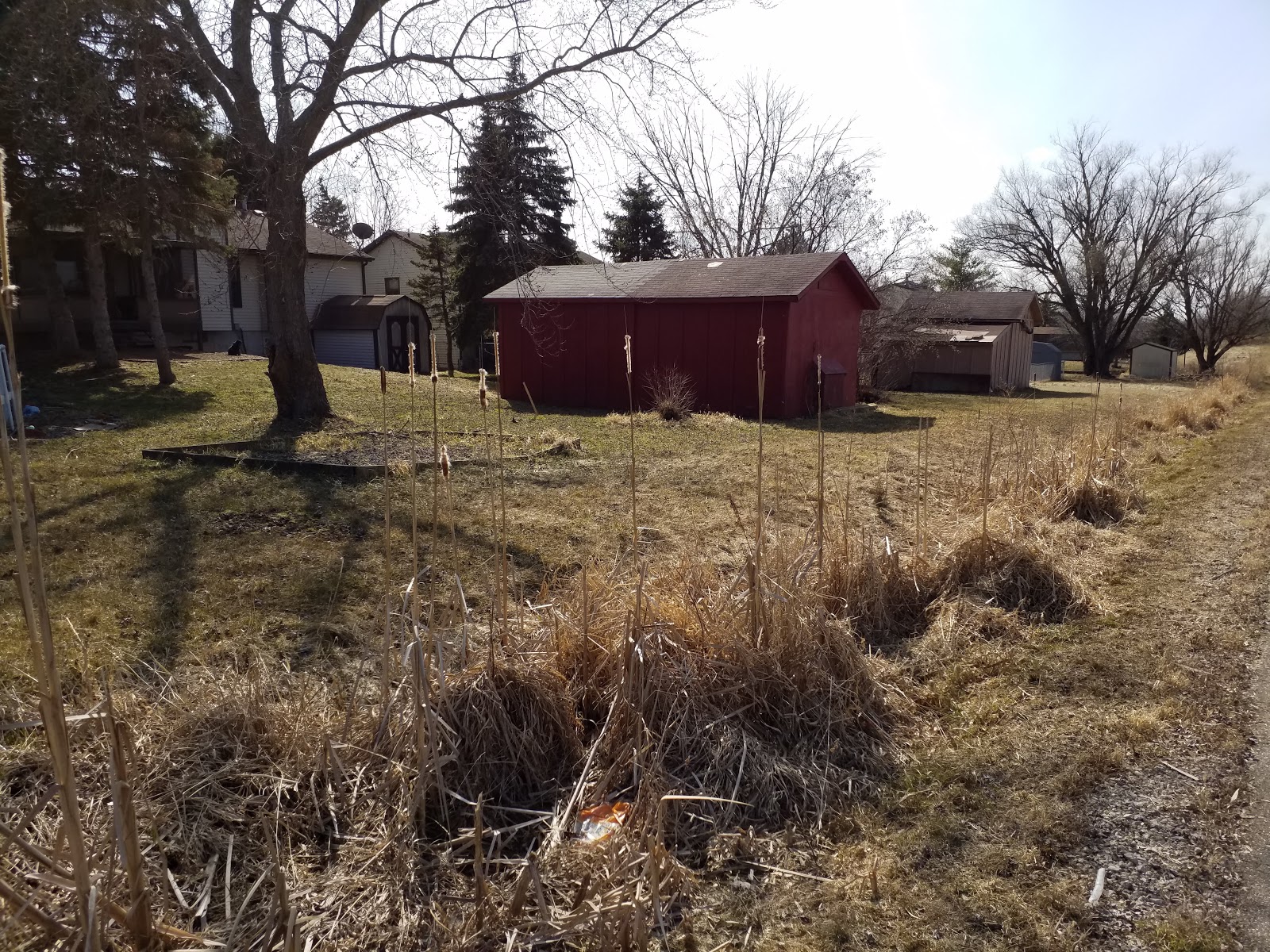
I did locate some cattails, though.  I have a friend who\’s interested in foraging, and apparently cattails are edible when they\’re young.  Also, you can harvest the pollen as flour.  So that\’s weird, but also kind of cool.  This is a smaller stand of them, but there\’s a much larger stand I didn\’t get a good picture of further down the way.  I\’m not sure how much pollen you can really get off a cattail brush, but it\’ll be interesting to see.  


Reading the Research: "Recovery" from Autism

Welcome back to Reading the Research, where I trawl the Internet to find noteworthy research on autism and related subjects, then discuss it in brief with bits from my own life, research, and observations.
Today\’s article is one of those divisive pieces that elicits a different response depending on your definition of autism.  Upon reading this article, some parents might say, \”oh… that\’s disappointing…\” because they were hoping that someday their children might be cured/recover from autism.  Meanwhile, people in the neurodiversity community would instead scream \”well DUH.\”  Why such a difference?  

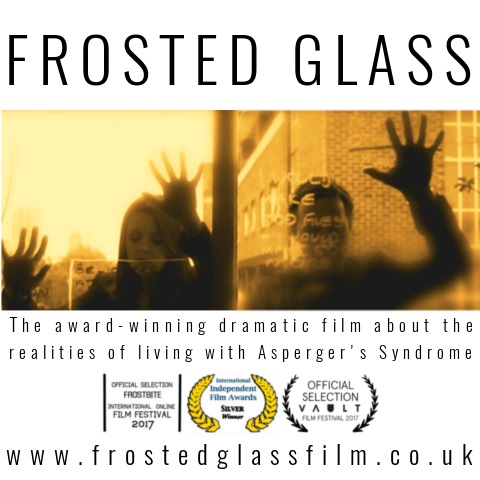
Well, it\’s in how you understand autism.  To parents, autism is often a thing that encroaches \”over\” their idea of what their child should be.  It\’s the gut problems, the depression, the social anxiety, the failure to read social cues, everything \”abnormal or bad\” about the child.  This can be represented by those pictures of children or people behind clouded glass, such as this one:

The idea is that the \”normal\” child is trapped behind the clouded glass, which represents autism, and you have to try to get through the glass to recover and reach the child.  Reading this article, then, to some parents would be both encouraging (because the child can cease qualifying for the autism diagnosis) but also disappointing (because problems often remain).

Autistic adults and people in the neurodiversity community reject this view of autism, often rather vehemently.  The reason is a fundamental difference in definitions.  Autism is not everything abnormal and/or bad about them, to these people, but part of their identity, and as such, declaring it a disease to be wiped out is rather insulting.  Autism instead is the differences in the brain and perspectives that we often have.  It\’s what makes us such interesting people, and lets us solve problems in such unusual and creative ways.

So, such a person, reading this article, would say \”Well DUH,\” because to them, merely being disqualified from the formal autism definition doesn\’t make you not autistic.  Your unique perspective and unusual ways of thinking, and perhaps difficulties reading social cues, sensory processing differences, and other differences, remain.  So sure, some kids might cease to qualify for the formal diagnosis, but they don\’t stop being autistic to neurodiversity proponents.  They just stop being as disabled.  Which is great!  But not exactly what many parents want.

As an autistic adult who has many supports and has had much help in the adult years, I can safely say that I am much less disabled than I used to be.  I\’m doubtful I would still qualify for my autism diagnosis, though I have no real desire to find out.  The key with the formal diagnosis is that there has to be a certain level of impairment, and the fact that I manage a small social life and a spouse suggests strongly to me that I wouldn\’t count any more.

That does not, to my experience, magically make me neurotypical.  I am not \”cured.\”  I am still autistic, still an alien in a world not made for me or people like me.  I still think in strange ways and do things differently than other people.  I still phrase ideas in ways that confuse most people.

I am, however, coping with that reality far better than I have in the past.  I have much better self-care skills and social perception skills.  I have a small but perceptually adequate support network.  My nutrition and exercise habits are much better than they were in my childhood.  As a result, I am healthier and my overall mood is better than it has ever been in the last 15 years.  Maybe even 20 years.

I don\’t entirely identify as a proponent of the neurodiversity movement, because I recognize some validity in the typical parental outlook on autism, as well as the scientific/professional outlook on it.  But I think it\’s fair to say I share some views with the neurodiversity ideals.  This is one.  I am, and always will be, autistic.  Autism is not merely a diagnosis code in the psychological manual of diagnoses, it is a difference in brain connectivity, outlook and personality, and general behavior and understanding of things.  It is an identity, not a disease.  I am not cured, I never will be, and I do not want to be.

(Pst! If you like seeing the latest autism-relevant research, visit my Twitter, which has links and brief comments on studies that were interesting, but didn\’t get a whole Reading the Research article about them.)