Welcome back to Reading the Research! Each week I trawl the Internet to find noteworthy research on autism and related subjects to share with you. Along the way I discuss the findings with bits from my own life, research, and observations.
Today’s article is one of those little ironic joys I sometimes find in my research. These are the articles that point out what a metaphorical house of cards ableists stand on when they preach to autistic people about “correct” communication. Another turn of phrase that goes well with this is “those who live in glass houses shouldn’t throw stones.” Today, you see, is about eye contact.
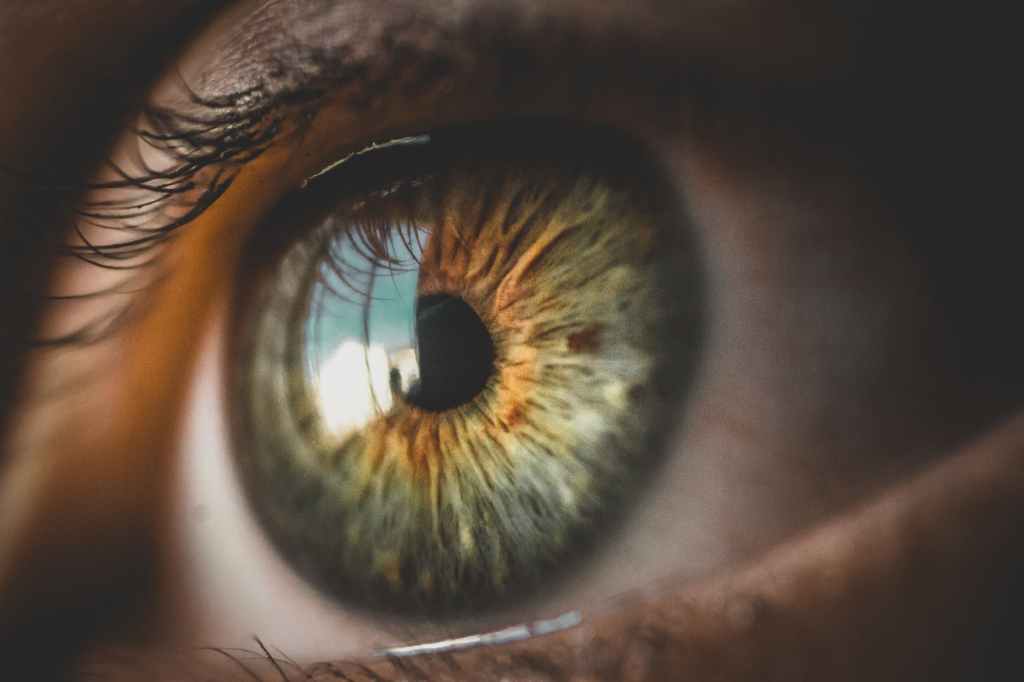
Eye Contact and Mental Static
Eye contact is a subject that often becomes a focal point for “correct” communication. The rough summary is that you should spend about 85% of a conversation looking at the other person or people. The remaining 15% you can spend looking at the scenery or whatever else. Looking at the person speaking allows you to get additional information from their face and body. Seeing how others in the conversation react can likewise give you valuable information about how you’re expected to act and react. In theory, there’s no reason you wouldn’t look at the person or people you’re talking to.
The thing is, looking people in the face is hard. It’s a lot of information all at once. If an autistic or other neurodiverse human is already struggling with information overload, demanding that we look at others directly is not helpful. It’s cruel and counter-productive. Not only are we still going to miss the information conveyed by a person’s face, but we may also miss even more than usual because of the additional overload.
Some people describe looking others in the face as adding a layer of static into their brains. It can cause them to miss words or phrases or even entire sentences. That’s comparable to being hard of hearing in quality-of-life terms. For me, it’s more like being hit on the side of the head with a baseball bat. The more familiar the face is and the better I’m doing that day, the softer the mental impact is. Still, I don’t typically make eye contact with people in the grocery store, even if I’m talking to them directly. I’m sure that bothers them to some extent, but it’s not worth the mental pain and exhaustion to me.
The Kicker
What really tickled my metaphorical funny bone about this article was the fact that otherwise “normal” humans have this same behavior pattern. Teenagers (ages 10-19) and older adults (ages 60-80) show this exact same avoidance of eye contact and faces.
I’m honestly uncertain as to whether the reasons for that behavior are the same as our autistic reasons, but they could well be. Teenagers are typically dealing with both an influx of hormones and a massive expansion in social requirements and feelings. Therefore adding in the extra effort of looking people in the face might well constitute information overload. Older adults have to deal with the deterioration of their bodies, the passing of friends and family, and adjusting to the massive changes the world has gone through. These things, too, could overload a person.
And doesn’t it just figure, regardless of the reason… that the proposed solution the article gives is “obviously these people should pay more attention to faces!” And not something like adjusting communication expectations so everyone, autistic or not, can participate.
That’d be crazy, I guess. It’s not like most people can tell whether you’re looking their eyes or their mouths… oh, wait. They can’t.
(Pst! If you like seeing the latest autism-relevant research, visit my Twitter! There are links and comments on studies that were interesting, but didn’t get a whole Reading the Research article about them.)
 realisticautistic