“Oh Crap, It’s Real” Moments

photo of common kingfisher flying above river

Ever had an “oh crap, it’s real” moment? As a person on the autism spectrum, I have a somewhat fragile biology. Small things can entirely wreck my equilibrium. A sudden siren or fork caught in a blender can cause me immense pain, even driving me to tears.

Fork. Blender. Tears.

That literally happened, by the way. I was eating at a newer, slightly upscale restaurant when a utensil of some kind got caught in an industrial blender back in the kitchen. It made a horrible racket: an excruciating experience spanning several octaves. I would compare it to a chord made entirely of people running their nails down a chalkboard, but that’s far too simplistic. The reality was much, much worse. Everyone at the table (all family: my mom, brother, and sister-in-law) made a face and covered their ears. But only I curled up into my seat and started weeping from the pain.

Moments like that teach you, by stark contrast, that you are very much not like everyone else. I can only hope the family I was with also learned that… but since they’ve never mentioned it and I’ve never asked, I’ve no idea.

The lesson, for anyone caring to observe that incident, was that “yes, sound sensitivity is real.” My brain did not sufficiently tamp down on the extraneous and unpleasant noise of a fork in a blender. Most brains, and the brains of everyone else at the table, did, and so those people were shielded from some of the Sound. Because I was not shielded, I was driven to tears in an instant.

Accidental Food Challenge

There have been other such moments. Once upon a time, I didn’t eat dairy (milk, cheese, ice cream, etc) for a week or so. Then I drank some milk, and within the hour I was weak, shaky, ill, and most of all, angry. For no apparent reason. Everything else in my life was neutral-to-positive. Except the milk. Oh crap, it’s real.

I’d accidentally performed what’s called a food challenge. You remove the questionable food from your diet for a couple weeks, then introduce a small amount and see what happens. If nothing happens, great! The food is probably not an issue. If you get a reaction, though, that’s probably why.

The nice thing about doing this challenge accidentally is that it’s entirely free of confirmation bias. (That’s the tendency to interpret things the way you think they should be, rather than objectively assessing the way things truly are.) I can’t say, for most of my life, I’ve gotten so lucky and been able to say, so confidently, that it was definitely the milk or whatever other cause.

Calmer… aaaand now I have a headache.

The reason I’m writing this post today (besides that I got out of work after 4 hours, which means I had extra time for once!), is because I just had another of those moments.

My doctor knows of a lot of factors that can affect sensitive people like me. One of those is dirty electricity and electro-magnetic fields. It’s not a lot of people, but a certain small percentage of humanity does poorly in big cities and apartment buildings, constantly being pelted with dozens of wifi networks. This can manifest as anxiety, depression, and even poor sleep. The question was, “am I one of those affected people?”

My hope with that question is always “no.” With dairy, it would have been nice to continue eating ice cream and cheese to my heart’s content. But it’s real and makes me depressed and angry, so I’ve found alternatives. So Delicious makes a good coconut based ice cream, and Follow Your Heart makes some very good deli slices that taste and feel like cheese in a jiffy. I particularly like the Smoked Gouda flavor.

There’s a website that sells shielding clothing, meters, and other items. On a whim last year, I bought a plain black baseball cap. I put it on when it arrived, and did feel somewhat calmer. But I wasn’t sure… though in retrospect it maybe speaks volumes that I wear it to work every day now.

Recently, since I’ve been working such long hours without a choice, I’ve devoted some of my extra money to buying extra things. One of those was a shielding hoodie. Today it arrived. I put it on. It’s comfortable, if a bit thin. It was when I put up the hood that I had the “oh crap, it’s real” moment.

Because the moment I did, it was like pressure had been removed from my skull. I felt calmer even as I felt surprise and then anxiety about the realization. In less than a second, I also noticed I had a very mild headache at the back of my head. Oh crap, it’s real.

What Now?

Moments like these pepper my life. There are always new things to try, new ideas to look into. Because my doctor is so on top of the research, I’m aware of a lot more avenues to explore than most people.

Mostly I fall into these “oh crap it’s real” moments by accident. I didn’t really have a clear picture of what would happen when I put on the shielding hoodie. Just that it might be good to try it. I had no idea whether there would be a reaction, let alone such a strong one.

I have the rest of the afternoon to figure out what to do… but I think a nap is probably the first order of business.

The website I got the hoodie from also has shielding bedding and even a cloth faraday cage for all bed sizes… so that might be my next step. I’m clearly not so sensitive that I need to be wearing shielding clothes everywhere- I’m still sleeping 8 hours, managing my depression/anxiety, and being kind to people around me. And yet, it’s clearly a factor, or I wouldn’t have experienced the “ahh, calmer… wait, why do I have a headache?” sensation.

In the meantime, I guess the hoodie is my new best friend for wearing around the house.

It’s been a rough end/beginning of the year

Hey y’all. It’s another update instead of a proper autism-centric post. I have a couple ideas for blog posts, but the fact is, I’m working 70 hours a week on average. Down from 80-ish in December, but still too much for me to manage and have this updating.

I miss being myself outside of work. Literally, I don’t have hobbies or time for my vocation, and haven’t for over two months.

And I’m struggling hard at work, in part due to the long hours literally just breaking my body down. And in part because the working conditions really aren’t great. It’s that way for a lot of reasons I have zero control over. But because of how things are for me right now, I still need to stay there or find a comparable job elsewhere.

I’m really tired.

As of tomorrow (or possibly several days ago, it’s unclear), I’ve reached my 90 days and have union protection. So my job is pretty secure. But the security came at a terrible cost to my body and mind, and I’m going to see about leveraging that security to recuperate.

Once I’ve done so and gotten some of that fabled R&R (or at least caught up on my sleep somewhat), I’ll be able to work on this blog more, and/or begin the autism book I always wanted to write.

I hope y’all are well, or as well as can be expected in such a trying year, with the pandemic still going. Wishing you all the best from my little corner of the world.

Healthy Snacks

As I was bumping around at home recently, I realized my dinner table had been taken over by snacks. The job I’m currently working frequently has mandatory overtime, up to 12 hours. In fact, quite soon it will be 12 hour days almost exclusively, seven days a week.

Now, I always pack a lunch: a hearty sandwich, greens, and a fruit of my choice. But that only lasts so long. So I’ve taken to looking (read: pestering my therapist/nutritionist, mostly) for whole foods snacks that carry nicely. I’ve talked about why good food is so stunningly important to wellbeing. It pretty much has to be lived to be believed, but you can read my guide and story about it here.

In an ideal world, you would start with fresh veggies and a healthy dip. And I do that at home, with fresh green beans, sugar snap peas, or snow peas. But at work I only have so much space, and the work refrigerator has Rules I don’t want to try managing. So instead I’m opting for mostly shelf-stable convenience foods and hand fruits, like apples, clementines, and grapes.

As I was clearing the table of my snack selections, I realized it might be helpful to I share what I’ve found. These are whole foods snacks a busy parent might also include in their kids’ lunches or household snacks with a clear conscience. Or snacks an overwhelmed autistic adult, like myself, might keep around the house instead of candy, cookies, and pastries.

Snacks Criteria

I have a relatively strict diet these days. The criteria, then, for these snacks I’ve welcomed into my home:

  • must provide nutrition
  • low sugar, keto, or at least minimal added sugar
  • whole foods as much as possible- you can typically look at the item and see what it’s made of easily
  • minimal or no added artificial colors, artificial preservatives, extra chemicals
  • dairy-free, humane treatment and slaughter if it’s meat

Without further ado: the winners:

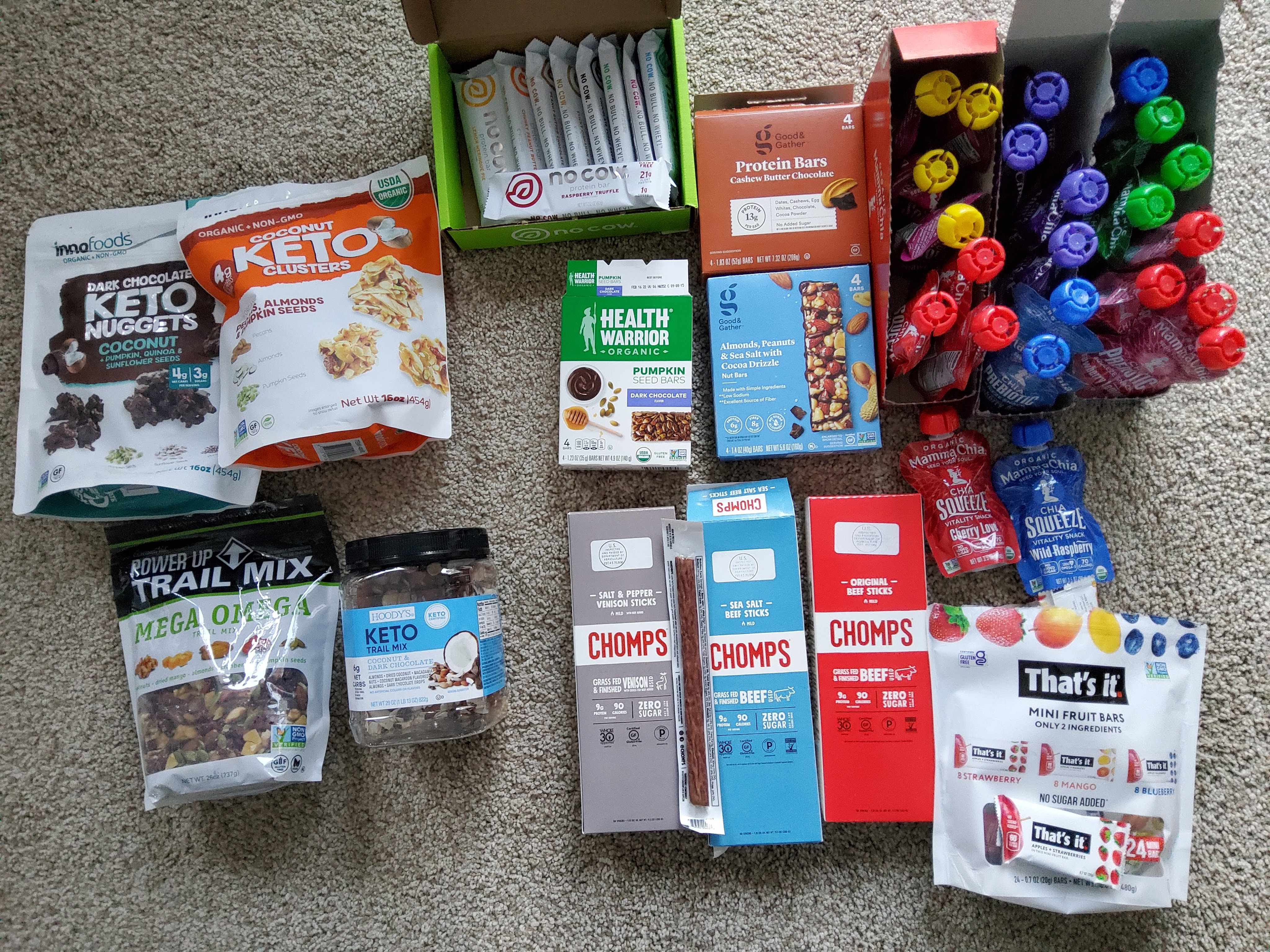
I’ll handle these healthy snacks by food type for everyone’s convenience.

Seeds and Nuts Clusters

We’ll start on the left side. On the top left is my new most favorite snack in existence: innofoods Dark Chocolate Keto Nuggets.

What they are: chocolate covered coconut, quinoa, sunflower seeds, and pumpkin seeds. My God that chocolate is delicious. They talk about it on the back of the bag and I really don’t know how much is marketing and how much is true, but. BUT. That chocolate is delicious. I can and absolutely would consume a whole 16 oz. bag in one sitting if I wasn’t paying attention. I know this because I wasn’t paying attention with the first bag and I absolutely ate half the bag before I noticed. Then I noticed and had to make myself stop eating because I didn’t want to stop.

Like its orange sibling next to it (pecans, almonds, pumpkin seeds, and coconut- still good but c’mon, chocolate!), it’s a crunchy snack. If you like crunchy snacks, tree nuts, or seeds, innofoods seems to have cleverly balanced their sweet and salty to make a snack you really do want to just keep eating. (This is also why Pringles can be hard to stop eating, fyi.) However, the sweetener is a mix of erythritol and cane sugar. So it’s still keto-friendly in small doses. Just, y’know, don’t eat half a bag in one sitting.

I found these bags at Costco. You may want to check with your specific Costco to see whether they have these, though. The two bags are from two different Costcos. The closer one has the chocolate, and the other had the orange sibling. Innofoods also has a website.

Trail Mix

Moving on (reluctantly!), we have more typical loose trail mix. Loose trail mix is vaguely annoying to me because you need a container for it. But I do have some, so I still keep this around. There are two kinds of trail mix, which I typically just throw together like a madman. Also because they’re pretty good that way.

The first is a mix of dried fruit, nuts, and seeds. It is notably not keto, but in small amounts it’s quite good. The issue with dried fruit is that it’s often laced with sugar. It’s already fairly sweet as is, and then they throw more in to make it addictive and/or cover up poor quality fruit. Really, any trail mix will do. Just avoid the ones with candy and added sugar.

The second trail mix does claim to be keto, but includes dark chocolate nubbins as well as macademia nuts. I’m not a big tree nut buff, but they are high quality protein and staying power in a pinch. The dark chocolate nubbins are mainly why I mix the two mixes together. The fruit is sweeter than the nubbins, but chocolate is delicious.

Both of these trail mixes can be found at Costco. But really, any trail mix works as long as you avoid added sugar, artificial colors, and outright candy.

Protein/Convenience Bars

Onto the wrapped bars. These are terribly convenient.

Health Warrior seed bars are first up. Health Warrior was the only brand at my grocery store that was made of whole foods without a hefty helping of sugar. They have a website, and they do both pumpkin seed bars and chia seed bars. It’s all been good. These fit the typical granola bar niche, and they’re nourishing to boot.

Target’s Good and Gather protein bars are pictured, but they’re kind of the crappier, mainstream, cheaper version of the Health Warrior options. They’re not truly low-sugar, but they were one of the first things I found that fit the bill for what I was looking for. they are, at least, whole foods. And available in much of the US. I eat these sparingly, as treats.

No Cow Protein bars are probably the best proper protein bar option. They’re a bit more processed than the other listed bars, but nourishing and low sugar as well as completely dairy, gluten, and GMO free. Also, you can cover 99 cents’ worth of shipping and have three bars sent to you free, which is pretty much the best way to try stuff like this. I personally tried that free trial, then bought the variety pack you see above, and now have settled on four flavors I like best. They’re filling and stick with you, and for that reason, they’re the last thing I typically eat in a shift. Sort of a sweet yet satisfying ultralight dinner.

Meat Sticks

Chomps meat sticks are my current go-to for humane, whole foods animal protein snacks. These are the clean food versions of beef snack sticks. They’re available at several of my local stores, but you can also buy them online. Of the listed flavors, I’ve tried Original Beef, Jalapeno Beef, Salt & Pepper Venison, Sea Salt Beef, and Italian Style Beef. I’m not a huge spice fan, so I’m not bothering with the Jalapeno again (it wasn’t that spicy, mind). The Italian Style Beef tastes like pepperoni or summer sausage, which I’ll do sometimes but not every day. And the remaining three I enjoy greatly.

Paleovalley meat sticks (not pictured) are also a thing. I have yet to try these because I can’t find them in local stores, but my nutritionist swears by them and feeds them to her kids. The site has a whole blurb about why their meat sticks are superior to the typical kind, which would include Chomps. I have no doubt these will be fantastic when I finally get to try them.

Fruit Leather and Squeezable Snacks

Mamma Chia squeezes are maybe the closest thing I’ve got to typical squeeze fruit snack type things. I’ve seen applesauce packaged like this as well as other fruit-like products. Anyway, this is basically a fruit puree with chia seeds. I’ve found it at many of my grocery stores, and they also have a website. The chia seeds are a superfood, and they also add some texture to an otherwise basic smooth puree. I’ve had every flavor they offer except mango coconut. They’re all good. My favorite is Cherry Love (tangy!), with Wild Raspberry as a close second.

That’s it. fruit bars are the last item in the picture. I have the mini bars, which are at Costco, but they sell larger ones for a heartier snack as well. Their big selling point here is that the bars are literally just what it says they are. I have the apple/mango and apple/strawberry varieties, which are respectively 1 apple + 1 mango, or 1 apple and 12 strawberries processed into a fruit leather bar-shaped thing and sealed in a wrapper. They’re sweet and good, but not laced with colors, preservatives, or sweeteners. Also, at the time of this writing, all but two flavors are sold out, so I guess consider that a resounding vote of “yes, these are excellent.”

Bonus: Drink Mix

I’ve mostly covered food here, but there’s one thing that I’d be remiss if I didn’t mention. I mainly drink water all day, every day. It’s tasty water, so I’m not bothered. But sometimes you really just want to have extra flavor and maybe some sweet in your drink. So, meet TruLemon.

TruLemon drink mixes are a fairly simple idea: low sugar, but not zero sugar, lemonades and drink mixes. I can speak for the original lemonade, raspberry lemonade, peach lemonade, and black cherry limeade flavors. They are all very good. Sweet but not overwhelmingly so. Not enough sugar to rot your teeth. Strong flavor. I’m mostly quite happy with water, but when I want to liven up my drink, this is what I reach for. Target and several other grocery stores carry these, and they have a website with a ton more options.

Life Update: Work

There’s a triad of things that’ve been going on lately, which have severely impacted how much time I can give to this blog. I don’t like it, but it’s how it is. I explained my health situation last time. Today I’ll talk about my job situation. There will be some context removed, because the major part of the triad of changes is still too painful and difficult for me to talk about.

My financial situation changed in June of this year. I needed to take on a greater share of the costs for the house and food and such.

For context, I hadn’t had a 9-5 job in years at this point. In fact, I was actually in despair about it. Every 9-5 job I had, felt like I’d failed at for one reason or another.

Tries at Employment

Major

For example, I went to college to study Psychology. That was good and interesting, but when it came time to consider grad school, I was pretty much just done with being in school. So I didn’t do that, and that meant I couldn’t become a therapist or do much besides manage people or counsel high schoolers (yeah, figure that one out). Neither of those things really appealed to me, because I hated high school and kind of hated people. So managing them for a living seemed stupid at best.

Minor

Instead, I attempted to make a living in my minor, Information Systems. That’s more or less what you get when you cross a Business Degree with a Computer Science degree. I got an internship job coding a new RFID system for city’s public library. I liked the job and the people. But the internship was never meant to last, and there was no job available for me to move on to in the city proper. I tried to get a job at a local company doing more or less the same thing, and it wasn’t a good fit. They fired me after a while.

I Can Organize Stuff?

After that, I started to really despair. I got a job as a secretary (administrative assistant) at a local special needs service provider. Specifically, an autism clinic. Which was mostly fine, but eventually the bad parts of the job started to get to me. For instance, hauling stinky bags of diapers every day was really revolting. And being on the phone with insurances sparked misanthropy as well as self-hate.

Autism Education

So eventually I left, and did not pick up another full time or even part time job. By that point Chris had found work, and he made enough by himself that it wasn’t necessary to have paying work. So I began to focus on my vocation, which is autism education.

Blog

I’d been doing this blog for a few years at this point, and so I decided to develop that work and share what I’d been learning. Not just to share my thoughts, but also share the best of the education I was giving myself.

Autism, you see, is a very complicated subject. I’d hoped, at one point, to find or make a definition of autism that people could use and rely on. I figured it out a few years later: that is not possible in the current state of things. Autism runs the gamut from people like me, who seem almost normal (but we’re not and have just learned to hide our differences), to people who may never be toilet-trained and probably won’t ever live on their own or go to college.

Autism’s cause is unknown. You cannot point to one thing, like genetics, environmental factors, food allergies, or parenting techniques, and say “yes, this is what causes autism.” The truth is that a lot of things factor into whether someone’s going to meet the diagnostic criteria. And to the average person trying to care for their kid or themselves, what exactly makes them autistic is irrelevant. They need services and support and good information to help with immediate issues, not lengthy scientific explanations that pretty much have to end with, “we think, but we don’t know for sure. Maybe do more research?”

Not a Career (yet?)

In looking back over this blog, I feel I did some valuable work. I read and reviewed over a hundred books, and tried various products to see how they’d work and if they’d be helpful to the community. I summarized and shared a ton of research related to autism and co-occurring conditions. My perspective is valuable, I think, in part because I try to see many perspectives and stay open-minded, but arrive at a single, accurate conclusion.

However. My work did not end up leading to a career (yet?). That’s probably because I didn’t do enough networking. The paradox of a career in autism education is that autistic people struggle with socialization, but it’s mandatory to make the connections needed to find work.

I felt sufficiently overwhelmed by everything that I didn’t reach out enough. And so, while I had occasional jobs, they didn’t make a living.

Making Do

Now my financial situation has changed, and I can’t afford to just do the blog for work. In the months since June, I’ve held four jobs.

I picked up two part time jobs at once, one at UPS, and one at a local church that wanted to hire a sound technician. I have about a decade of experience running sound for a different church, so the second was easy enough.

The UPS job was both good and bad. The hiring process was stunningly fast. I applied and had a start date within an hour. No interview. Just some time spent at the computer. Then there was a week of training, and then I was throwing boxes onto conveyer belts. It was hard work, and my body started to fail after a while.

The bigger problem, though, was that I couldn’t make enough money between those two jobs to make ends meet. It’s not wise to be losing money every month. So I went looking for another job. I found work at a local food factory that mostly does baking mixes. It would make ends meet, at $16/hour for 40 hours a week. There’s a post about that job and why it didn’t work out. Mainly, it didn’t work out because joy goes to die at places like that, and I wasn’t allowed to listen to music or podcasts.

Trial By Inferno

Which leads me to my present job, at the post office. It’s not a career position, it’s a job that can lead to a career position. The work isn’t very hard, or even that physically taxing (besides having to stand for pretty much the entire shift). However, the schedule is volatile, and they may schedule me for up to 84 hours a week. (That’s 12 hours a day, 7 days a week, by the way.)

It will definitely make ends meet. I can even make extra payments on the house and probably buy an entire new wardrobe of clothes if I wanted to. I just have absolutely no idea if I can survive 84 hour weeks.

I’m calling it Trial By Inferno, and hoping I can make it work. If I can, I can get a career position in various parts of the mail system. Including working at my local post office, about 5 minutes away from home.

Wish me luck. I’m going to need it.

Life Update: Vaccine Side Effect

man climbing on rock mountain

Hey y’all. I’m transitioning to a new job (again). And that means precious little time to serve my vocation of educating and learning about autism. There’s a lot of stuff going on in my life, and I thought I’d share some of it as I’m able.

However, the writing of the bigger, more difficult things has been intensely painful and difficult. So I’ve defaulted, this week, to something somewhat smaller: a medical development in my life.

The short version is that after I got the vaccine, my internal organs decided to have a relatively polite hissy fit. Specifically, my female internal organs.

If the idea of monthly periods is disturbing to you, this is your chance to find something else to read. Okay?

Before

Cool. I’m more or less used to bleeding every month, though I definitely resent it. I don’t recall asking to be born female and don’t particularly like much of what comes with it. Mostly I just tolerate it.

For most of my life, my periods were exceptionally heavy and extremely painful. Not “curl up into a miserable ball and wish myself dead” painful, which is the kind that suggests endometriosis. But painful enough that moving around was misery. A menstrual cup and heavy-duty pads were essential. I referred to the first day or so of my period as Hell Day, which was not an unreasonable designation.

This is likely due to some kind of hormonal imbalance. It’s unclear what kind, but at one point I had sufficiently unusual periods that a doctor prescribed me birth control to even things out. I never bothered with it, which turns out to have been a very fortuitous decision for my mental health.

And then…

This all changed when I got the Pfizer vaccine. I got both shots, of course. But the first one was enough to mess up my cycle. The second drove it home, though.

I stopped having predictable periods. And they stopped being heavy. In fact, they barely hurt at all after the vaccine. Which was actually pretty amazing, save that I nearly ruined a pair of underwear due to not noticing I was going on my period. Pretty shortly thereafter, my spouse and I started having pretty significant issues… which distracted me pretty well from my weirdo biology. At least for a while.

Eventually, though, I started realizing I hadn’t stopped bleeding in a while. It still didn’t really hurt, but bleeding for 3-4 weeks straight is… well, unusual. And not really healthy. It was never a lot of blood, but it didn’t stop… and periods are really only supposed to last a week, perhaps a bit more, but sometimes significantly less.

They’re definitely not supposed to last two whole months, which was about the point I finally said, “maybe this is a bad enough problem I should go see my doctor…” So thankfully it was easy to get an appointment with my doctor using a newer online system. I also had to throw together whatever I could to help her figure out what was going on. Which meant reading back through my journal entries to find dates and whatever patterns I could find about my period.

It’s also worth pointing out here that the only reason this didn’t cause serious medical problems is that my daily supplements have a good dose of iron as well as other things essential for building blood. If I wasn’t eating so well and taking my vitamins, I probably would have become faint and collapsed at my job. Bleeding that long is no joke. Your body can only replace lost blood so quickly. I was able to leave the issue alone so long only because my health is very well supported.

Medical tests

My doctor was concerned, suffice it to say. There were a few possibilities. We ruled out pregnancy first, which is how I found myself picking up pregnancy tests after walking out of a hospital (where my doctor works).

Can’t say I’m overfond of peeing on a stick, but at least the stick was obligingly quick to provide results: negative. No kidlet on the way. Which is good. I really can barely manage myself right now. Dragging some poor kid into the mess that is my life would be cruel at best.

So with that ruled out, it was blood test time. I’m actually not sure what we were ruling out with these, but we checked the contents of my blood as well as a few other things. Everything came back normal. I wasn’t even low on red blood cells, which is a mercy given that I’d been bleeding for about two months straight at this point.

I also noticed, by this point, that having an active job, bending at the waist, and singing all made me bleed harder. Which was really depressing. Sing less in church, despite that it’s one of my favorite parts of church. Don’t be so active, despite that movement is key to a happy brain and life. Also, my job required it, so that was not at all optimal.

Finally, when all that came back, my doctor decided it was time to break out the ultrasound. The ultrasound would let us check the physical structure of my parts. It was possible there was a ruptured cyst or some other structural abnormality that was causing problems. This test would show it.

I was able to get a quick appointment in just a couple days. Turns out this kind of ultrasound involves you drinking 24 ounces of water an hour beforehand, and not using the bahtroom until it’s done. That’s so your organs are in the right place, and your bladder is nice and easy to see through with the scan.

Unfortunately, the scan involves the technician digging their scanner into your very full bladder to look at your uterus. This was extremely uncomfortable to say the least. They also did an internal scan for good measure, which I didn’t need a full bladder for, thank God. The results came back at the beginning of the week. Nothing to worry about. So most likely, I am not cancer-ridden or dying of some kind of hideous internal injury.

What’s Left?

So if none of that was it… we’re pretty much left with “hormonal abnormalities.” Most likely, what is happening is that I am constantly on my period for reasons entirely unknown.

There isn’t a lot of data on how the mRNA vaccines affect vagina-havers, since this is a very new technology. And therefore, there isn’t a lot known about how to fix weird side-effects like this. The more common (and thus well-known) period disruptions after these types of vaccines are having worse periods that stabilize and return to normal in a couple months.

It has now been more like 5 months, and my period did kind of the opposite.

So what’s to be done? Well, on the advice of my therapist/nutritionist/main doctor, I’ve begun a supplement called Vitex. There are a number of herbal remedies that support regular monthly cycles and hormone levels for uterus-havers. The chaste tree is one such thing. If I’m very lucky, a couple months of taking it once a day will straighten out my issue and bring me back to only regretting being biologically female for 5 days out of a month.

If I’m not, I may have to try other options. Femmenessnce is a broader-spectrum, far more complex option. I’ve actually tried it once before, and it was helping… but something about it also upset my intestines. Which was mightily disappointing. So I stopped taking it.

Since then my diet has changed to be a lot more healthy, what with the minimizing sugar intake and the eating mainly whole foods. So it’s possible I might have better results if I try it again sometime.

With luck though, I won’t have to.

This is about as resolved as this phenomenon is going to be for a while. Wish me luck in my quest to stop bleeding forever, friends. And rejoice with me, because I don’t have cancer!

Autism at Food Factory Work

black ship on body of water screenshot

For the last two weeks, I (an adult with autism) have been doing factory work at a local factory that makes baking mixes, breads, and sweets. I thought it might be interesting to give an overview of my experience and tell you whether this kind of work is suitable for autistic people. The workers at the factory have a union. Which I’ve found mostly means that they have their own rules that may or may not make sense or be helpful.

I won’t name the company here because I like avoiding being sued. The job was titled General Labor, which effectively means they’re paying me to pick things up and put them down. It’s a skillset I have, though admittedly not my most valuable skillset. I got this job because I needed work that was full time, quickly. My bills need paying, and at the moment I can’t make part time work pay them.

First Impression

My first and second impressions of the company were not favorable. The online reviews on the job site I applied on were, um… not complimentary in the slightest. That was the first impression. I still applied and interviewed, but I asked some very pointed questions about their conflict and management practices. The answers were somewhat satisfactory. They suggested the management (at least of this section) listens and was reasonably adult about their crap, so I accepted the job.

Second Impression

I formed my second impression on what was supposed to be my first day. I’d been told to arrive a little early to turn in a piece of paperwork for joining the union. Which I did. I arrived about 12 minutes early, and promptly couldn’t get in or reach anyone to let me in. I wasted 5 minutes just trying to get someone to answer a phone so I could turn in this paperwork. Then the lady at the desk took several minutes just to print me a map (which didn’t end up being helpful anyway) and tell me where to go for orientation.

I arrived at 9:02am, two minutes late. The door was closed and locked. There was no built-in way to phone for help. I knocked, and nobody answered. I waited around hoping someone would go through the door, but nobody did. Eventually, in desperation, I called the main line for the company and asked what was going on. The desk jockey told me they would send someone. After another 10 minutes or so, someone did arrive… but she looked me up and down and told me I couldn’t start that day, for two reasons. One, I was late. Two, I was wearing jeans, which weren’t allowed. And there was management in the building, so she didn’t want to risk their displeasure. And thus, because they only do orientation on Mondays, I was sent home and had an entire week off.

Disrupted Schedule

Needless to say, I was not impressed. It was mainly their fault I was late, and punishing me for their failure is not a great way to start a business relationship. It also struck me as astoundingly irresponsible and uncaring of their employees’ time. The start time was 9am. Was I supposed to know, despite not being told, that I should show up at 8:45? Apparently.

Autistic people can be very good at sticking to a schedule and obeying the rules. But we have to know what the rules are. This was not a very autism-friendly start to this factory work job. I’m fortunately fairly graceful about handling sudden changes like this in the moment, but I still cried all the way home and spent much of the day in bed. It was really frustrating to have tried my best to start well, only to have them spit on my efforts and then have to go home for the entire week.

First Day

So, at the appointed time the next week, I arrived 15 minutes early. This time the door was standing open. They checked my documentation at the door and escorted me up to… basically a lecture hall. I had my picture taken for my ID before I’d even chosen a desk.

The ensuing lecture was unpleasantly reminiscent of 8am lectures in college. I came to the lecture tired and somewhat dazed. And just like those lectures, they threw too much information at you to possibly memorize it all. A pen was provided for taking notes, but paper was not. So I took notes on the back of my insurance information folder.

The lectures were with a live presenter, a la the 80s or even the 90s, I guess. Most places I’ve worked simply have training videos, but not here. Like 8am lectures, it was “sit down and listen until we’re done with you.” They then fitted us for uniforms and sent us home. Still not a particularly autism-friendly start to this factory work, in my opinion.

Subjects

We began with training about their onsite freezer chemical (which apparently stinks long before it can harm you, so you really do have to try to hurt yourself with it). Then there was a lecture on Good Manufacturing Practices, which includes a laundry list of things. But it pretty much boils down to “Keep Very Clean,” “Use Proper Clothing and Equipment,” and “Follow the Rules to Ensure Safety.”

After that it was on to Allergens, which is a big deal in food production. You really, really don’t want to accidentally kill someone because somebody had almonds for lunch and a bit got into the waffle mix. I learned here that 90% of food allergies (that are recognized as allergies) are to one of eight things: peanuts, tree nuts (like almonds and cashews), dairy, eggs, soybeans, wheat, fish, and shellfish.

I also learned that there are several additional named categories of foods they need to pay attention to. I’d heard of kosher, organic, gluten-free, and non-GMO. But they also pay attention to halal and pareve designations. All of these mean sourcing only ingredients that meet these standards, so that the final product can also be labeled that way.

After that it was on to various cleaners and chemicals we might use, including the use of protective equipment. And finally, we were taught about how to lock out equipment. And also told we wouldn’t be doing that, but that everyone needed to know it anyway.

There were a couple quizzes about the chemicals and lockout procedures that we needed to fill out and turn in. Thankfully being half-awake was sufficient for that.

Unusual Rules

I’ve never done factory work before this, so a few of their rules struck me as strange. Some are explainable, but others seem just kind of petty.

Rules that Made Sense…

In the explainable category… no one was allowed to have peanuts or tree nuts in their lunch. The exception was peanut butter, but that was it. You couldn’t have candy or gum in the production area. You also weren’t allowed to use any kind of tobacco product, to the point that they’d literally fine you every paycheck if you were. And no strong-smelling perfumes or colognes. Finally, you pretty much couldn’t eat in the production area.

These rules are all meant to limit allergens and contamination of the food products. Perfume and cigarette smoke can make the food product taste like those things. Nobody wants to eat pancakes that taste like cigarette butts or “male musk.” That all made some sense to me.

They also had a rule about not having hair ornaments, like decorative combs, clips, etc. This seems sexist until you remember these things can rip a hole right through your hair net, which then means you’re running the risk of contaminating the food. I have short hair, so I pretty much didn’t care about this rule.

And Rules that Didn’t

But then there were rules that just struck me as pointlessly oppressive or mean. Things that made this factory work job very autism-unfriendly.

No Phones and Internet

My biggest irk: you weren’t to have your phone on the work floor. Not at all, going by the signs on the walls. Absolutely no one paid attention to this when they weren’t being monitored, mind you. There were phones in pockets, phones coming out at moments when no work was immediately necessary, etc. Considering the workplace has no lockers, secure storage, and very limited numbers of clocks, I can’t really blame anyone.

However, my “phone” is a full sized tablet, and no one makes pockets that handle stuff that big. Plus it’d be very obvious. So I ended up having to leave it in the car and bring in an old iPhone I have on long-term loan from a friend. It doesn’t have a data connection, but it has phone games and a clock.

Also? The building has incredibly poor signal for most cellular carriers. The place is saturated with wifi. But when I asked, I was told basic employees weren’t given the wifi passwords on purpose. So during my breaks, I had no Internet unless I went out to my car. Which I believe I was told in my interview is not allowed. (I did it anyway.)

In this modern world, we’re often used to being constantly connected. While I don’t think it’s absurd to expect your employees to work on the clock, I do think it’s unkind to have the expectation that we leave so much of our lives at the door. A rule like this is off-putting, and for autistic people who don’t realize there are two sets of rules (the ones stated and the ones people actually follow), it might be a deal-breaker.

Corollary: No Earbuds, Music, Audiobooks, or Podcasts

I really hated this part. Doing the same thing over and over isn’t the end of the world to me. Some autistic people thrive on repetition, and getting into a rhythm doing the same thing can be exactly what we need. The kicker: some people really need to have music or audiobooks to help keep their focus. Especially people with ADHD, but many autistic people and even neurotypical people as well.

That option is literally nonexistent in this place. You aren’t supposed to have your phone. And even if you do, earbuds and headphones are not allowed. I checked. You can still have earplugs, which helps with the machine noises somewhat, but they’re provided by the company, so I hope you like blue squishy foam earplugs on strings.

This rule made this factory work very not autism-friendly, in my opinion.

Breaks

Speaking of breaks, this factory does not believe in lunch. My state does not mandate any break schedule or lunch after you become an adult. So the union negotiated for two 20 minute breaks. That’s all you get for 8 hours of work. I’m used to two 15 minute breaks and either a half hour paid lunch or an hour unpaid lunch. This rule is very stingy by comparison. Thanks to being at college, I know how to shovel food down my throat quickly. However, it’s a poor practice for enjoying, digesting, and getting the most out of your food.

The shortness of the breaks also means the workers are pretty much limited to bringing food from home. There is no time for, “I’m going to run out for Subway, everyone gimme your orders and money and I’ll bring it back!” Or, “Our team is going to Taco Bell for lunch, see y’all when we get back!” and everyone companionably piling in someone’s car.

On one hand, this means the autistic person’s diet can be catered to as much or as little as they want. If you’re always packing your own lunch, it’s up to you what you put in there. Fast food doesn’t really do dairy-free, gluten-free, low-sugar stuff at the moment. On the other hand, you’re missing the possibility of coworkers and bosses getting to know us as people, rather than just as workers. So those rules for this factory work are kind of a mixed bag in terms of autism-friendliness.

Sitting Down

This is an informal rule I learned while on the job. You are not to sit down. There are basically no places to sit down in the factory. You’re to stay on your feet for your entire shift except for breaks. Management gets upset if they see you sitting.

As someone unused to being on my feet for 8 hours, this was awful. I have two pairs of good shoes suitable for this job. But I’ve never been terribly athletic. Not being allowed to sit to rest my poor, angry feet, strikes me as just cruel. Eventually I’m sure I’d build a tolerance for it, and buying nice padded insoles would probably help. But really, why on Earth would it not be okay to rest your feet when you’ve nothing else to do? That’s stupid, petty, and just mean. If that’s standard for factory work, then factory work is inhumane. Don’t @ me.

The first day I was out on the floor, my legs and feet hurt so badly at the end of my shift that I refused to get out of bed for over 2 hours. Absolutely refused. There were various things I could have been doing that day, but the idea of putting weight onto my feet was so abhorrent that I just couldn’t.

I assume management, had they actually found me resting my feet, would have had a metaphorical heart and let me sit for a bit once I explained my situation. But having a heart is entirely optional. If the person with autism couldn’t explain themselves well and quickly, this factory work might easily become intolerable.

The Actual Work

I’ll now describe the different types of work I did over the course of the weeks. It was never exactly the same work twice over the course of the week, interestingly. I’ve described the first day, which was entirely orientation.

Day 2: Tour and Glaze Packing

The second day I started off with meeting my boss’ boss. He personally gave me and the other two new hires a tour of our area. He also explained his management style, which is aiming for “approachable, open, friendly, and willing to listen.” The tour and explanation probably took an hour or so.

Then we were given our assignments. The other two were assigned to work somewhat like warehouse jobs, where you put together bags of the ingredients needed for recipes going into production. That involves lots of lifting, and they unironically only assign men to that work. It’s insisted that this isn’t sexist. I have my doubts. At UPS, women were fairly evenly assigned to trailers. Here, not so much I guess.

On to the Production Line

I was assigned to a factory line that makes doughnut glaze. Because I was new, I was rotated through exactly two stations: making boxes and filling them with plastic bags of glaze. I was assigned to work with a kindly older Hispanic lady. She A) was clearly very competent and caring, and B) had limited English skills. She would become my Square One for the job. If I didn’t know what I needed to be doing, she was the person to ask. Or in my case, walk over and look confused. That part of the factory work, at least, was autism-friendly. Having a Square One is essential.

Many of my coworkers on this line and elsewhere spoke Spanish more than English. This was more than a little isolating, because I can count to 10 in Spanish and say good morning and thank you, and that’s about it. Learning additional languages is really not my strong point, but it could be a great experience for someone wanting to polish their skills with native speakers.

At any rate, for the rest of the day I taped the bottoms of boxes and lifted bags of icing off the conveyer line and into those boxes. I had concerns about getting a repetitive motion injury, but thankfully that didn’t happen. Fortunately I was only mildly sore, and it went away quickly. I fell into a sort of waking trance during the work, and badly missed my podcasts and music.

It was very much like school. By the last 2 hours or so, I kept checking the clock and willing the hands to move faster. It’s also the most footsore I can remember ever being, which is a big part of why time seemed to move so slowly. When I got home, I took care of a few small things around the house and then got in bed and refused to put weight on my feet for over 2 hours.

Day 3: Glaze Rework

The next day, I was still assigned to the glaze line. However, I also had an appointment to get to at noon, which would turn out to be incredibly fortunate. In this factory (and perhaps elsewhere), when you need to remake a finished product, they call it rework. And that was my job that day.

Literally, there were boxes of icing. We were issued knives, and the job was to cut the bags open and get them emptied down a specific hatch into a heating tub. The knives were not terribly sharp, I’m afraid. But I still had to wear a cut glove, which is basically a tight, knife-resistant cloth glove. That went on my off hand, under the blue gloves we wore to keep the food sanitary.

The machine room was rather warm already, and the hatch in question was up on the second floor. So this was already somewhat unpleasant. Then, despite my mask, I could also smell the icing. And unfortunately, the process of emptying the bags of icing was a messy one. You had to squeeze them with your hands to get all the icing out. Then, when it was sufficiently empty, you’d toss it into a nearby trash can. The icing got everywhere. My shoes, my pants, my shirt, my arms, and apparently even my hair.

I learned later there were plastic aprons I could have been using, but the machine operator and everyone else forgot to mention it (it’s common equipment everyone knows to use, in their defense). I eventually found one and wore it, but by then it was obviously too late to save my clothes. Fortunately, it’s mostly just sugar and liquid. Nothing the washing machine can’t handle.

How to Hate Food in One Easy Step

The real kicker was the smell. I was sweating, my arms hurt, it was hot, and the smell of the icing was all-encompassing. Like most humans, I’m an associative creature. So I began to equate the smell with the experience. Dislike started replacing my immediate “ooh, smells good” reaction to icing and doughnuts.

I strongly suspect, had I not had to leave for my appointment, I would have ended the day with a hatred of the smell of sugar and icing. Which makes me think that working in a food factory might be a spectacular way to ruin your love of food.

Thankfully, I left at noon for my appointment. So I wasn’t particularly footsore that day, and had some time to recover from squeezing all those bags of icing. I did end up with some nice bruising on both forearms from leaning on solid stainless steel equipment while I was working. As of writing this post, those bruises have mostly healed.

Day 4: “Cleaning”

When I came back to work the next morning, I found out that the glaze line had finished their work. There was nothing more to do in production there. Most of the workers went to other lines.

Me, though? I and my Square One got the clean up assignment. This involved wrapping certain pieces of smaller equipment in plastic, to start, so they would be protected from… something. I’m honestly not sure what. Powdered sugar? A pressure washer? Dust? It was never explained.

At any rate, once that was done, the torture began. You see, there was not, in fact, all that much to clean. And there were probably 6 hours to burn after the plastic stuff was done. We got 2 microfiber cloths each, and a bucket with a little water and zero cleaning product. Thus equipped, the Hunt For Anything At All To Clean was on.

I’m actually having trouble recalling precise details of this day, which I think speaks to how miserable it was. It wasn’t just the boredom. It was that there really was nothing that particularly needed the help.

Make Work

I wiped the inside and outside of cabinets, even though they weren’t or were only barely dusty. I cleaned inside phone boxes, at least one of which no longer had a phone. Wiped stainless steel equipment that wasn’t particularly dirty just to make it shine a bit more. And railings that showed no sign at all of needing the care. The water wasn’t disinfectant, so really what was the point?

By the second half of my shift, it was a joy to actually spot dust I could attend to. Even though it was barely there. The once I found some actual glaze spilled down part of a railing, I exclaimed happily out loud. That was how soul-crushing this work was.

I think I took four bathroom breaks that day, and I took zero the days before. I dumped my bucket far more often than was necessary, and took extra long in cleaning it out and refilling it. Sitting down is against the rules, remember. And there was nowhere to hide, really.

Also, it was literally “clean stuff” or “go home,” and I needed the money. I no longer wonder why everyone I’ve ever seen in the factory grimaces when they mention cleaning. It wasn’t hard work. It just made me wish I didn’t exist. At no point can I recommend this kind of factory work to anyone, with or without autism.

Work like this is where motivation and joy go to die. I would quit in a heartbeat if this was going to be my life every day.

Day 5: Waffle Mix Rework

The next day was once again different. With no more cleaning to be done, I was instead assigned to a different production line. This one made waffle and pancake mix. Y’know the self-serve Belgian waffle stations at hotels? The ones with the little cups of batter that you pour into the machine? Yeah, they make that waffle mix at this line.

It was rework again. This time it wasn’t bags of icing, thankfully. It was bags of waffle mix. I was issued a knife and a cut glove to protect my off hand, just like last time. The job was to cut open the bags and empty them into sanitary bins, roughly the size of janitor trash cans.

Once enough boxes had been emptied into the bins, we emptied the bins into the machine. This meant the mix went everywhere and got on everything, basically. Including my shoes and my clothes. After that was done, the machine processed the ingredients for a while. Which meant that after the bins were refilled, you had nothing to do but stand around.

Again, sitting down on the job gets you in trouble. Unlike the other line, though, this line was up high on the third floor. Meaning management doesn’t typically just wander by, and can’t easily spot you. So unlike other days, I did sit down a lot. The other workers mostly didn’t follow suit, but they didn’t give me grief either.

Therefore, this was the only day of factory work that I wasn’t footsore after.

Bonus Day 6: Mandatory Overtime, Just Kidding!

On Friday morning, management told us that there would be mandatory overtime on Saturday. They didn’t name anyone specifically. But when I asked the leadership afterwards, they said this was quite normal and everyone should come in. My local union rep echoed this sentiment. I assumed this meant I was to treat Saturday this like a normal work day.

So bright and early, I showed up as I had each previous day. But when I went to find where I should go, my name wasn’t on the assignment list for a production line. I clocked in anyway and went to where the 8am meeting should have been. There was nothing. No one gathered and waiting. No familiar faces. And of course, no Square One.

A Lack of Answers

I wandered around the facility trying to find someone to ask what I should do. I went to HR, which typically has an open-door policy. They weren’t in. The office was dark. The door was locked. Management wasn’t in. Same deal. I guess it’s all fine and well to demand your workers sacrifice their Saturdays, but doing so yourself is a step too far. (Why yes, I might have Opinions about this.)

Eventually I found a different assignment board that basically said “if your name isn’t on these lists, you’re not working today, go home.” So not only do they expect everyone to show up to work, but also they don’t give you the courtesy of telling you whether you’re going to waste your time and gas getting there.

This deeply displeased me. That kind of schedule disruption and implied disrespect for my time and sleep is really concerning. I can’t imagine most people with autism would handle this mandatory overtime/just kidding facet of factory work well. I really wonder about the union in this place.

At any rate, I clocked out and went home. I couldn’t get back to sleep. That ship had very much sailed. But I was able to do a few things around the house that I hadn’t expected to have time for. I also started writing this post. I felt so annoyed by the situation that I got about 2,500 words down before my brain begged to do something else. I’m kind of proud of that, to be honest.

Pros and Cons

So after all this, what’s the conclusion? Is factory work a good fit for people on the autism spectrum?

Pros

So here’s the thing. Factory work can be really good for people with autism. It’s often steady, predictable work. The hours are fairly regular, particularly with good management and a steady customer base. Autistic people can thrive on repetition, which a factory has plenty of.

The pay was decent enough ($16/hr and up), particularly with the labor shortage. Maybe not enough to pay for house, car, and expenses by yourself, but enough for a good start. And of course there’s advancement, at least ideally. So you might start on the lines, but you could move up to Quality Control or management or being a machine operator.

There’s also limited social interaction expected in factory work, which can be an important factor to keep in mind when job hunting on the autism spectrum. The two production lines I worked on had maybe six people working on them at any given time. Sometimes far less. That’s not too many people to juggle. In my case, I didn’t even need to differentiate that much. All I really needed was to recognize my boss and recognize my Square One. The others mainly kept to themselves and chattered in Spanish.

Finally, this factory was pretty clean. Sanitation is extremely important in food production, of course. Tainted product becomes sick customers and lawsuits and tons of lost money. But some food factories, I’m told, are better than others. This place had a lot of precautions in place, from washing your hands before entering work and after breaks, to shoe brushes and sprays. Hairnets, gloves, and beard nets were mandatory. It was annoying at times, but in all honesty, I’m glad for the concern.

Cons

That said… I’m going to assume success for work like this is a matter of finding a good fit. Policies and rules vary by the company and the type of work. Food production, like the place I worked, likely has more stringent sanitary requirements than other types of production. You probably don’t need to wear a hair net (and a beard net if applicable) and pay very careful attention to which color gloves you’re wearing at some types of factories. You might not need to sanitize your feet every time you leave the break room.

I, for one, found the incredibly limited breaks and the no headphones policy rather intolerable. I like to take my time eating my food. And if I’m going to be doing the same thing over and over, I want to be learning about autism or listening to music or hearing about myths and legends from around the world. Also, anyone should have the option to sit down if they need to. I don’t know what purpose that rule serves, other than to purposely make workers miserable.

Racism and Sexism

Also, the leadership in this factory is pretty white and male. Usually both those things, especially as you move into positions off the factory floor. Whereas the workers in the lines are more often black or brown, and many are female. As a white apparently-female line worker, I’m an oddity. I dislike this state of affairs, as it strongly suggests glass ceilings are in effect. The leadership of the factory doesn’t seem to be drawn from the pool of line workers… or if it is, it strongly favors cis white male workers.

Finally, there’s some fairly strong evidence for a culture of (usually) subtle sexism in the factory. Women aren’t typically assigned to parts of the line where lifting stuff is required. When I talked to a couple people about that, they said something along the lines of “oh, men are better suited for that.” In contrast, when I worked at UPS, I got assigned to trailers of whatever happened to be on hand… If it was heavy, sucked to be me. And all the women who’d worked at UPS longer could have snapped my spine in half, even if they looked tiny and fragile.

I don’t think this food factory is a good fit for me in the long run. That doesn’t mean other factories couldn’t be. Factory work in general seems like it might suit a lot of autistic people. In fact, I recently met an autistic guy that loves his factory job. So there’s definite potential there.

Would I recommend this particular factory to other autistic people? No. No I would not. I’ll be taking a new job elsewhere soon, with no regrets.

A Superficial World

person walking on the road

I dreamt, this morning just before I woke, of a superficial world. A world where deep thought and meaning were prohibited. Interactions were always superficial. Small talk only. No exploration of a subject or how someone felt about it was permitted. And no one really cared or listened to the answers others gave. All smiles were fake, and all people making conversation were just biding time until it was their turn to speak.

You proceeded from one area to the next in this world, solving problems that didn’t matter. Like making your car finish slightly faster on a short race course than another car. But a clever solution, like modifying your car to be faster, wasn’t allowed. The only way you could solve the problem was by shoving your car forward a couple feet before the race started. All tasks were busywork with boring solutions.

When you finished at one place, you moved on to the next. All problems were small, piddling things that had to be solved, or you couldn’t move on. Yet there was no joy or satisfaction in solving them, because they were so meaningless. The solutions were never difficult, challenging, clever, or fun. They were just time consuming.

The people of this world flitted from one distraction to the next. Gossip and small time news were the distractions of choice. TV screens were everywhere, so no one would ever be out of the loop.

Sex was sometimes offered on the spot as a reward for finishing tasks, if the person was so inclined based on your appearance. But no actual intimacy, excitement, sharing, or closeness was ever involved in the experience. It was literally just a bland “you look good, and solved this problem, want to hop in bed?” deal.

Nothing truly changed in this world. The tasks you completed reset as you walked away, ready for the next person to pass by. The people in the world didn’t work towards a better life or future for themselves or their children. I couldn’t tell whether it was because they didn’t care, or they did but were too distracted by the TV, the gossip, and the news.

And in all this, there was me. Hiding in this superficial world, still thinking my deep thoughts and caring about the answers to small talk. Feeling my emotions. All alone.

I spent some time on a conveyer belt, pretending to be zoned out mindlessly as the system demanded. Like an object. But it was just a cover so I could live, think, and feel as myself, with all the depth I possess, without alarming anyone or being reported. Being on the conveyer belt was a refreshing experience, a break from the constant distractions of this superficial world. But it was also sad, because I was all alone.

Meaning

I don’t typically dream. I’m not honestly sure why. It may be that I simply don’t typically get enough quality sleep, or that my anxiety is normally too high to let me experience such things. All this to say that when I do dream, I try to pay attention to it.

In all honesty, this dream feels like an exaggerated version of reality. I dreamt of TVs, not smartphones and computer screens, but the never-ending stream of distracting information is a reality. There’s news services, there’s social media, there’s other people… You could spend a whole life doing nothing but looking out for yourself and barely experiencing other people in their depth and complexity. And I’m afraid some people do.

Generally speaking, I don’t think people really listen to or care about the answers to small talk. If they do, it’s because it’s a form of connection, rather than a legitimate exchange of ideas or information. I’ve always thought that was strange. If you ask about someone’s wife and kids, shouldn’t you care about the answer? If you care about that person, shouldn’t the wellbeing of their dog or kids or family matter to you? Or the weather. If it’s good weather, shouldn’t you take a moment to exult in the sunshine? And if it’s bad, isn’t it relevant to appreciate raincoats or air conditioning or roofs?

Maybe what was most depressing about this dream, to me, was how nothing changed. Nothing you did really mattered. Nothing you said to people made a lasting impression. Everything you did was automatically reset back to where it was before you arrived. Every day went by for people, the same as the one before.

The real world isn’t like that, but sometimes it really feels like it is. Police continue to brutalize marginalized humans, and no one holds them accountable. Corrupt people in power get richer and richer while most of us scramble to make ends meet. Systems become soulless machinery, uncaring of the people they’re meant to serve and the higher purpose for which they were created.

I know that in some ways, I’m very different than the people around me. It’s not just the autism. I spent a lot of my childhood without friends, and as a result, spent a lot of time thinking about the rules and systems we live in. Most people do that to some extent as teenagers, but not usually, it seems, with the intensity and specificity that I did. Maybe most people don’t have the kind of pattern-seeking brain I do. Or maybe having friends shifts your priorities to other things, at least some of the time. I don’t honestly know.

I wasn’t really sad in the dream. Or at least not the kind of sad where you cry. It was more the old lonely melancholy, the feeling I had in high school where I was just putting one foot in front of the other. Surviving as myself, but always, always alone.

This dream, it wasn’t real… but like a caricature represents a person, it feels to me like the dream represented reality. I don’t want to live in that kind of superficial world. But I don’t know how to reverse the patterns we find ourselves trapped in.

Autistic Burnout and Surviving a Day at a Time

I have a confession to make. I am more than 30 years old and I still really don’t have a system of tracking and recognizing when I’m approaching autistic burnout. The situation Anne Corwin describes here, running on momentum, operating on a depleted state until a crash happens, is the story of my life.

I’ve written on burnout before, but it seems particularly relevant after last year’s COVID lockdown. A lot of people got a taste of burnout during that time. Sometimes it was the lack of people, sometimes using technology like Zoom, sometimes it was simply cabin fever. Or all of these, plus more.

Perhaps it was a familiar sensation for some people. For me, it certainly was. It was, in fact, almost normal.

How It Started

Autistic burnout has followed me my whole life, beginning with the demands of school. The fact that I liked learning and was fairly decent at learning in the school setting helped somewhat. But the fact is that the demands of peer interactions, the incessant noise, and the roughness and tags in my clothes all stole my energy. I was expected to develop at the same rate as my peers. But in a lot of important ways, I simply couldn’t keep up. I withdrew into myself rather than reach outward the way my peers did.

I’ve mentioned that I was bullied in elementary school, quite possibly as young as 1st grade or even Kindergarten. I can’t quite remember, but I do recall very little help was forthcoming from either the school district or my parents. Efforts were made to enlist my teachers, mostly with no results. The bullies still targeted me day after day. So naturally I withdrew more, because I just needed to survive the day. Every day was like that: the environment exhausted me, and then people went out of their way to make it worse.

That was how my life went, and it continued even after my dad’s job necessitated moving to another state.

Crashes

I can count, on one hand, the number of times in my adulthood that I’ve publically crashed and inconvenienced or upset the people around me. Two.

Once, when I was already doing poorly and we visited my grandmother in a temporary nursing home, I became overwhelmed and had to leave the building to hide in the car. At the time, my mother suggested I learn to predict things like that, so everyone wouldn’t be uncomfortable again in the future. In retrospect, it was a hideously ableist thing to say. Uncharitably boiled down, that translates to, “it is not acceptable for you to visibly be upset, so expend extra effort so others won’t be discomforted by you having emotions.”

I’d be mad about it, but that’s the exact tripe society teaches most women. She merely repeated the same toxic expectations expected of all of us.

The second time was the visit of a then-friend from college. We talked for a very long time, and my brain began to fill up with words. I didn’t recognize I was running out of energy until it was too late, and I ungracefully bundled her out of the apartment and said goodbye. I’m quite sure she was hurt, and when it was later discussed, she suggested the exact same thing as my mother.

I’ve never been able to follow their advice. If I was a car, the gas gauge would be stuck just above Empty, with the warning light on. I simply don’t seem to have a functioning interface to tell me I’m 15 minutes or 2 small failures away from a crash, or a meltdown.

Mostly, I simply avoid the possibility of a crash. That means avoiding a lot of social situations, outings, and possible adventures. Not a healthy, viable solution, I don’t think.

Still Overwhelmed

In all honesty, I don’t think I’ve moved that much beyond that “I just need to survive today” mentality, even after literal decades. I’ve learned to think in the long term, make important decisions wisely (or as wisely as possible). Projects have due dates, after all. I made and kept various medical and social appointments. I managed myself well enough to graduate from college with a Bachelor’s degree and hold an internship and a couple jobs.

It’s probably fair to say I developed the adult skillsets around the existing survival mindset. Autistic burnout is an ever-looming threat, fended off a day at a time.

The thing is, the world hasn’t become much less overwhelming. Existence is still loud and full of sounds that cause me pain. People are still demanding and not understanding. And though I’ve raised my voice to protest and explain, it still doesn’t really feel like people are listening.

My personal experience aside, one could argue things have actually gotten worse. Take 2016’s sharp nosedive into open tribalism and white supremacy. The decades of murder, violence, and exclusion visited upon the black and brown communities coming into sharp focus for white middle class people like me. And of course 2020, the year many people locked ourselves away except for work. It was the best way to avoid killing our friends and family with a virus we weren’t prepared for.

I’m not the only one feeling overwhelmed. A lot of my autistic friends went into almost total radio silence during the pandemic. I haven’t asked whether that’s because they, too, had collapsed in on themselves in autistic burnout. I hope not.

Legwork and Life: Zucchini

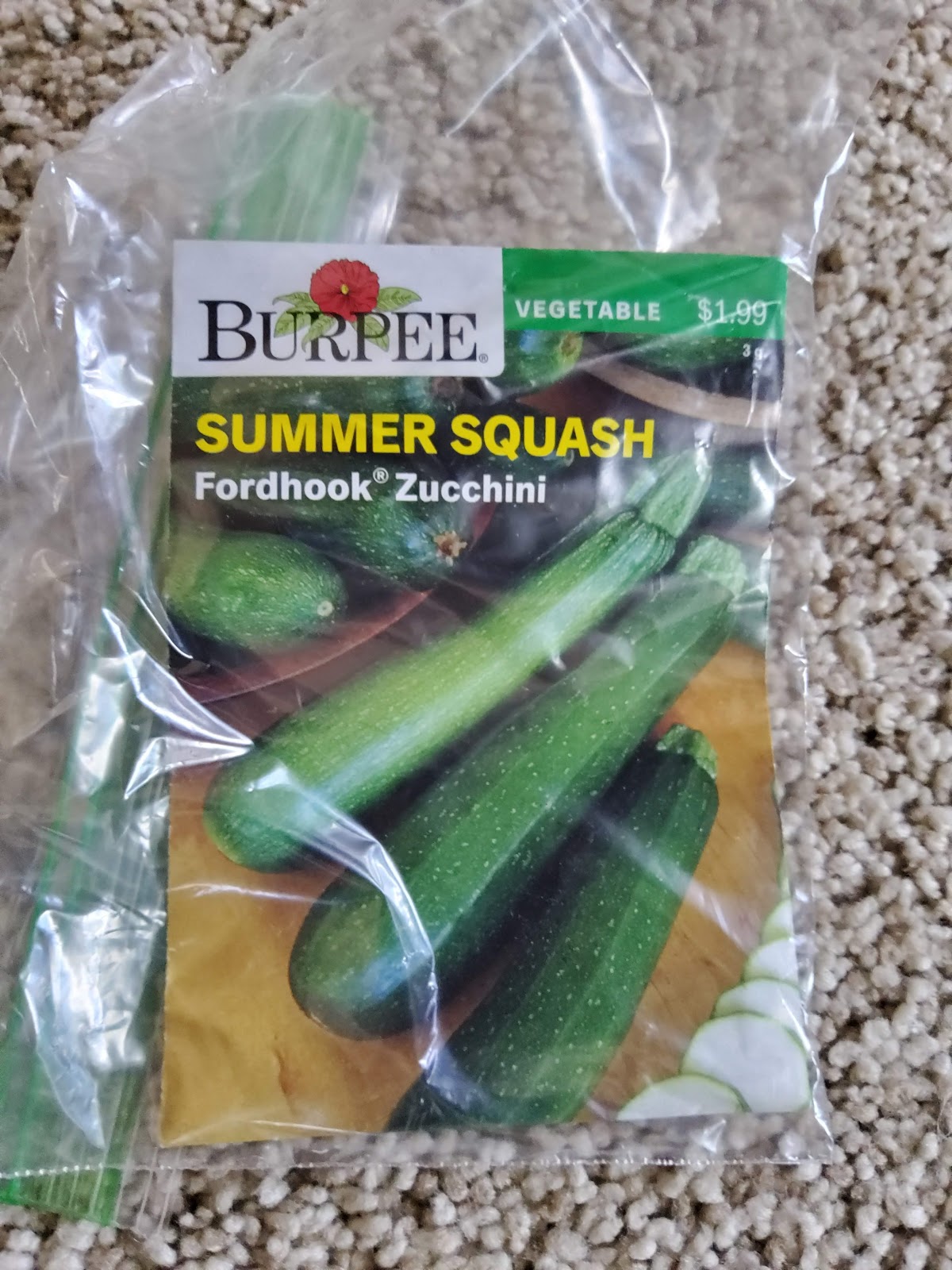
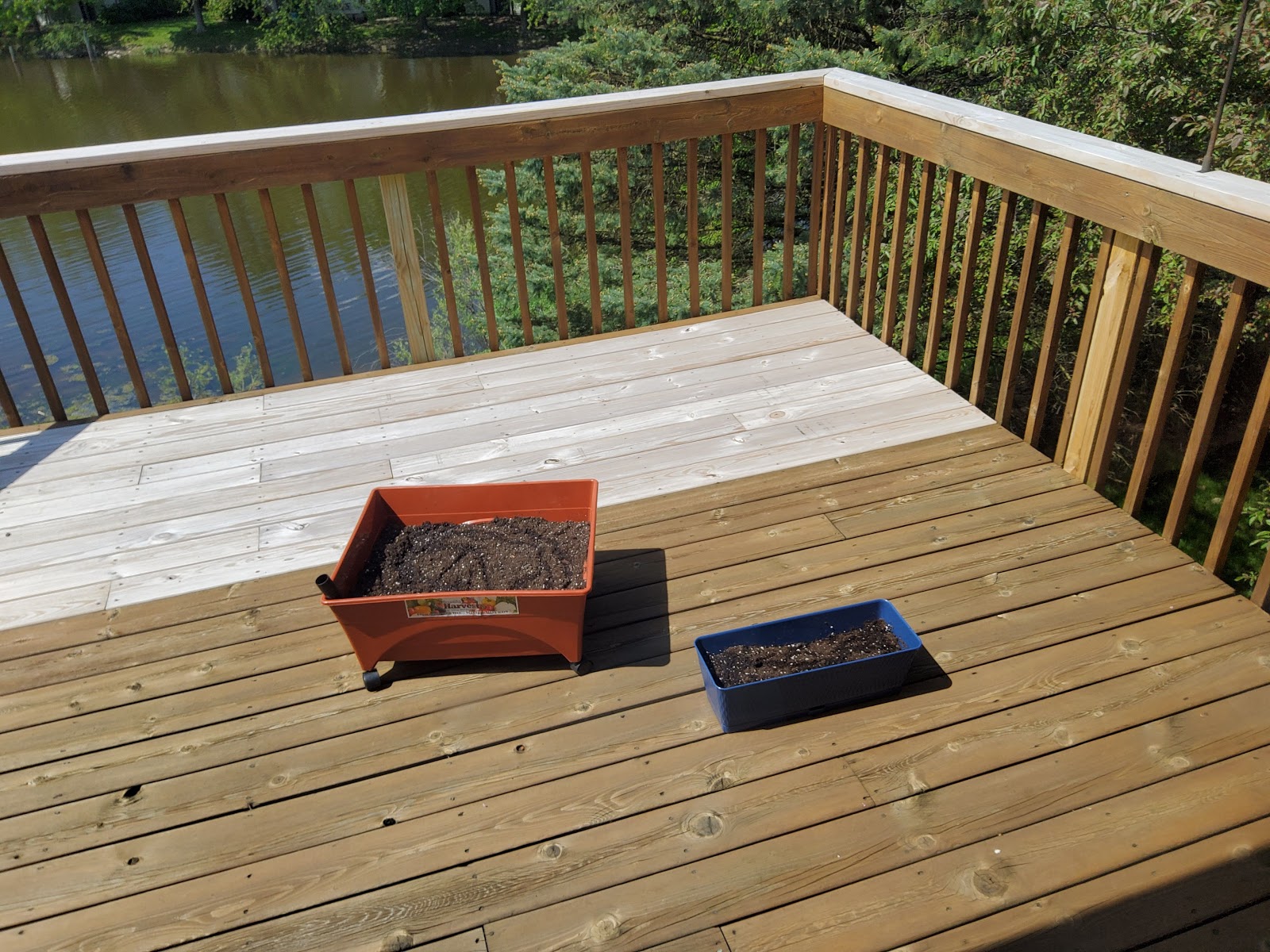
I tried my hand at gardening this year a bit.  It was something to do that made me feel a little more in control of my life, plus growing food is kind of cool.  I started with an idea, some containers, and some seeds…

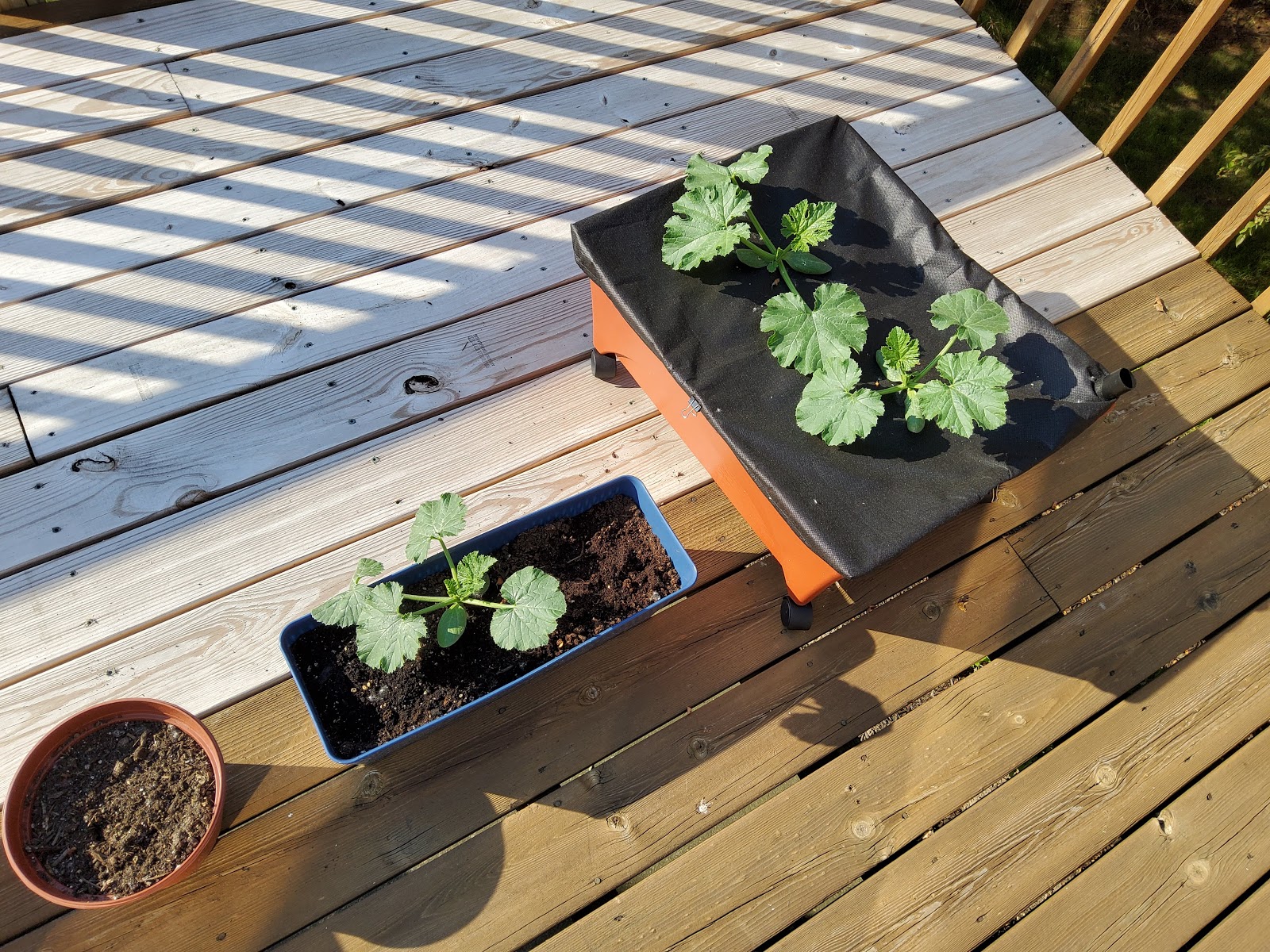
In all honesty, I planted late.  I could have easily planted a full month earlier, I just wasn\’t sold on the idea.  I try to think through ideas that have price tags over $20 or so, and this was significantly higher.  Still, it was kind of rewarding to see the zucchini sprout and grow…

And grow…

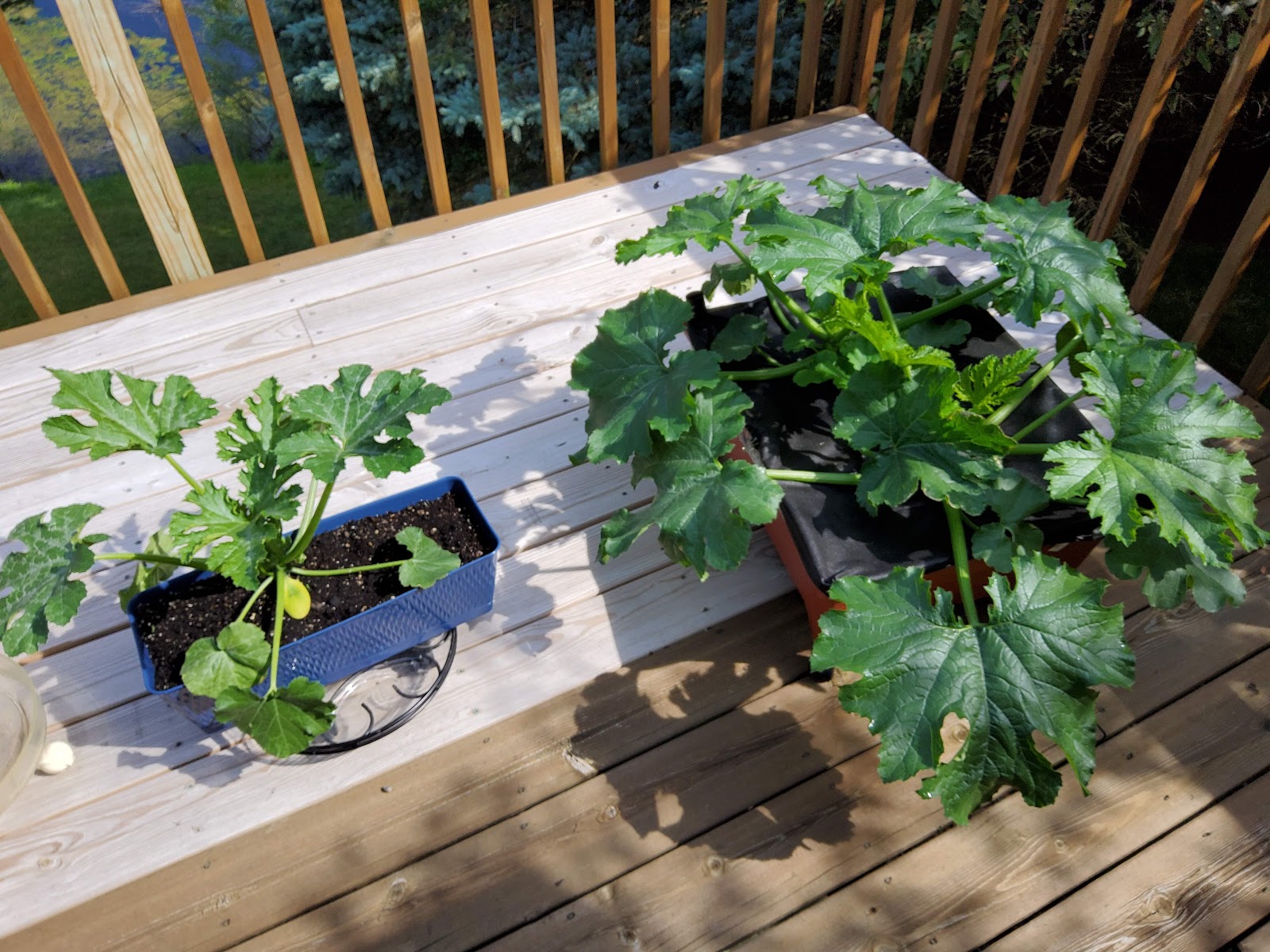
And just keep growing.

Then they flowered, and the harvest began.

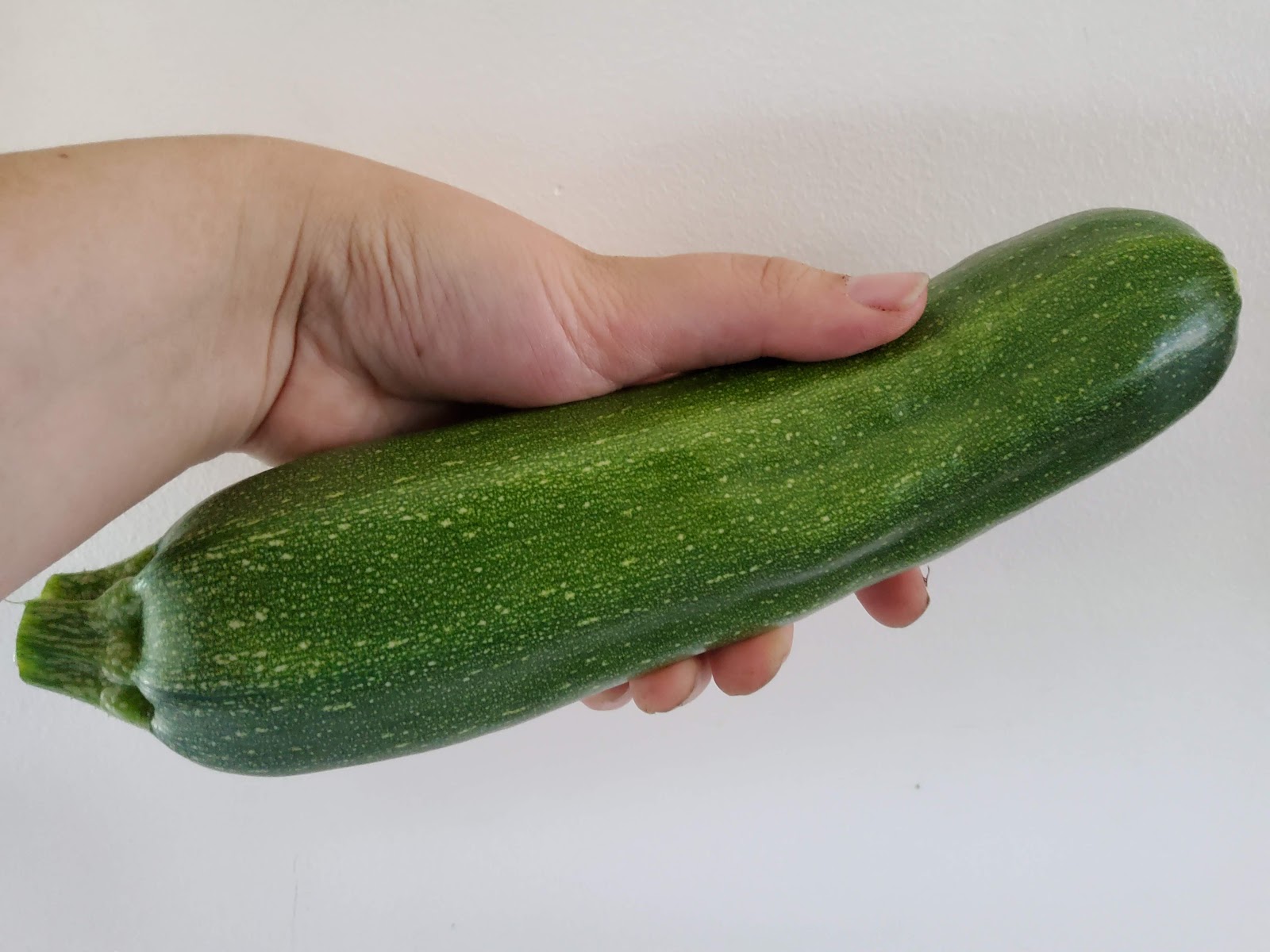
This was the first zucchini I harvested.  As you can see, it is not small.  I was pretty pleased.  We chopped it into pasta dishes.

But of course you never get just one zucchini, so…  They began to pile up, even though I made gifts of some.  Notably, due to the coronavirus, the zucchinis sold in the store are a quarter to half the size of the ones here.  Zucchini can grow to be the size of baseball bats (just ask my mother-in-law, who grows an army of zucchini every year), but the insides get very squishy and seedy so you’re better off harvesting them sooner.

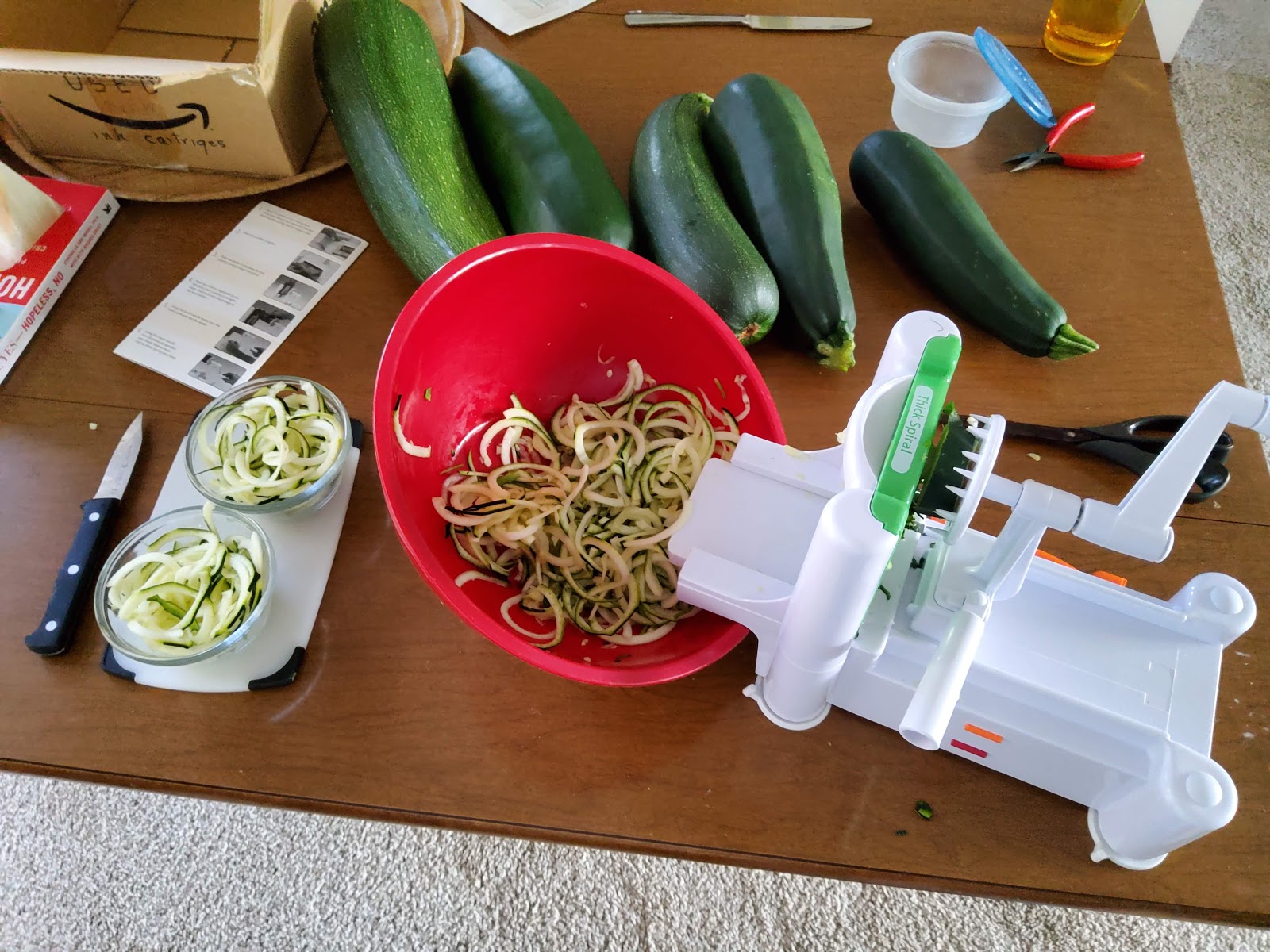
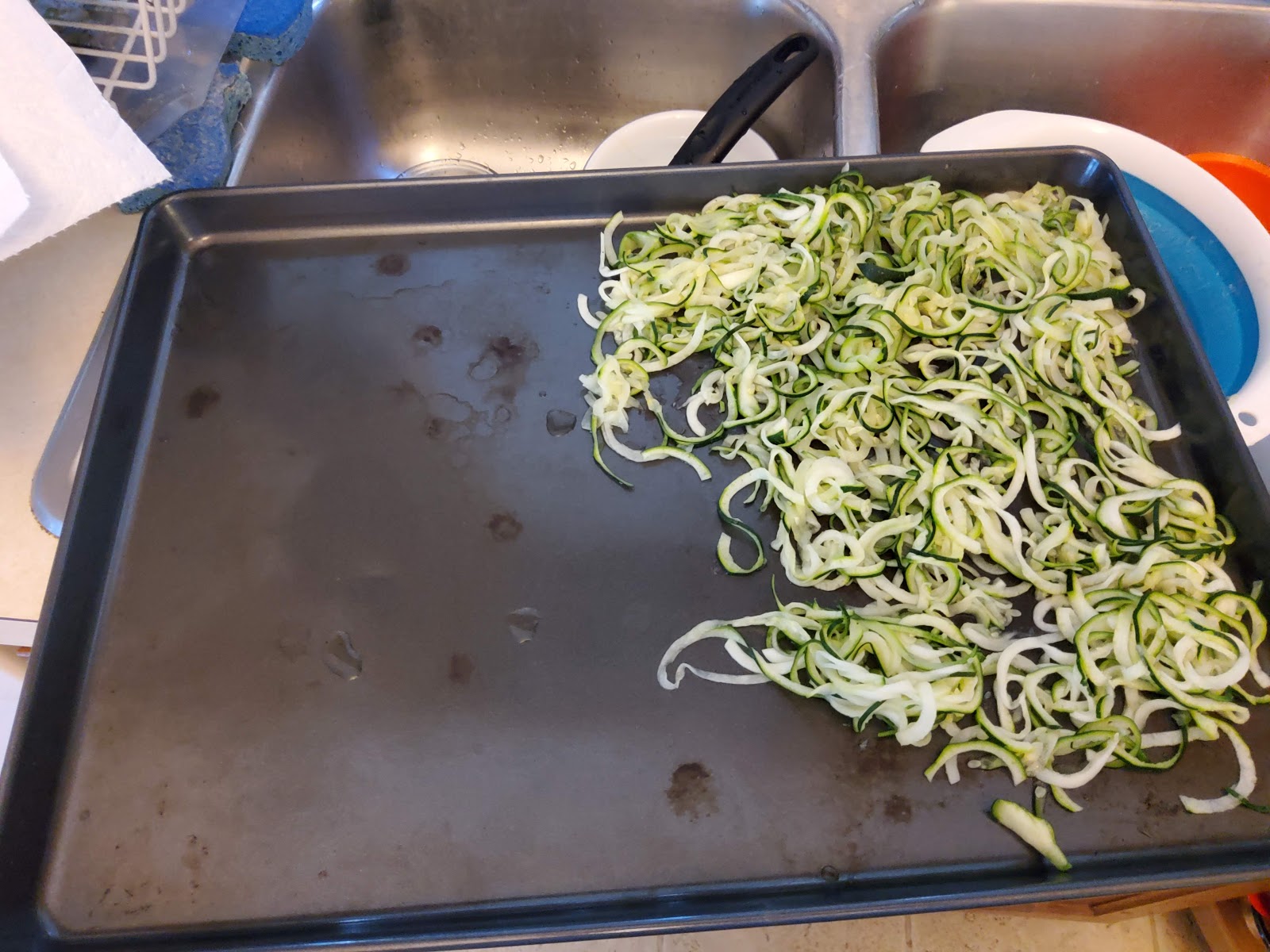
I bought a starter spiralizer to use on fresh zucchini, and to make tossing zucchini in pasta even easier.  You can use spiralizers on most vegetables, but I wanted to specifically try to freeze zucchini spirals.

There’s now a quart bag in the freezer for use whenever, plus more in the fridge.

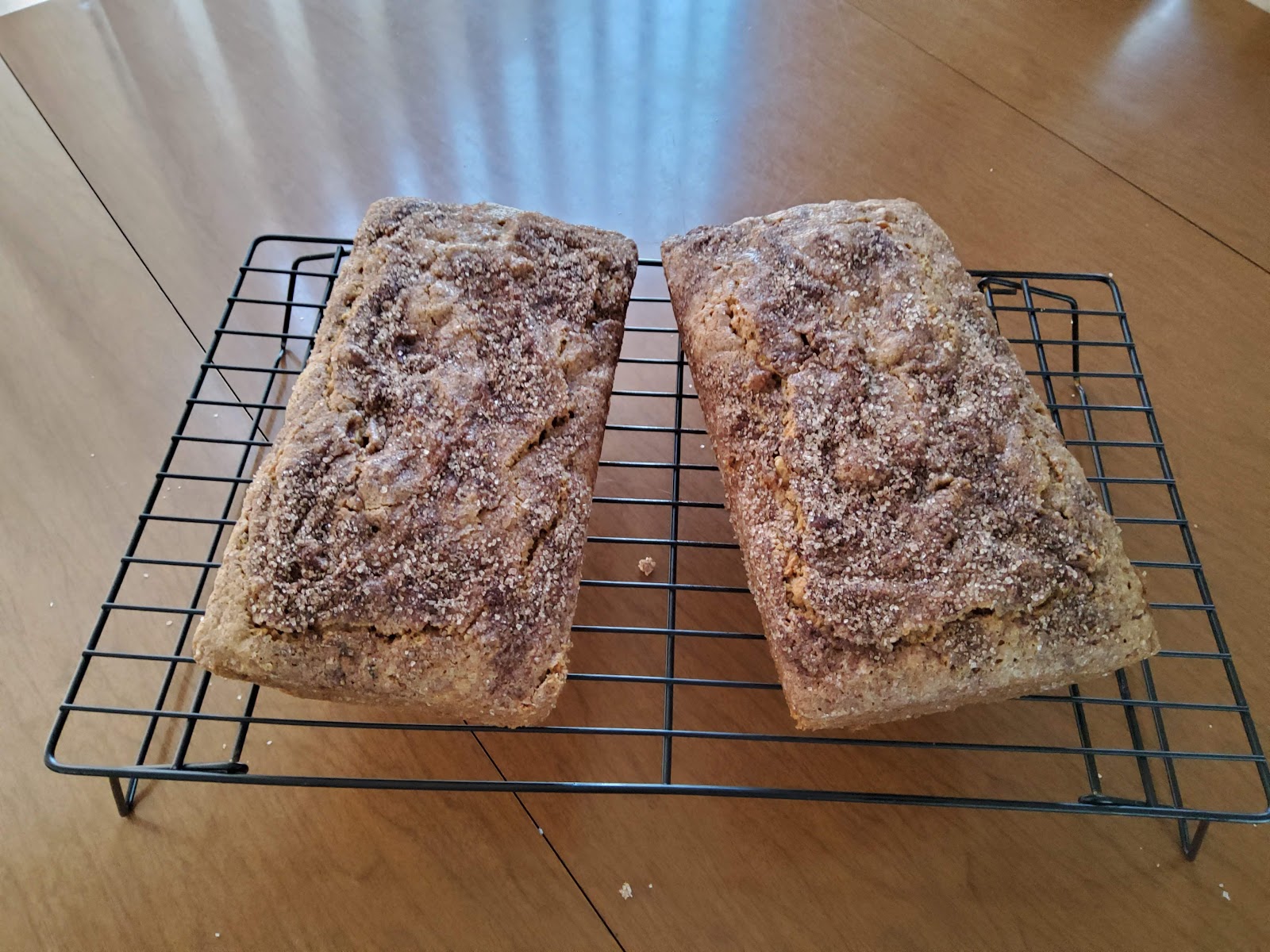
In addition to spiralizing zucchini, I also endeavored to make my spouse’s family zucchini bread recipe, which is notably a dessert.  That’s cinnamon sugar on the top.

At the time of this post, I’ve baked six of these loaves and made gifts of two.  My spouse has agitated for something like 10 loaves to keep in the freezer, because this zucchini bread is familiar, comfort food for him and he wants to have it around all the time now.  I’m not sure I’m up to making and freezing that many, but it’s… certainly possible with how much zucchini I’ve harvested.

Legwork and Life: Black Raspberries (and other rubus berries)

It\’s been a while, but I thought I\’d say \”hi\” and \”I\’m doing okay despite the virus and stay-at-home orders\” and also \”here\’s what I\’ve kept busy with.\”  There\’s actually a second post I should do on zucchini, but you\’ll forgive me if I keep it brief.

Black raspberry, or rubus occidentalis, is a wild growing bramble berry.  I\’ve enjoyed the flavor since I was quite young and had very little idea what I was putting in my mouth (but Mom said it was safe).  It\’s smaller than domestic blackberries or raspberries, but very flavorful.  Like blackberries and raspberries, the brambles have thorns, but with care, you can get a delicious snack without too much trouble.

I gathered small handfuls here and there when I was little, but didn\’t think much of it.  Last year, one of my friends got into foraging, and I rediscovered rubus occidentalis.  Together we found several very worthy foraging spots for these delicious berries…  so this year, these happened:

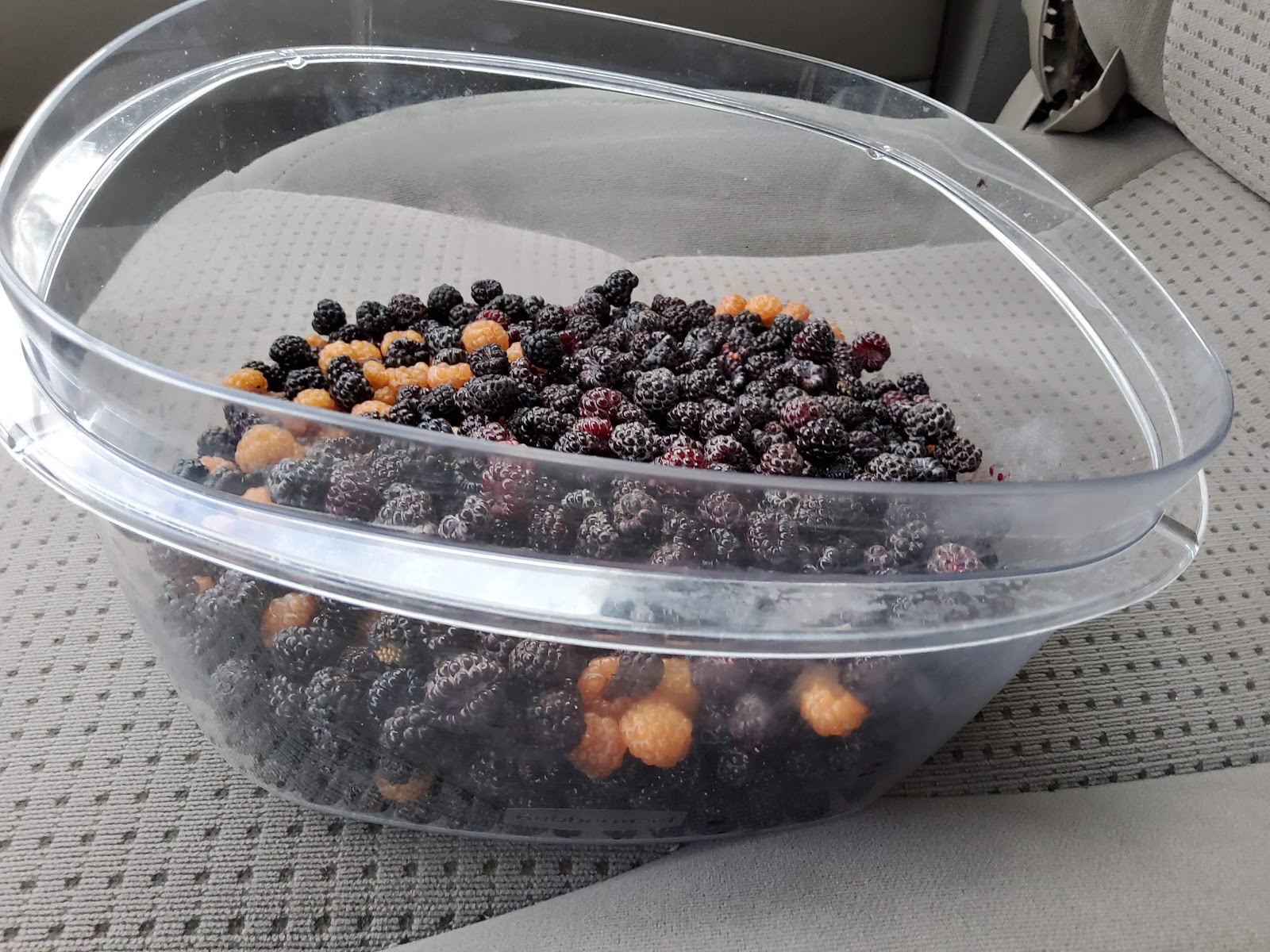
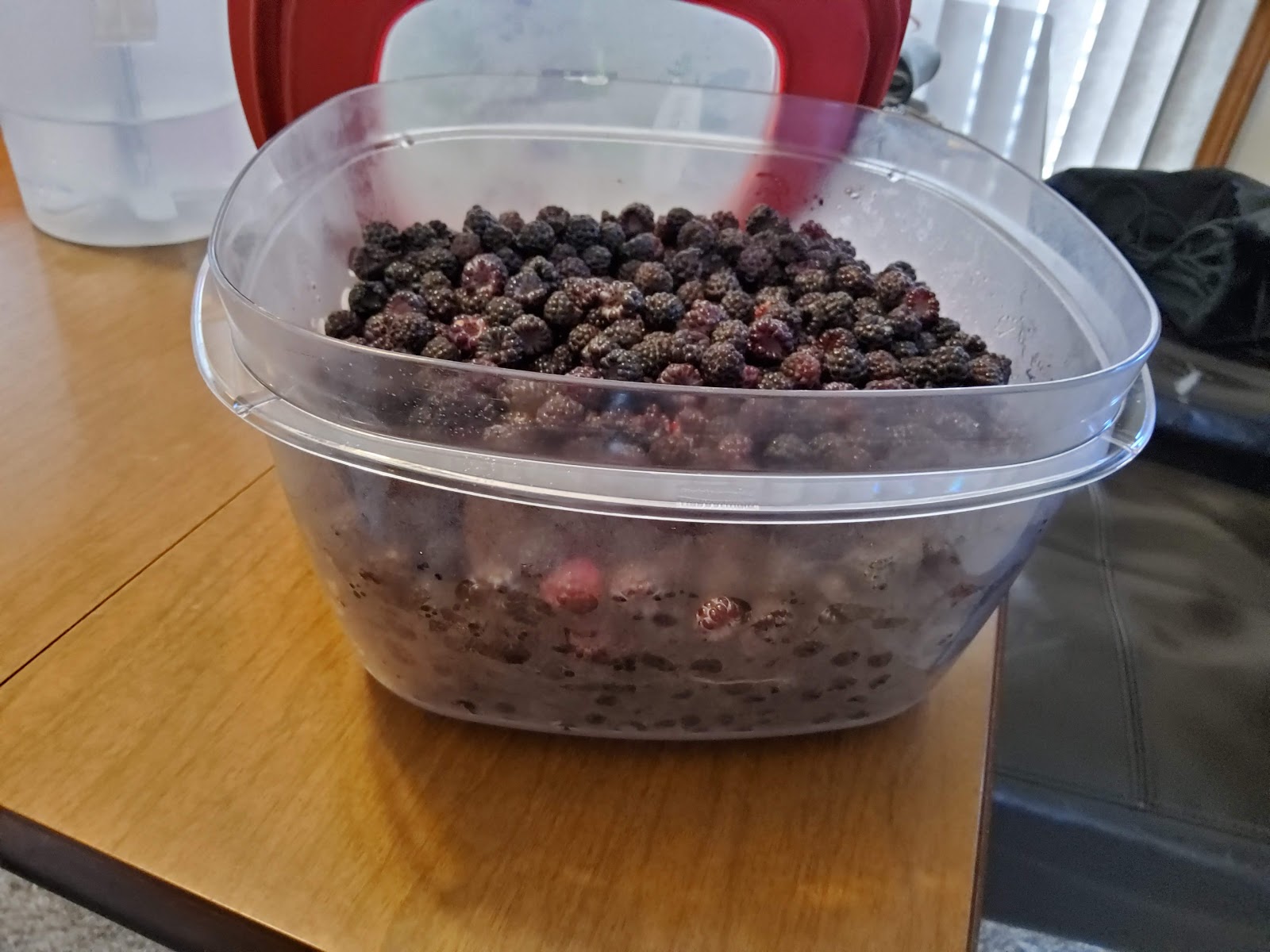
Those are the same size of container, but it\’s three separate trips.  Each container is about the size of a large saucepan… so now you have a better idea of how many berries you\’re looking at.  Suffice it to say, I spent a lot of hours outdoors. 

I think this is one of those things being autistic helps with.  When I wasn\’t berrying with my friend, I\’d put a playlist of podcasts on and just work my way through the area slowly but surely.  This allowed me to get into a state of hyperfocus: much of my mind could be occupied learning about mythology or trying to understand racial oppression in the US, and my hands and eyes were kept busy spotting and harvesting black raspberries.  Meanwhile I\’m breathing fresh air and getting exercise.  Overall, it was a very positive experience.  My main gripe is that I don\’t have enough time in the day when I\’m dedicating several hours to just berrying.

I only got ice cream after berrying once, but being able to throw fresh berries into my treat was really rewarding.  

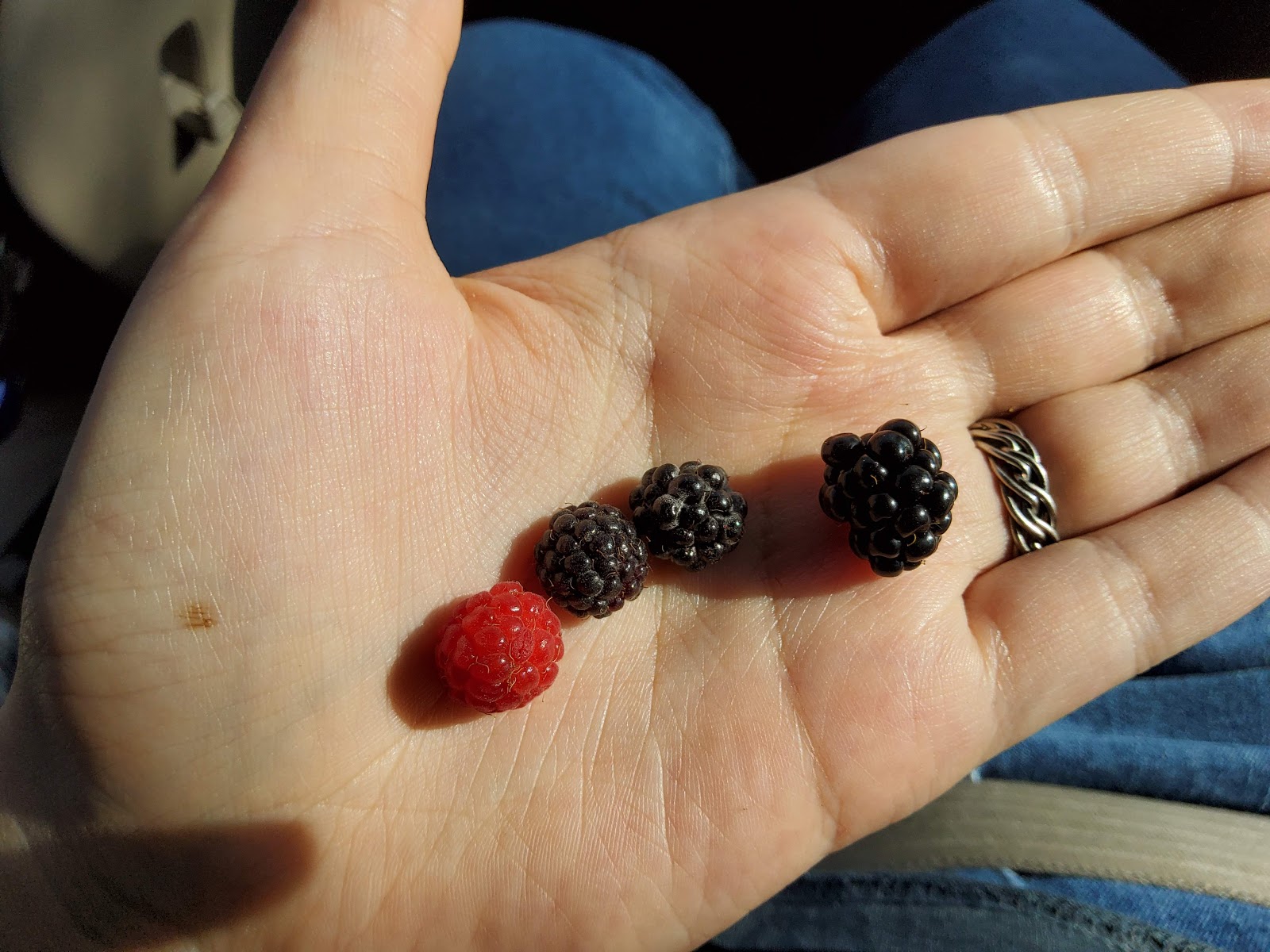
There are actually five kinds of berries in the pictures above.  While the bulk of my harvest was black raspberries, there were also wild red raspberries, wild blackberries, some kind of hybrid blackberry/black raspberry, and what I assume was someone\’s escaped specialized raspberry plants. 

All rubus berries are safe to eat, so I consumed a few of those odd pale yellowish berries.  They tasted exactly like raspberries.  (Please note, not all berries are rubus berries!  Do not eat random berries off plants without IDing them.)

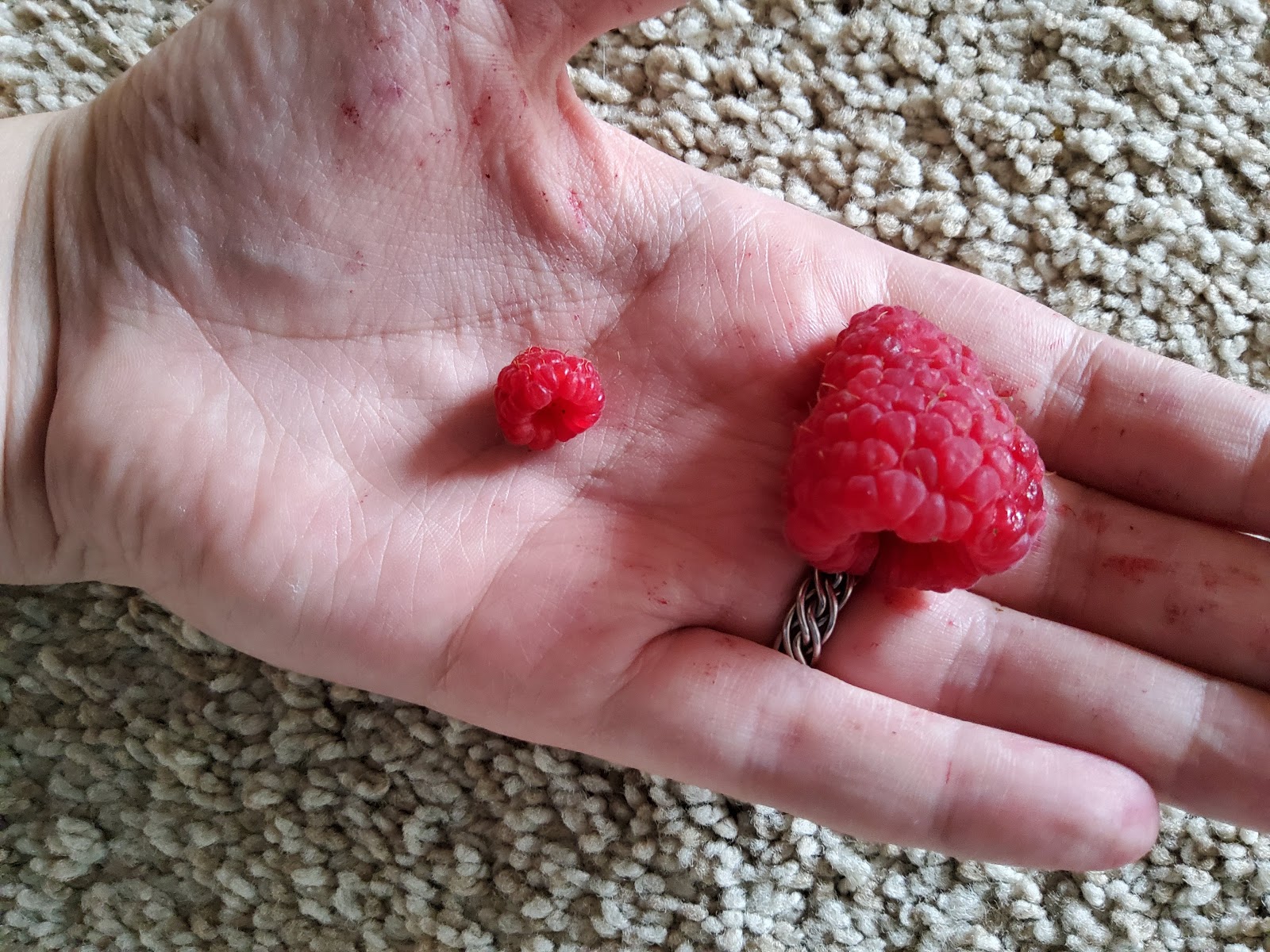
Because it personally amuses me: side by sides of domestic and wild berries.  Selective breeding at work!  I\’m pretty sure raspberries weren\’t the size of my whole knuckle joint when I was little.  Though I think they were still bigger than that wild raspberry in the picture.  Maybe twice the size?

Anyway, once picked, I obviously ate some of my harvest raw…  but I also wanted to cook with them.  Which mean washing them.  From container to soaking (and picking little bits of plant matter out) to drying again. 

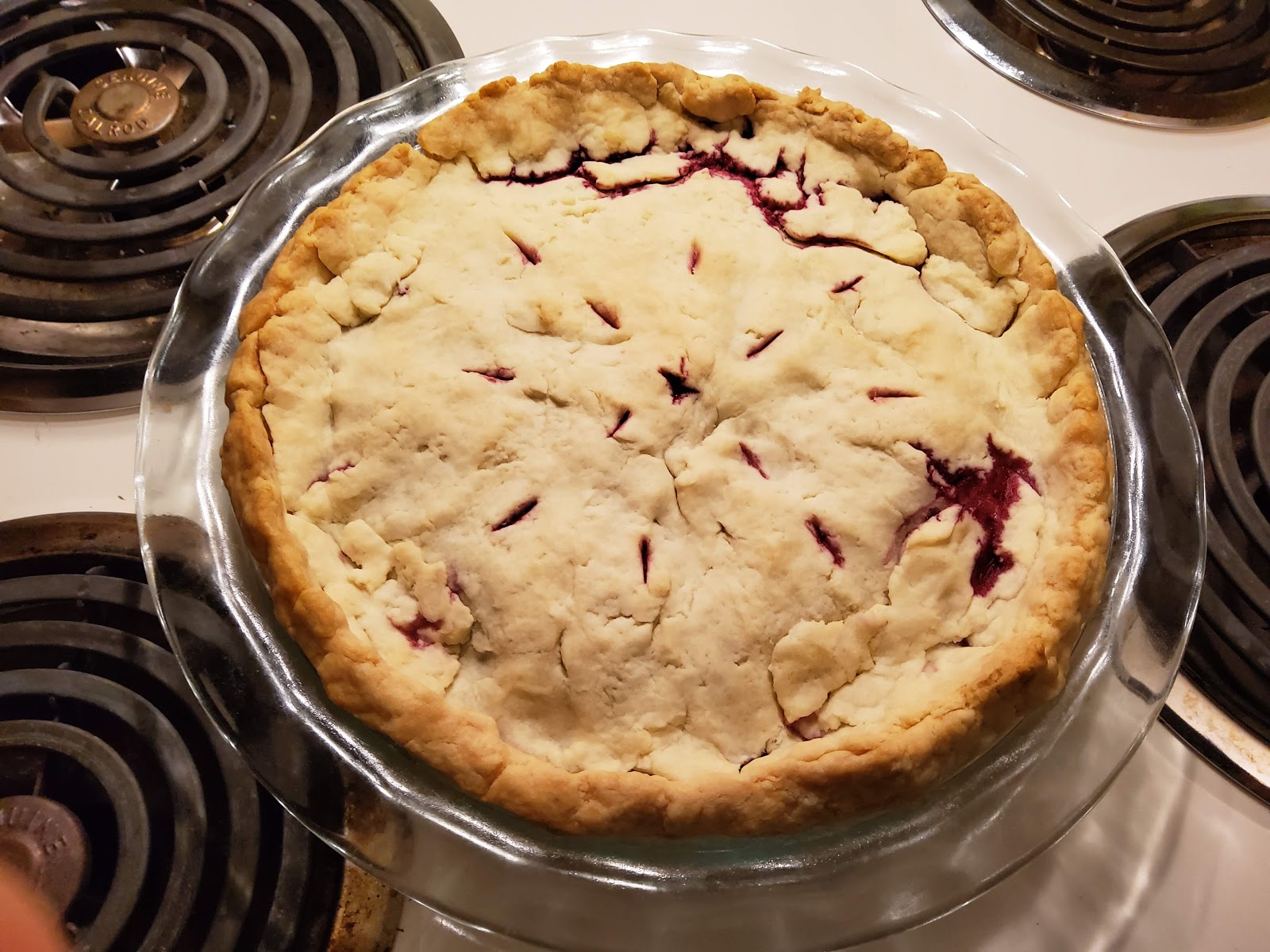
Pies were the obvious choice.  I actually made three, but gave the bulk of those pastries, including a half of a pie to my parents.  I also made a gluten-free pie for the first time, which would be more impressive if I hadn\’t used a baking mix.  The crust still came out poorly, because I couldn\’t use my gluten-infested rolling pin.  So I hand-shaped it and it was fine, but the crust cracked and filling leaked. There will be no awards for best in show, but they were still tasty at least.

There was also freezing them on trays…

And stuffing them into a gallon bag for later.  I may not be inclined to eat a whole gallon bag worth of black razzes (and friends) right now, but winter will likely be another story. 

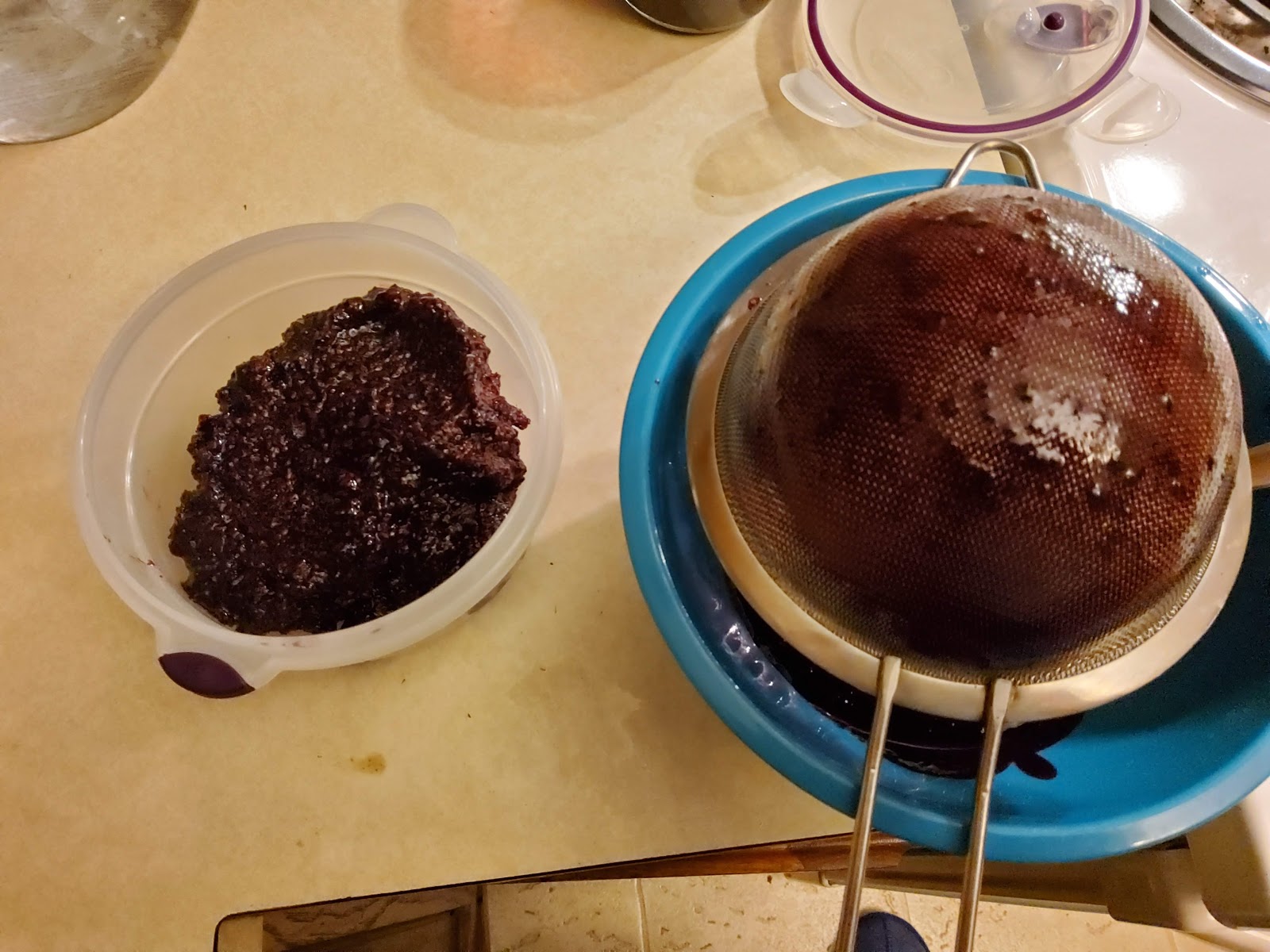
Finally, I also made syrup.  This involved simmering the berries with water, sugar, corn starch (to thicken it) and a bit of vanilla.  The berries have to be mashed pretty good to get most of their liquids out.

You can strain all the pulp out of it, but I left a small amount in, just for some texture.  Leave it all, and you don\’t have a syrup, you have… I guess jam, kinda.  Leave none and you practically have store syrup.  Leaving some reminds you where the flavor came from without making you chew your way through all the seeds.

It\’s pretty good on ice cream!

I\’ve made two batches of syrup now, and frozen most of it in ice cube form.  It\’ll last longer that way and can be thawed out when I want to serve it. 

The season is basically over now, which means I can stop braving the 90+ degree weather and focus a bit more on my plants and handling such things as dental appointments, getting an eye exam, and all that fun health maintenance stuff. 

It\’s been a very active summer for me, and I think I\’m better for it.  Hopefully, my harvest and cooking work will brighten the gloomy winter days ahead.