Merry Christmas

Hey y’all. Wanted to wish you all a merry Christmas or happy whatever holiday you celebrate. It’s been an eventful year. Here’s hoping 2022 is a more boring (in a good way) year. XD

I’m hopefully nearing the end of my 84 hour work weeks(that’s 12 hour days, 7 days a week, every week, for the whole bloody month) extravaganza. Blog posts should begin to happen more frequently again once that’s over and I have flex time again, but I don’t have a firm date on when that’ll be.

I still intend to tell y’all why I’ve been so quiet this latter half of the year, but there’s a good deal of rawness and some unresolved stuff yet. Going public about it too soon would not be kind to anyone. Not even me.

Regardless, I wish you all well. Warm, happy holidays if you celebrate them. Family, blood or found, around you. Peace, patience, faith, joy, and most especially love.

~Sarah (The Realistic Autistic)

Dear Mystery Gift-Giver

Hey y’all, this will be a bit unrelated to autism. This is the second time in as many years I’ve received a gift with zero identifying marks. Last year it was an Escala CD I’d really wanted, imported from the UK. I made efforts to track down who it was, but nobody took credit…

This year I’ve received a pair of bluetooth headphones, colored blue (which means somebody probably knows my favorite color). It’s a very kind gift, and will be helpful for my present job.

So hey, whoever you are? Thank you! I’d love to say thank you in person or directly in some other form, so I’ll be asking folks a bit and keeping an ear out. But if this year ends up like last year, I just wanted to make it known that A) I received this kind gift, and B) I appreciate your thoughtfulness! So I’m putting out this post in hopes that whoever it is will see it.

Thank you!

A Dream: What Might Be

group of people making toast

I had a dream. Last Saturday was my last known weekend for a while. I woke up at like 6am, because apparently my body loves a schedule even while it’s exhausted. But after eating a bit and lying in bed for a couple hours, I made it back to sleep.

I rarely dream, but I tend to pay attention when I do. Sometimes they’re sad. But not always.

Friends, Together

I dreamt of a group of friends, meeting at a restaurant I couldn’t name, but was cozy and dimly lit. Though a couple faces were familiar (Chris, my spouse, and Simon, a person I don’t count as a friend anymore due to his decisions…) most faces I didn’t recognize. Yet each friend (there were at least 7) was familiar and comfortable. We were gathered there to play a tabletop RP game like D&D together.

In this dream, I was DMing (running the game while the others played), and I’d only had minimal time to prepare because of my work. But it didn’t matter, because everyone was having so much fun. Laughter and jokes were frequent. The game got offtrack sometimes but it didn’t matter because everyone was enjoying the experience. There was some drama, but it didn’t bother me for some reason. Perhaps because I knew everyone liked each other and would just get over it. Or perhaps because I’d finally perfected the skill of disengaging and trusting people to be adults about resolving their issues.

A Valued Time

Regardless, we were playing some kind of high fantasy game, but it was a heavily homebrewed thing. I thought D&D, but thinking back on the class names, they’re not from any edition I’m aware of. We played until everyone got hungry, after which we ordered food. There was something for everyone at this restaurant, even me with my incredibly strict no-dairy, no inhumane meat, whole-foods-only thing.

As we were chattering and waiting for food, a couple of the players went off together and did some character development on the side. Because the world and those characters mattered to them and sparked their creativity. After they got back, I offered to run this game every week. I told everyone I had really limited time for prep, so they’d probably only get shallow things like “a quest to kill a particular monstrous pig because a nobleman wanted to eat its bacon.” Somehow, everyone was fine with that. Several jokes were sparked off the bacon idea, and everyone agreed they wanted to do this every week. I felt proud that I was going to be able to help provide this experience for everyone.

A Nation, Known

As we were settling down at the table, I noticed a TV in the corner was playing some kind of video. But instead of an advert for the latest probably-useless product, it was a short piece saluting and depicting immigrants in the US. And acknowledging their importance, and that all of us are descended of immigrants if you trace our ancestries back far enough.

At the beginning, it shunned and called out white supremacy for the lie that it is. But the focus of the movie was really more on the countries from which we all came. There were these little animations with country flags, representing people or populations from those countries. Eventually the shape of the US was formed in the flags of those other countries. This was accompanied by triumphant music.

With my friends, I watched this and put my hand over my heart, acknowledging patriotism and support of this country where differences are strength, and all people have value. I began waking up, but held onto this dream as long as I could. It was perfect and beautiful in ways I may never experience in this life, and I wanted to at least write it down.

What Might Be

This is not the country I live in. It’s the country I wish I lived in. As a nation, we began with immigrants from Europe butchering and displacing the First People nations that lived here. That behavior continues to this day. We begrudgingly allow immigrants into the country (sometimes), but often relegate them to jobs nobody else will take. Such is exactly the case in the job at the food factory, where I find the conditions utterly intolerable. But Spanish is spoken freely and fluently on the floor between most of the line workers. They’ve built a community of sorts, even as the job and the need for money eats away at their lives and souls.

I can’t honestly say whether any of the people in my D&D-esque friend group were black or brown. My focus was less on their faces and identities (save the surprise of the inclusion of one), and more on the atmosphere and interplay between them. For my own sake, I hope so. I didn’t have visible minority friends growing up, and I’m afraid it probably shows in how long it took me to recognize how bad things really are for black and brown people.

Likelihood

I can’t decide if this thing I dreamed is even possible in real life. My sense of reality suggests the first part, with the friends, might be. Maybe not those exact friends, but a friend group like it is a possible thing. It wouldn’t have to be a restaurant. Could be someone’s house, or a park, or whatever. Somewhere everyone could be comfortable.

As for the broader change in the US… well… it’s what I hope for. It’s what I advocate for, when I can. I vote for it when the option is there. I’m old enough to know change typically doesn’t happen quickly. In the dream I felt like I was in my 20s… But at the rate of change I’ve seen…. I’d almost guess I’d’ve had to be at least 60 years old. Maybe even 80.

I won’t rule out real life being able to deliver this dream, if I worked hard for it. I’d need to make friends actively, which is really hard now that I’m working full time. Learn how to improv, so I could run a game off-the-cuff like that. Both of these things are possible, but would have been quite difficult for me in the past.

Are they possible now? I’m not sure.

I also can’t shake the feeling that I’ve been shown a small portion of heaven. That perhaps this dream is not truly achievable in this life.

Wouldn’t it be wonderful if it was, though?

WYR: How to Talk to Disabled People

landscape near hidden kvernufoss waterfall in iceland

https://www.forbes.com/sites/andrewpulrang/2021/06/30/5-sensible-guidelines-for-interacting-with-disabled-people/

I’m really struggling this week, so please have this article passed to me by a fellow advocate.

Like the author, I find there’s a general discomfort people display when interacting with people with disabilities. The way we’re treated can vary wildly. The experience ranges from simply ignoring the person to treating them like a helpless baby that needs your help for everything.

You could consider me “fortunate” in that my disabilities are more or less invisible. Autism doesn’t typically have physical differences. Neither does depression, nor does an anxiety disorder. Effectively, I walk among you, camouflaged to seem “normal.” A person trained to recognize autistic traits might recognize my autism, based on how I communicate and move. But the average person has no idea.

That is not always a kindness. When I break the illusion of normalcy, the reaction is often very negative. Because the observer is surprised as well as upset, they don’t handle the situation gracefully. Hurt feelings and unkind words are common. For example, I once had an acquaintance over to my home in college. We talked for hours, and accidentally ran my mental and emotional energy out. As a result, I had to rather ungracefully have the acquaintance leave so I could recuperate. The suddenness really hurt her feelings, and that’s likely part of why we don’t talk any more.

In contrast, visible disabilities are ones you can see. An amputee, or someone in a mobility device or wheelchair, are obvious examples. There is typically no escape from the recognition. Additionally, some people decide, upon recognizing the disability, that the person must need their help. The implied assumption is that there’s no way the disabled person could handle the situation by themselves, or that it’s just too painful to watch them struggle. Either assumption is degrading.

The article doesn’t use these precise words, but the autism community has a quick way of saying some of the advice in this article: “Presume Competence.” Basically, make the assumption that the disabled person can handle things themself. A disability, visible or not, does not necessarily mean the person can’t navigate daily life. Many of us find workarounds for ourselves over time. They simply aren’t intuitive to a non-disabled person.

Autism as a Disability

This is a bit of a debate. I would personally argue that yes, it is. In part because of the structural ableism and prejudice in our culture, laws, and society. The way others treat us and the opportunities made available to us impact our ability to thrive and grow.

In short, the social model of disability applies here.

I don’t personally think that covers everything, though. Even if you fixed other peoples’ behavior and the systems we live and work in, some autistic people still have significant medical issues. I don’t even mean things like cerebral palsy or epilepsy, although those also exist.

No, what I mean is things like needing a dairy-free diet, or really high grade air purifiers. Our biological processes can be really, really fragile. If one tomato molds in my house, I begin falling into a depressive state. If I were to drink a glass of milk, I would be in a bad mood in 15 minutes. And the bad mood would last at least a day.

Some days I have trouble communicating my needs, emotions, and thoughts. Even days when I’m alone, that can be true.

So I don’t feel the social model of disability explains all those things. Even if I wish it did, so I could just blame others for my hardships.

I hope you find this article as helpful as I did. Even among disabled people, there’s a lot of variety. And I myself, as a person with invisible disabilities, would probably hesitate and make mistakes when talking to someone with visible disabilities. It’s okay to make mistakes. It’s good to educate yourself ahead of time to avoid making mistakes, though. And that’s why this article exists!

Legwork and Life: Full Time Work

Hey y’all. My life circumstances have changed pretty significantly in the last few months. I’m not yet ready to talk about the changes, though I will at some point when I feel able. Right now I’m spending most of my time handling the circumstances and trying to keep my head above water. That doesn’t lend itself well to introspection, loving communication, fairness, or maturity when discussing the changes and circumstances that led to them.

In the meantime, though, I’ve taken on a full time job. It’s not in a field I wanted, and sadly is not even slightly autism-related, but it will pay my bills and allow me to keep my living situation. But, it will cost me a significant amount of time. As such, this blog will be dropping down to once a week. I’ll keep making the Friday posts, which I feel are the most valuable to the average person.

When I started this blog, I wanted it to be a springboard into a career speaking and writing about autism. The fact is, if I’d started it ten years ago, that might have worked. These days you can’t just make quality content and expect people to find it. And that was my mistake. I don’t love marketing myself. I have a decidedly complex relationship with networking. And there are dozens, if not hundreds, of autistic adults out there trying to do the same thing.

I could argue that I’m probably one of the better-read ones, and as such deserve more limelight. But the fact is, I didn’t prioritize the advertising and marketing aspect of things, and didn’t get discovered by someone who really excels at such things. So (somewhat) predictably, I didn’t become popular.

I recognize the issue now, but unfortunately, I’m not in a position to capitalize on that knowledge. I still care very deeply about autism, advocacy, and education. That’s why I intend to continue this blog despite my impending lack of flex time and energy. But I have to be able to eat and have a roof over my head first.

You have my word that I’ll continue to provide thoughtful, useful, and valuable information about autism, life with autism, and other related subjects. My personal education on the subject is far from over. Autism is, after all, a spectrum. My experience is but one color in a brilliant rainbow of valid, fully human lives.

I hope you’ll continue on this journey with me. : )

RtR: Reading Facial Expressions is Contextual

Welcome back to Reading the Research! I trawl the Internet to find noteworthy research on autism and related subjects to share with you. Along the way I discuss the findings with bits from my own life, research, and observations.

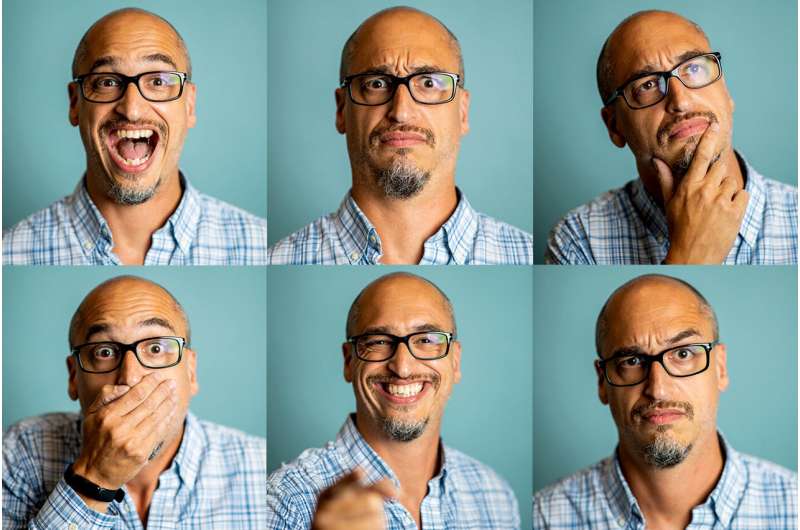
Today’s article explains, at least in part, why autistic people can have such trouble reading facial expressions. In Kindergarten or other early education, they teach that certain expressions mean certain things. Unfortunately, that is simply not how it works. The fact is, expressions are contextual. They don’t always mean the same thing.

Up to Interpretation

An exercise in reading facial expressions. One possibility: from top left to bottom right, surprised happiness, alarm, thoughtfulness, shock, a warm welcoming smile, and disbelief. But you might also read it feigned enthusiasm, fear, concentration, hiding a socially impolite smile/laughter, joy, and passing negative judgment. Note how many of these interpretations aren’t simple “happy, sad, angry” designations.

The fact is, expressions are complicated. People don’t simply swap between a palette of 8 basic expressions. If they did, most autistic people would have no issue learning those 8 expressions and then it would be metaphorical smooth sailing from then on.

No, the problem that instead of 8 basic expressions, there are dozens. They vary by the situation, by the person, and even by the culture. Because of all that variation, you have to use context to interpret any given expression. The better you understand the situation and know the person making the expression, the easier it is to figure out what the expression might mean.

Complicating matters, by the way, is how different autistic minds can be from neurotypical ones. When you go to interpret an expression in a situation, you’re performing predictive calculations using theory of mind. The more different you are from the person you’re trying to interpret, the harder that calculation is going to be.

Not Just Emotions

Adding to the difficulty of reading facial expressions, by the way? We’re taught that facial expressions are for conveying a person’s mood. This isn’t entirely wrong, but it’s not right either. Facial expressions also convey what we want people to see. Even if that’s a lie.

That’s actually something LENS and therapy have made possible for me. I can now lie with my face. That wasn’t possible before, which made things harder for me when it came to photography, formal occasions, interviews, and distant relatives. I can now choose to smile reasonably convincingly even if I’m feeling terrible. And often do, though my effectiveness at conveying the expression may be undermined by how bad I’m feeling.

(Pst! If you like seeing the latest autism-relevant research, visit my Twitter! There are links and comments on studies that were interesting, but didn’t get a whole Reading the Research article about them.)

A Superficial World

person walking on the road

I dreamt, this morning just before I woke, of a superficial world. A world where deep thought and meaning were prohibited. Interactions were always superficial. Small talk only. No exploration of a subject or how someone felt about it was permitted. And no one really cared or listened to the answers others gave. All smiles were fake, and all people making conversation were just biding time until it was their turn to speak.

You proceeded from one area to the next in this world, solving problems that didn’t matter. Like making your car finish slightly faster on a short race course than another car. But a clever solution, like modifying your car to be faster, wasn’t allowed. The only way you could solve the problem was by shoving your car forward a couple feet before the race started. All tasks were busywork with boring solutions.

When you finished at one place, you moved on to the next. All problems were small, piddling things that had to be solved, or you couldn’t move on. Yet there was no joy or satisfaction in solving them, because they were so meaningless. The solutions were never difficult, challenging, clever, or fun. They were just time consuming.

The people of this world flitted from one distraction to the next. Gossip and small time news were the distractions of choice. TV screens were everywhere, so no one would ever be out of the loop.

Sex was sometimes offered on the spot as a reward for finishing tasks, if the person was so inclined based on your appearance. But no actual intimacy, excitement, sharing, or closeness was ever involved in the experience. It was literally just a bland “you look good, and solved this problem, want to hop in bed?” deal.

Nothing truly changed in this world. The tasks you completed reset as you walked away, ready for the next person to pass by. The people in the world didn’t work towards a better life or future for themselves or their children. I couldn’t tell whether it was because they didn’t care, or they did but were too distracted by the TV, the gossip, and the news.

And in all this, there was me. Hiding in this superficial world, still thinking my deep thoughts and caring about the answers to small talk. Feeling my emotions. All alone.

I spent some time on a conveyer belt, pretending to be zoned out mindlessly as the system demanded. Like an object. But it was just a cover so I could live, think, and feel as myself, with all the depth I possess, without alarming anyone or being reported. Being on the conveyer belt was a refreshing experience, a break from the constant distractions of this superficial world. But it was also sad, because I was all alone.

Meaning

I don’t typically dream. I’m not honestly sure why. It may be that I simply don’t typically get enough quality sleep, or that my anxiety is normally too high to let me experience such things. All this to say that when I do dream, I try to pay attention to it.

In all honesty, this dream feels like an exaggerated version of reality. I dreamt of TVs, not smartphones and computer screens, but the never-ending stream of distracting information is a reality. There’s news services, there’s social media, there’s other people… You could spend a whole life doing nothing but looking out for yourself and barely experiencing other people in their depth and complexity. And I’m afraid some people do.

Generally speaking, I don’t think people really listen to or care about the answers to small talk. If they do, it’s because it’s a form of connection, rather than a legitimate exchange of ideas or information. I’ve always thought that was strange. If you ask about someone’s wife and kids, shouldn’t you care about the answer? If you care about that person, shouldn’t the wellbeing of their dog or kids or family matter to you? Or the weather. If it’s good weather, shouldn’t you take a moment to exult in the sunshine? And if it’s bad, isn’t it relevant to appreciate raincoats or air conditioning or roofs?

Maybe what was most depressing about this dream, to me, was how nothing changed. Nothing you did really mattered. Nothing you said to people made a lasting impression. Everything you did was automatically reset back to where it was before you arrived. Every day went by for people, the same as the one before.

The real world isn’t like that, but sometimes it really feels like it is. Police continue to brutalize marginalized humans, and no one holds them accountable. Corrupt people in power get richer and richer while most of us scramble to make ends meet. Systems become soulless machinery, uncaring of the people they’re meant to serve and the higher purpose for which they were created.

I know that in some ways, I’m very different than the people around me. It’s not just the autism. I spent a lot of my childhood without friends, and as a result, spent a lot of time thinking about the rules and systems we live in. Most people do that to some extent as teenagers, but not usually, it seems, with the intensity and specificity that I did. Maybe most people don’t have the kind of pattern-seeking brain I do. Or maybe having friends shifts your priorities to other things, at least some of the time. I don’t honestly know.

I wasn’t really sad in the dream. Or at least not the kind of sad where you cry. It was more the old lonely melancholy, the feeling I had in high school where I was just putting one foot in front of the other. Surviving as myself, but always, always alone.

This dream, it wasn’t real… but like a caricature represents a person, it feels to me like the dream represented reality. I don’t want to live in that kind of superficial world. But I don’t know how to reverse the patterns we find ourselves trapped in.


WYR: Soundproofing for Autism Sound Sensitivity

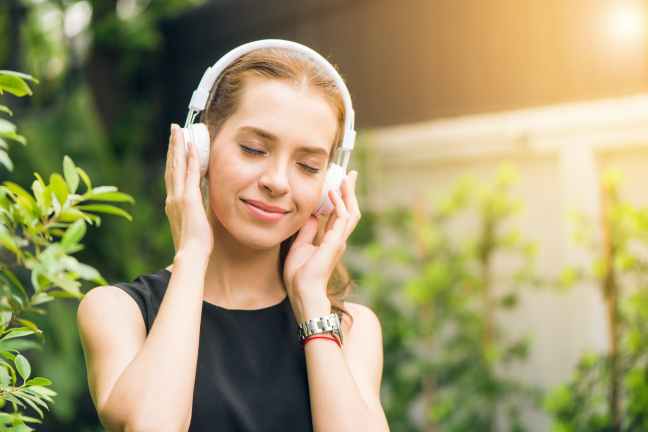
woman wearing black sleeveless dress holding white headphone at daytime

I can’t begin to stress how important soundproofing is for my daily wellbeing. Sound sensitivity in autism is a common experience. I’ve talked about sound sensitivity before in the context of noise-canceling headphones. As much as I love my headphones, it’s simply not feasible to wear them everywhere.

So today, thanks to Autistic Science Person, we get to talk about soundproofing. Or sound dampening, since getting a room to truly be silent is quite a feat. And not necessarily good for the people inside anyway. (Imagine always being able to hear your own heart beat and the blood rushing through your veins, and it might become a bit clearer as to why perfect soundproofing is not ideal…)

Sensory sensitivity is an issue I personally deal with every day. It mostly affects my hearing, and it works like this:

For a full 60 seconds, stop everything you’re doing. Listen to your environment. Are there people talking? Fans running? Appliances humming? Pets moving around the house? Geese, songbirds, or airplanes flying overhead? Is a TV on somewhere? Really strain to listen and identify every thing that’s making noise. If you’re able, write down every source of noise you can hear in that minute, no matter how quiet or irrelevant it seems.

Now, how much of that noise were you aware of before doing this exercise?

If your brain and hearing are typical, you most likely were only aware of the loudest thing or two in your area, unless it was relevant to you personally. Your brain, you see, filters out noise it considers irrelevant. This is generally a good thing. It keeps you from having to pay attention to stuff that’s not important. It’s a mental trick to save energy.

People with sound sensitivity don’t have that filter. Or if they do, it doesn’t function as well as it should. Because of that, we can easily become overwhelmed by loud noises or noisy environments.

Noise-canceling headphones and earplugs are the first and most obvious line of defense for autism sound sensitivity, but as Autistic Science Person says, they’re not always an option. Also, having a safe space to retreat to when overstimulated is incredibly important for my wellbeing.

My current home is fairly well soundproofed against noises from the neighbor we share a wall with. But there’s only so much you can do when the house is directly on the typical path to the airport. I honestly don’t mind the airplanes, for the most part. In my first apartment, I also didn’t mind the trains after I got used to them. These sounds are somewhat predictable and I can immediately identify them, which helps me manage always hearing them.

When I lived in apartment buildings, it was significantly worse. The soundproofing was minimal, especially when it came to the hallway. Doors slammed all the time. People yelled in the hallways. The buzzer to open the front door would go off at random intervals, and sometimes people would just buzz random apartments until someone let them in. Sometimes you could hear disagreements in other apartments.

I don’t miss all that extra noise. If I do the listening exercise I had you do before, I hear the air purifier fan, the hum of the HVAC, the hum of my computer, and that’s about it. Anything else, I choose to add to my environment. I’m presently bird-sitting for some friends, so that’s adding to my ambient noise. I also have a livestream (think like live TV) going to help make the bird comfortable. But I have it on very quietly so I can ignore it better.

I would still really like to have a space that’s decked out with acoustic foam, as Autistic Science Person suggests. Maybe, in time, I could rig the bedroom with that foam or with egg cartons or whatever the less expensive options are. Or create a quiet sensory box, like one autism dad did for his kid.

I love Autistic Science Person’s recommendations in their post. They have direct links to good sources for acoustic-dampening foam and guides for how to install it. They’ve also put together a Ko-Fi for families that really can’t afford to buy foam or have it installed.

I’ve personally bookmarked this post about managing sound sensitivity with autism, since I’ll want it for later. I hope you find it useful too.

WYR: Conflicts of Interest in Autism Research

woman holding a magnifying glass

I ran across an article from Ann Memmott recently about conflicts of interest in autism research. The article proper is worth your read, and so is the research paper she was responding to, but I also wanted to give a bit of background in what she’s talking about.

Her main point is that a lot of autism research has been done by people that have no right to be doing it. Most notably, a lot of Applied Behavioral Analysis professionals have produced most of the research on the subject. Obviously they’re going to want to say, “Yes, ABA works!” If they don’t, they lose their jobs. (Alas, this is not the only problem with ABA…)

A more typical example of this kind of thing would be a teacher being asked to grade her daughter’s homework. Or a judge presiding over the trial of a family member or close friend. A doctor who owns stock in a pharmaceutical company taking a job to test their products. In each case, someone with an obvious bias accepts the role of an impartial judge.

Poisoning the Well

In science, we call this a conflict of interest. Because it produces inaccurate, unfair, and untrustworthy data, educators always teach avoidance of conflicts of interest. Authors should be honest about their conflicts of interest. As a failsafe, publishers should keep them honest by doing their homework on each author. Presently, my research suggests publishers don’t do that homework much, if at all.

Left unchecked, the compromised researchers may publish data they made up. The funders of the research can push for types of research that’s likely to show the results they want. Or, more subtly, companies can demand a certain type of analysis and interpretation of the research results. Finally, companies can try to suppress research results they don’t like. In all cases, greed and ego twists or hides the truth.

It’s worth noting that even if the researcher chooses not to act on their biases, it still counts as a conflict of interest. The issue is that they have that chance, and may unconsciously act on it. Even as they do their best not to in service of the truth.

A single false study can influence future research. The way science works, researchers pick topics to study based on the results of previous research. So if product A is effective according to a false study, future research teams (who may or may not be corrupt) may choose to study variations of Product A. We hope that the future teams’ data will show the truth, but that doesn’t always happen. The future teams may simply conclude that Variation 1 of Product A was not as effective as the original Product A.

This is how whole streams of research theory can be based in lies, and turn out to be pointless. This is, Ann Memmott says, exactly what has been happening in autism research.

Hypothetically

When I served on the DOD’s Autism Research Program as a community reviewer, each application had a section to disclose conflicts of interest. We had every possible option to avoid committing the offense, right down to, “I suddenly realized I have a conflict of interest, weeks after I’ve read, rated, and reviewed this paper.” The organizers were very studious about sending identified conflicts of interest out of the room before each application.

The thing is, I don’t know whether any research was done into the reviewers to be sure they were honest. I never had any conflicts, because I’m not a member of any institution that does research. Beyond my typical existing biases, like “please don’t commit eugenics and erase autistic people from humanity,” I don’t have the connections and relationships with such entities. I’d certainly like to think the government did its due diligence and made certain no conflicts of interest affected the reviewers, but I truly don’t know.

I strongly suspect the Department of Defense wouldn’t publicize a conflict of interest in their scientific reviewers. It would reflect badly on the organization. They would probably blacklist the lying scientist and not hire them again, but not publicly denounce the offender. If they did publicly denounce the scientist, that scientist’s reputation would be ruined, and their career would be over. If the conflict of interest was accidental, that’s a good scientist’s life and career ruined forever. Instead, the organization would likely hire a replacement and move on.

Generalizing

It’s not much of a stretch to assume prestigious publications might take similar courses of action. In the current culture, people seem to distrust organizations that admit they made a mistake. Rather than risk their own reputations, a publication might decide to simply let the conflict of interest slide. Assuming, of course, they even noticed it in the first place.

Also, the number of research articles and proposals submitted for publication has risen over time. It costs money and time to hire people to look into every potential author. In the industry, the norm appears to be simply taking the potential authors at their word. In high profile cases, a publisher might retract a published study and condemn the author. But this doesn’t happen often.

Moving Forward

Honestly, I’d like to see jobs specifically hunting for conflicts of interest in the publishing industry. Clearly, we cannot rely solely on the honesty of researchers. It would be wise to create an additional check on the publication process.

As I understand it, this problem is not specific to the autism research community. Pharmaceutical research suffers from a plague of corruption exactly like this. Which means many possible jobs. These jobs could be remote, requiring only an Internet connection and a knowledge of how to find people’s publishing history, resumes/CVs, etc.

Honestly, this is the sort of job I might like doing. It’s a job detail-oriented autistic people overall might thrive in.

WYR: Elon Musk Showboats Autism

Why Elon Musk Being Autistic Isn’t That Great For Autistic People

In case you hadn’t already heard: Elon Musk, CEO of Tesla has proclaimed himself autistic on Saturday Night Live.

I have to agree with the author here about how problematic Musk is as a person, and the impact of his showboating. We in the autism community certainly can’t make Musk somehow not autistic. Kind of like how you don’t get to choose your family. But we certainly don’t have to welcome him. I honestly see no benefit at all to any of us from his announcement. He’s an awful human being who treats his employees like dirt. He has the money and influence to make life better for everyone, but he chooses to use it to send a car into space.

Personally, I see this announcement as just another disconnected out-of-touch ultra-rich person move to play for sympathy and humanity from the general public. Through the hard work of many other, far less privileged people, autism has become somewhat more mainstream. It’s begun to be more okay to identify publicly as autistic. Even, in some very questionable circles, trendy.

What better way to hop on the trend and pretend to be just like everyone else than to claim the identity? Y’know, now that others have suffered and slaved so that it’s safer to do so.

Avoiding Responsibility

Another point here is that Musk seems to be employing a very unacceptable mentality. Y’know, the “I have a condition and therefore I don’t need to take responsibility and you should automatically forgive me if I say or do something harmful” thing. This is a mentality I see occasionally in all sorts of conditions, from autism to mental illness. Sometimes it’s an overreaction to the feeling or reality of society telling us absolutely everything we do is wrong. Sometimes it’s simply that it’s easier to avoid responsibility so we don’t have to own up to our faults.

Regardless of the reason, it’s wrong. Society is wrong when it tells us we have to be what it wants us to be, rather than ourselves. Autistic people are people. We deserve to be ourselves and to thrive.

But everyone who responds to society’s demands with “screw you, I won’t take responsibility for anything” is also wrong. Just because we’re different from others doesn’t mean they have to drop everything for us. As we expect them to work to communicate with us, we have to do the same in return.

A Better Way

The correct path, in my opinion, is the one where both sides recognize that supporting differences and diversity is a necessary part of life. We all take responsibility for our actions, earnestly listen to and learn from each other.

The onus, or the greater share of this burden, though, falls on those with power. It doesn’t matter whether that’s money (such as Musk and Gates), or influence (politicians and leaders), or simply being the majority the systems are meant to serve (neurotypical people).

It often seems to me like power blinds, deafens, and makes idiots of those who have it. CEOs are notoriously horrible people. Rich people are almost invariably clueless about the worth of a dollar, and what it’s like to live from paycheck to paycheck. And like clockwork, priests and pastors seem to turn up violating the very rules they preach.

I guess Elon Musk and other rich white tech guys show us pretty clearly: autism isn’t the cure to the corruption of power.