WYR: Elon Musk Showboats Autism

Why Elon Musk Being Autistic Isn’t That Great For Autistic People

In case you hadn’t already heard: Elon Musk, CEO of Tesla has proclaimed himself autistic on Saturday Night Live.

I have to agree with the author here about how problematic Musk is as a person, and the impact of his showboating. We in the autism community certainly can’t make Musk somehow not autistic. Kind of like how you don’t get to choose your family. But we certainly don’t have to welcome him. I honestly see no benefit at all to any of us from his announcement. He’s an awful human being who treats his employees like dirt. He has the money and influence to make life better for everyone, but he chooses to use it to send a car into space.

Personally, I see this announcement as just another disconnected out-of-touch ultra-rich person move to play for sympathy and humanity from the general public. Through the hard work of many other, far less privileged people, autism has become somewhat more mainstream. It’s begun to be more okay to identify publicly as autistic. Even, in some very questionable circles, trendy.

What better way to hop on the trend and pretend to be just like everyone else than to claim the identity? Y’know, now that others have suffered and slaved so that it’s safer to do so.

Avoiding Responsibility

Another point here is that Musk seems to be employing a very unacceptable mentality. Y’know, the “I have a condition and therefore I don’t need to take responsibility and you should automatically forgive me if I say or do something harmful” thing. This is a mentality I see occasionally in all sorts of conditions, from autism to mental illness. Sometimes it’s an overreaction to the feeling or reality of society telling us absolutely everything we do is wrong. Sometimes it’s simply that it’s easier to avoid responsibility so we don’t have to own up to our faults.

Regardless of the reason, it’s wrong. Society is wrong when it tells us we have to be what it wants us to be, rather than ourselves. Autistic people are people. We deserve to be ourselves and to thrive.

But everyone who responds to society’s demands with “screw you, I won’t take responsibility for anything” is also wrong. Just because we’re different from others doesn’t mean they have to drop everything for us. As we expect them to work to communicate with us, we have to do the same in return.

A Better Way

The correct path, in my opinion, is the one where both sides recognize that supporting differences and diversity is a necessary part of life. We all take responsibility for our actions, earnestly listen to and learn from each other.

The onus, or the greater share of this burden, though, falls on those with power. It doesn’t matter whether that’s money (such as Musk and Gates), or influence (politicians and leaders), or simply being the majority the systems are meant to serve (neurotypical people).

It often seems to me like power blinds, deafens, and makes idiots of those who have it. CEOs are notoriously horrible people. Rich people are almost invariably clueless about the worth of a dollar, and what it’s like to live from paycheck to paycheck. And like clockwork, priests and pastors seem to turn up violating the very rules they preach.

I guess Elon Musk and other rich white tech guys show us pretty clearly: autism isn’t the cure to the corruption of power.

Reading the Research: Reading Emotions

Welcome back to Reading the Research! I trawl the Internet to find noteworthy research on autism and related subjects to share with you. Along the way I discuss the findings with bits from my own life, research, and observations.

Today’s article (full version here) points out a possible fundamental difference between autistic and neurotypical people. Essentially, they had people, autistic and neurotypical, identify emotions on animated .gif-like images. Autistic people weren’t as accurate about reading emotions, especially anger.

Reading emotions challenge: what does the pictured expression say to you?  A young white woman with long blond hair looks at the camera.
What does this expression say to you? Reading emotions isn’t my strong point. I honestly couldn’t tell you without more context. Can you tell what she’s feeling? Photo by Michelle Leman.
A (Neuro)Typical Misunderstanding

Now, typically when something like this is identified, the majority look around at everyone and says, “Well, I get this, and you get this, it’s just these people that don’t get this. Therefore something must be wrong with them.” So props to Connor Keating of University of Birmingham, because instead of that very old ableist song and dance, he suggested that autistic people may simply use our facial expressions differently.

And if that’s the case, then it’s really less “autistic people are bad at reading emotions” and more “autistic people are just different.” It becomes another point in which neurotypical and autistic people must learn to support each other. This is much preferable to yet another one-sided “autistic people just have to be like us” conclusion.

I can actually personally verify Keating’s idea. At some point between “I’m kind of upset” and “I’m about to melt down” my face stops expressing emotions. My spouse has read this as “calm, everything must be okay” in the past. He’s making efforts to recognize that’s not accurate, but it’s hard for him.

Alexithymia and Graphing Emotions

Mixing in alexithymia just makes things harder. We learn our words for emotions from our parents and peers. There’s nothing innate about it. Autistic people can have a really hard time putting words to emotions, especially since we often feel things very strongly. What the science is telling us now is that emotions are actually graphable. You have a spectrum of wound up <–> calm, and a spectrum of good <—> bad. That’s all there is to it.

Anger graphs to wound up-bad, for example. Sadness graphs to calm-bad. The tricky one for me is anxiety versus excitement. The only difference is how you feel about the situation. Physiologically, they’re exactly the same: wound-up. I’m prone to seeing the worst in things, so I experience a lot of anxiety. But perhaps I could experience excitement more, if I worked on it a lot.

Regardless, I’m really glad to see research like this. Researchers like Keating give me hope that one day neurotypical and neurodiverse will find it much easier to communicate. Perhaps it will never be easy, but research like this can turn into guides and training, which in turn can become public knowledge. And with that knowledge, a better tomorrow for all of us.

(Pst! If you like seeing the latest autism-relevant research, visit my Twitter! There are links and comments on studies that were interesting, but didn’t get a whole Reading the Research article about them.)

Book Review: Funny, You Don’t Look Autistic

Funny, You Don’t Look Autistic: A Comedian’s Guide to Life on the Spectrum, by Michael McCreary, is a “growing up with autism” story from a somewhat unusual source: a standup comedian. Autistic people aren’t typically known for our senses of humor or ease with handling a crowd. The stereotype is more intelligence with math and science. Naturally, Mr. McCreary is absolutely awful with math.

Cover of the book Funny You Don't Look Autistic: a concerned young white man looking between a microphone and its unplugged cord in front of a blue background.
If You’ve Met One Person with Autism…

The fact is, autistic people don’t fit neatly into a shoebox. We’re all kinds of people, including actors, accountants, and athletes. Our hobbies (“special interests”) vary from trains to animals to foraging. We have commonalities, but like any group of people, there’s a lot of diversity, too. Since autism is a neurological condition, that includes racial and gender diversity as well as basic neurological differences.

One of the challenges of being an autism advocate is trying to speak for such a broad range of people. Some of us speak many languages fluently. Others don’t speak at all. Mr. McCreary pointedly says at the beginning of Funny, You Don’t Look Autistic, that he’s pretty much only speaking for himself. I did find it a nice touch that he grew up with an autistic brother, and one rather different than him. It made for an interesting comparison point as the story went on.

Like a lot of autism memoir-style books, this one mainly covers the author’s childhood. It’s a strange feature of books by autistic people that we do tend to write memoirs before becoming old and grey. I choose to believe it’s because we’re just too interesting to wait until our stories are nearly finished. The world needs to know us, and about us, now. It can’t wait for another two or three decades.

I don’t have a good sense for how to be funny, because that’s not one of my focuses in life. But I do have enough pattern recognition to recognize that this book is written in a cross between the typical plainspoken autistic “I’m explaining myself” tone and the typical stand-up comedian storytelling/joke style. That may make this book easier to digest. And, y’know, funnier. A lot of humor is context-sensitive. The author does a pretty good job of giving you the needed context, thankfully.

Not Alone

One of the major differences I see between Mr. McCreary’s life and mine is that he found his tribe, so to speak. In less obscure terms, he found and befriended other autistic people. People that accepted him for who he was, eccentricities and all. He talks about this friend group and how it was much more supportive for him overall than even shared hobby groups based around theater.

He’s less than 10 years younger than me, but I guess that must’ve made a major difference in recognizing and diagnosing people. I didn’t get my diagnosis until my early 20s. It took me until middle school to find other (probably, none of us knew) autistic people, and until high school for people overall to tolerate me and to really find a place I felt comfortable in. So naturally, my family had to move away pretty much immediately.

Probably mine would be a happier story if it had included this kind of support. Or even a clue that I wasn’t so incredibly abnormal that no one at all was like me. Instead, I spent much of my childhood isolated because no one understood me and I had no clue how to do anything but survive each day.

So I’m jealous of what the author had, but also glad… because it’s what I want for every autistic person. It’s why social groups just for autistic people are so important. In meeting our tribe and accepting them, we learn to accept ourselves. And y’know, knowing people who have similar issues to yours means more ideas for how to cope with them.

A last note: at no point in the story is the title relevant. I’m uncertain as to whether it’s a reference to a bit the author does in his standup comedy, or just something he or the publisher thought was clever. Either way, I’m not really sure what “autistic” is supposed to look like.

Read This Book If

You’d like to read an extra funny “my life with autism” story where the author . The chapters are short and easily digestible. The humor is clean and family-friendly. Overall, Funny, You Don’t Look Autistic is a good story, told well.

Reading the Research: Amplifying Diversity in the Workplace

Welcome back to Reading the Research! Each week I trawl the Internet to find noteworthy research on autism and related subjects to share with you. Along the way I discuss the findings with bits from my own life, research, and observations.

Today’s article shows the benefits bosses and companies can reap when diversity in the workplace is respected and amplified. That diversity can include neurodiverse people, like autistic folks, but it can also include black people, immigrants, and even the aged or young among us.

diversity in the workplace: black woman sharing her presentation with her white colleagues
Collaboration takes many forms, but the best ideas come from listening to everyone- not just people who look like you. Diversity in the workplace benefits all of us. Photo by Canva Studio.

There is, I think, the preference for those “like us,” especially in groups and companies predominantly one ethnicity. In the US, that’s white people like me. The problem is that the “ingroup” can only generate so many ideas. We can see this pretty clearly in Hollywood’s choice of major movies. The typical directors and screenwriters are white and male. The Oscars are almost exclusively judged by old white guys. The same ideas get used and reused. It’s incredibly hard for marginalized people to get their ideas up to the highest level. Even if their ideas are actually really good. (A couple that made it through despite the immense difficulty: Creed and Black Panther).

Missing the Best Ideas

So many good ideas are thought up and are never used or even heard by people in power, simply because people don’t put a lot of stock in diversity in the workplace or ideas from marginalized people. (In fact, it’s difficult for marginalized people to get hired at all.) Thankfully, it doesn’t have to be that way. Ideally, we would simply hire and promote marginalized people in all industries. That way ideas could be introduced naturally in an organization’s power structure. Unfortunately, that’s not how most companies are right now.

So until things improve on that front, there’s another solution: making sure managers and other higher-status people in organizations listen to all their employees. If a good idea comes up, that higher-status person can promote it, or signal-boost it and the person that thought of it. Since the person is higher-status, others with power in the business will listen to them and the good idea. In turn, this makes the company more likely to use the good idea and benefit from it. Finally, the inventor of that good idea receives recognition for their work, and the possibility of advancement.

The Problem and a Solution

The tripping point is that many managers don’t see the value in promoting ideas from their underlings. Often, they would rather not rock the metaphorical boat, or take risks associating with lower-status people in the company.

Here’s the thing, though. This article tells us that this decision to promote good ideas from marginalized people pays off big time. The company benefits because good ideas rise to prominence, allowing the decision-makers to choose from the best possible options. The marginalized person benefits from the recognition of their good idea.

And the missing piece: the promoter also gains a status boost from bringing the good idea to the table and crediting the idea’s owner. Essentially, everybody wins. There’s no reason not to do this. Plus, doing this can lead to better, more competitive, fairer organizations where the best idea truly does win.

(Pst! If you like seeing the latest autism-relevant research, visit my Twitter! There are links and comments on studies that were interesting, but didn’t get a whole Reading the Research article about them.)

WYR: Nonverbal Communication

This is a link to a good piece about nonverbal communication (actually better termed nonspeaking communication): https://iancommunity.org/aic/neglected-end-autism-spectrum

There are a lot of means of communication besides speech. For example, a person’s posture, tone of voice, gestures, eye contact, and facial expressions are all commonly used alongside speech. However, these are normally overlooked. Many people consider them supplemental to the words used. Which is funny, because in my experience they’re sometimes even more important than the words a person uses. A simple change in expression or a particular tone of voice can change the whole meaning of a sentence.

But when it comes to autistic communication, the expectation is that words are the ultimate goal, and everything else should be ignored.

Perhaps you’re familiar with the above examples of nonverbal communication. Hopefully you recognize their importance. Something we don’t typically recognize, though, is that behavior is also communication.

Behavior as Communication

For example, refusing to do a thing is communicating something. It could be “I don’t like this thing.” Or it might be, “I am doing particularly poorly today, and rejecting this thing I normally enjoy should tell you this is important.”

The exact reason may be unclear, but the message needn’t be clear and precise to be a message.

The correct response to “challenging behavior” is not to punish the person. It’s to ask “why?” What might be happening with the person? Some example questions: Are they in pain (gastro-intestinal problems are common!)? Perhaps they’re frustrated because their communication isn’t being recognized or respected? Have you or they met all their needs? Are you presuming competence and intelligence when talking to them, or are you treating them like you would a small child?

It’s common, unfortunately, to treat nonspeaking people like small children. The presumption seems to be that since they don’t speak, they also don’t have the intelligence to speak. This is categorically false. The counter-examples are numerous. Off the top of my head, Naoki Higashida, the author of The Reason I Jump, is one. Another is D. J. Saverese, who starred in the movie Deej. Finally, there’s Owen Suskind, whose father wrote about him in Life, Animated. Each of these people struggled with typical speech despite being quite intelligent. Each found non-traditional ways to communicate.

Unfair Tests

Our intelligence-measurement tools typically limit us to only measuring people with near-fluent speech, which bars many nonspeaking autistic people from getting fair test results. For adults, there’s also the expectation that they can read. This isn’t always the case, and not even for the usual reasons. Autistic people sometimes also suffer learning disabilities, including dyslexia, tunnel reading, contrast or resolution impairment, and even environmental distortions. We might have 100% functional eyeballs, but the muscles that govern their movement might be uncoordinated. The words on the page might seem to flutter, wiggle, or shake rather than holding still the way they ought to.

Imagine this text shaking and blurring as you squint at it. Now imagine you have to look at textbooks every day for the rest of youre life. Is it any wonder autistic children can find school so miserable? Photo by Dario Fernandez Ruz
A Lifetime of Growth

It is fashionable, in the world of autism therapy, to push for therapy (especially Applied Behavioral Analysis) as early as possible in the autistic person’s life. There’s this sort of loudly unstated assumption that if you don’t get a person speaking before a certain age (6, I guess?), they may never speak at all. Leaving aside the incredible amount of abuse that typically accompanies an ABA program… this article, and many others, show us how false this assumption is.

Psychology itself has progressed past this incredibly backwards mentality decades ago. While we once believed that you truly couldn’t teach an old dog new tricks, the reality is that dogs of any age can learn new tricks. And humans of any age can learn new things. The term for this ability to grow and change over time is “neuroplasticity.” Neuro, like neurons, the nerve cells in your brain. And plasticity, like plastic: moldable, changeable, and shapeable.

Autistic people are people. Like any person, we have the ability to grow and change. Being autistic doesn’t change that. Not speaking fluently doesn’t change that. Communicating with a Picture Exchange Communication System (PECS) doesn’t change that. Nonverbal communication is just as valid as fluent speech, and sometimes far more powerful.

The question has never been “when will my child speak fluently?” It has always been “am I listening to what they’re telling me?” Because all humans communicate. Whether that’s with fluent language, a text-to-speech app on a phone, or simply pointing and smiling is irrelevant. Are you listening?

Reading the Research: Online Social Support

Welcome back to Reading the Research! Each week I trawl the Internet to find noteworthy research on autism and related subjects to share with you. Along the way I discuss the findings with bits from my own life, research, and observations.

A type of social support: people/friends supporting each other at top of cliff after hiking
Social Support can look like this. More often for me it’s talking to someone one-on-one in near-darkness. Photo by PNW Production.

Today’s article about online social support strikes me as both important and disappointing. The rise of social media has made staying in touch (or at least adjacent) to the people you know easier. My hope was that this would also mean better support networks for everyone. In theory, the more people you have in your network, the more expertise you can call on in times of need. Also, the broader you can spread your emergencies. The relationships in your network need to be meaningful to be properly supportive, though. I’d rather hoped that the Internet would still provide that.

According to this article, it seems this is not the case. Or at least it’s not usually the case when it comes to seeking support with difficult situations while addicted to social media. This is a fairly narrowly focused piece of research. Given that at least a third of my friends show signs of social media addiction, though, it seems all-too-relevant.

My guess is that people are trying to meet their social needs by way of the Internet, rather than investing in the time, pain, and effort of in-person relationships. I’m not sure exactly what makes the difference measured in this study. Is it that online people are less people to us? Is it the lack of “reality,” such as not being able to touch or see others? The study doesn’t say.

Personally, Then and Now

I wrote a post about what a social life could or should look like a few years back. Reading it now, I’m disappointed about where I’m at compared to that time. I had regular meetups with friends and family, including built-in exercise. In all honesty, I’d like all that back.

Realistically speaking I really can’t blame anyone for losing much of it. Not even myself. No one predicted exactly when the coronavirus would strike, and no one in power was listening to the scientists that predicted there would be a pandemic event like this. Online meetups can only help so much, compared to in-person activities. And I’m also not much of a planner, since I’m typically overwhelmed. Change is hard for me, just like it is for most autistic people.

I think a lot of people have retreated to Internet-only or Internet-mostly communication during the lockdown. The concern for personal safety and the safety of others meant keeping away from events. Many people, myself included, also avoided close friends and family while we waited to hear what contact, if any, was safe.

With the vaccine rolling out, it’s becoming much safer to spend time with others. At this point, I’ve completed the vaccination process. So I guess it’s time to start trying to pick up the pieces and establish in-person meetups and connections again.

Hopefully I can get back to that place of stability and connectedness soon.

(Pst! If you like seeing the latest autism-relevant research, visit my Twitter! There are links and comments on studies that were interesting, but didn’t get a whole Reading the Research article about them.)

Book Review: Parallel Play

Parallel Play: Growing Up With Undiagnosed Asperger\’s, by Tim Page, is a \”my life with autism\” story from one of our older survivors.  The book mainly deals with his childhood, as the title suggests, and is written in the typical autistic conversational-explanational tone that so frequently graces our literature.  Mr. Page\’s prose is more polished than most, I would say, which is likely due to his many years of wordsmithing.  

I call this autistic generation The Lost Generation, personally, because few of these autistic people avoided institutionalization, and those that did typically suffered immensely.  Autism was simply not understood, let alone supported.  There was no community to which we could find advice from others like us.  No comradery and fellowship.  No support services designed to meet our needs.  

Those of us that survived without being sent to the destructive prison-institutions typically bear scars and unhealthy adaptations from the experience.  Depression and anxiety are common.  For this author?  One of those unhealthy adaptations is a fixation on death.  This isn\’t uncommon for autistic people- anything can turn into a hobby or fascination.  Morbid subjects aren\’t unreasonable, especially when a close family member (such as the author\’s grandfather) dies when the autistic person is young.  

In the author\’s case, there are no gory details to be had.  His interest in the subject included a much-heightened fear of death and interests in deceased authors, musicians, and silent films.  I suspect this book would be quite a nostalgia trip for an older person, especially one that grew up in the Northeast US at around the same time.  In that sense, I am very much not the target audience.

One thing is painfully consistent regardless of generation, though.  The pain of living in a world that constantly misunderstands and willfully rejects you is clear throughout this book.  You can see this same pain in Liane Holliday Wiley\’s writing.  Both Tim Page and Liane suffered immensely, and neither of them had any kind of fellow autistic community.  They were simply alone, and found their way as best they could with other misfits.  

Another painful echo found in this book as well as other autistic accounts was perhaps summarized best by Jennifer Cook O\’Toole: \”How can I be so smart, yet so stupid?\”  Tim Page mentions scoring well on IQ tests (though no specific numbers) a couple times in the book, and inevitably with those mentions also comes a certain disbelief, and the suggestion that his father might have tampered with the results.  I certainly have no special insight into that suggestion, but I suspect Mr. Page, like many people, operates on the idea that IQ is somehow a blanket score for intelligence.  

I strongly suspect I will go blue in the face before I ever finish convincing people that no, it is not.  IQ is a measure of how well a person is likely to learn in a typical school setting, using typical teaching methods.  It does not account for learning disabilities.  It does not cover common sense, emotional intelligence, musical ability, hand-eye coordination, and social skills.  It\’s a highly restrictive scale that should only be considered useful in highly restrictive settings.  But because of the value people place on it, a person with a high IQ score is assumed to be good at all these other things.  When they turn out not to be, disappointment is about the kindest response I\’ve seen.  Rejection, disbelief, and avoidance are significantly more common.

This aloneness and rejection tends to breed a mindset of \”I don\’t fit in and it\’s my fault.  If only I wasn\’t so ____, I would have friends and be happy.\”  This sense of being wrong and bad is pervasive.  I should know: a part of me still believes that even though it\’s definitely unhealthy, bad, and just flat-out wrong.  It\’s the same poisonous mindset as believing that I can\’t be beautiful because larger women can\’t be beautiful (except for every other larger woman, because obviously the beauty industry is manipulative and horrible).  

It\’s exactly these kinds of experiences that make it worthwhile for me to step forward and identify myself as autistic.  Simply knowing \”there\’s someone else like me\” is a massive relief and boost to quality of life.  It\’s why representation in the media, especially genuine representation, is so important.  Parents do better knowing autistic adults, because it gives them a picture of what their kids might grow to be.  Autistic kids can receive that same benefit, but they also can gain courage to be themselves.  Also strategies and insights they might never have had themselves.

In short, they can have the things I never had, and hopefully be healthier and happier humans for it.  We march to our own drums, we autistic people.  Each of us stunningly unique.  One day I hope that uniqueness won\’t contain a rainbow of trauma as a given.  

Read This Book If

You want to experience a vivid slice of life narrative from an autistic man who grew up in the 50s and 60s.  They were a remarkably different time, those days before the Internet came to everyone\’s phones, computers, and homes.  This era wasn\’t my era, but I think there\’s value in knowing what life was like before the modern one… and in knowing the stories of the Lost Generation, perhaps find something of ourselves.

Book Review: Parallel Play

Parallel Play: Growing Up With Undiagnosed Asperger’s, by Tim Page, is a “my life with autism” story from one of our older survivors.  The book mainly deals with his childhood, as the title suggests, and is written in the typical autistic conversational-explanational tone that so frequently graces our literature.  Mr. Page’s prose is more polished than most, I would say, which is likely due to his many years of wordsmithing.  

I call this autistic generation The Lost Generation, personally, because few of these autistic people avoided institutionalization, and those that did typically suffered immensely.  Autism was simply not understood, let alone supported.  There was no community to which we could find advice from others like us.  No comradery and fellowship.  No support services designed to meet our needs.  

Those of us that survived without being sent to the destructive prison-institutions typically bear scars and unhealthy adaptations from the experience.  Depression and anxiety are common.  For this author?  One of those unhealthy adaptations is a fixation on death.  This isn’t uncommon for autistic people- anything can turn into a hobby or fascination.  Morbid subjects aren’t unreasonable, especially when a close family member (such as the author’s grandfather) dies when the autistic person is young.  

In the author’s case, there are no gory details to be had.  His interest in the subject included a much-heightened fear of death and interests in deceased authors, musicians, and silent films.  I suspect this book would be quite a nostalgia trip for an older person, especially one that grew up in the Northeast US at around the same time.  In that sense, I am very much not the target audience.

One thing is painfully consistent regardless of generation, though.  The pain of living in a world that constantly misunderstands and willfully rejects you is clear throughout this book.  You can see this same pain in Liane Holliday Wiley‘s writing.  Both Tim Page and Liane suffered immensely, and neither of them had any kind of fellow autistic community.  They were simply alone, and found their way as best they could with other misfits.  

Another painful echo found in this book as well as other autistic accounts was perhaps summarized best by Jennifer Cook O’Toole: “How can I be so smart, yet so stupid?”  Tim Page mentions scoring well on IQ tests (though no specific numbers) a couple times in the book, and inevitably with those mentions also comes a certain disbelief, and the suggestion that his father might have tampered with the results.  I certainly have no special insight into that suggestion, but I suspect Mr. Page, like many people, operates on the idea that IQ is somehow a blanket score for intelligence.  

I strongly suspect I will go blue in the face before I ever finish convincing people that no, it is not.  IQ is a measure of how well a person is likely to learn in a typical school setting, using typical teaching methods.  It does not account for learning disabilities.  It does not cover common sense, emotional intelligence, musical ability, hand-eye coordination, and social skills.  It’s a highly restrictive scale that should only be considered useful in highly restrictive settings.  But because of the value people place on it, a person with a high IQ score is assumed to be good at all these other things.  When they turn out not to be, disappointment is about the kindest response I’ve seen.  Rejection, disbelief, and avoidance are significantly more common.

This aloneness and rejection tends to breed a mindset of “I don’t fit in and it’s my fault.  If only I wasn’t so ____, I would have friends and be happy.”  This sense of being wrong and bad is pervasive.  I should know: a part of me still believes that even though it’s definitely unhealthy, bad, and just flat-out wrong.  It’s the same poisonous mindset as believing that I can’t be beautiful because larger women can’t be beautiful (except for every other larger woman, because obviously the beauty industry is manipulative and horrible).  

It’s exactly these kinds of experiences that make it worthwhile for me to step forward and identify myself as autistic.  Simply knowing “there’s someone else like me” is a massive relief and boost to quality of life.  It’s why representation in the media, especially genuine representation, is so important.  Parents do better knowing autistic adults, because it gives them a picture of what their kids might grow to be.  Autistic kids can receive that same benefit, but they also can gain courage to be themselves.  Also strategies and insights they might never have had themselves.

In short, they can have the things I never had, and hopefully be healthier and happier humans for it.  We march to our own drums, we autistic people.  Each of us stunningly unique.  One day I hope that uniqueness won’t contain a rainbow of trauma as a given.  

Read This Book If

You want to experience a vivid slice of life narrative from an autistic man who grew up in the 50s and 60s.  They were a remarkably different time, those days before cell phones, and the Internet in everyone’s pocket.  This era wasn’t my era, but I think there’s value in knowing what life was like before the modern one… and in knowing the stories of the Lost Generation, perhaps find something of ourselves.

Reading the Research: Eye Contact for Everyone?

Welcome back to Reading the Research! Each week I trawl the Internet to find noteworthy research on autism and related subjects to share with you. Along the way I discuss the findings with bits from my own life, research, and observations.

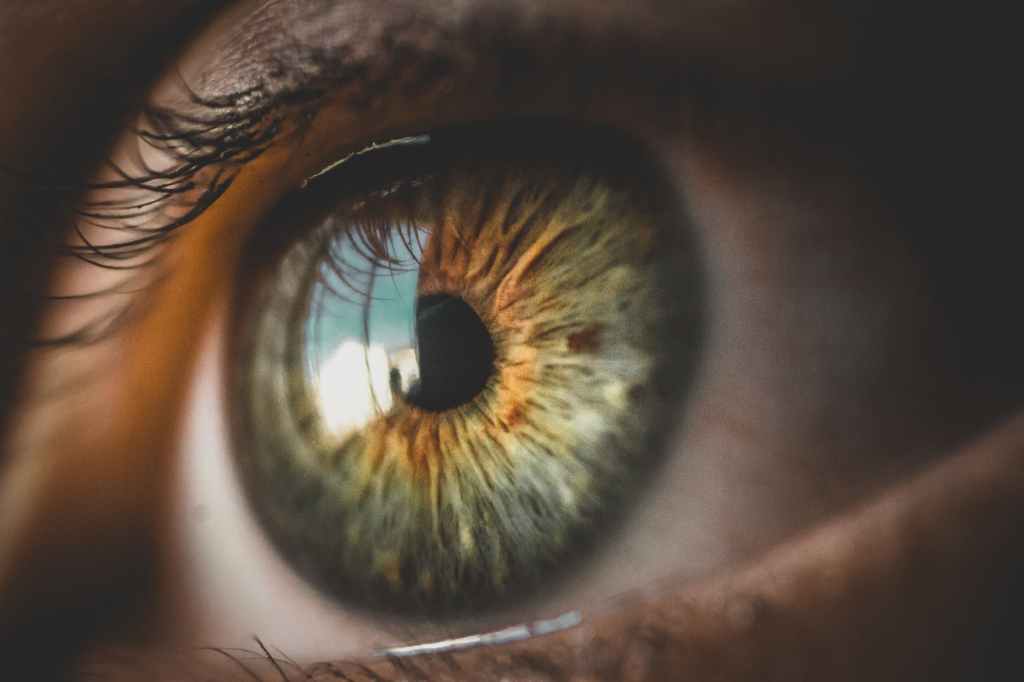
Today’s article is one of those little ironic joys I sometimes find in my research. These are the articles that point out what a metaphorical house of cards ableists stand on when they preach to autistic people about “correct” communication. Another turn of phrase that goes well with this is “those who live in glass houses shouldn’t throw stones.” Today, you see, is about eye contact.

human green eye reflecting building and blue sky
Photo by Bruno Henrique. If you’ve gotten this close to someone’s eyeball, you’re probably doing eye contact wrong. :3
Eye Contact and Mental Static

Eye contact is a subject that often becomes a focal point for “correct” communication. The rough summary is that you should spend about 85% of a conversation looking at the other person or people. The remaining 15% you can spend looking at the scenery or whatever else. Looking at the person speaking allows you to get additional information from their face and body. Seeing how others in the conversation react can likewise give you valuable information about how you’re expected to act and react. In theory, there’s no reason you wouldn’t look at the person or people you’re talking to.

The thing is, looking people in the face is hard. It’s a lot of information all at once. If an autistic or other neurodiverse human is already struggling with information overload, demanding that we look at others directly is not helpful. It’s cruel and counter-productive. Not only are we still going to miss the information conveyed by a person’s face, but we may also miss even more than usual because of the additional overload.

Some people describe looking others in the face as adding a layer of static into their brains. It can cause them to miss words or phrases or even entire sentences. That’s comparable to being hard of hearing in quality-of-life terms. For me, it’s more like being hit on the side of the head with a baseball bat. The more familiar the face is and the better I’m doing that day, the softer the mental impact is. Still, I don’t typically make eye contact with people in the grocery store, even if I’m talking to them directly. I’m sure that bothers them to some extent, but it’s not worth the mental pain and exhaustion to me.

The Kicker

What really tickled my metaphorical funny bone about this article was the fact that otherwise “normal” humans have this same behavior pattern. Teenagers (ages 10-19) and older adults (ages 60-80) show this exact same avoidance of eye contact and faces.

I’m honestly uncertain as to whether the reasons for that behavior are the same as our autistic reasons, but they could well be. Teenagers are typically dealing with both an influx of hormones and a massive expansion in social requirements and feelings. Therefore adding in the extra effort of looking people in the face might well constitute information overload. Older adults have to deal with the deterioration of their bodies, the passing of friends and family, and adjusting to the massive changes the world has gone through. These things, too, could overload a person.

And doesn’t it just figure, regardless of the reason… that the proposed solution the article gives is “obviously these people should pay more attention to faces!” And not something like adjusting communication expectations so everyone, autistic or not, can participate.

That’d be crazy, I guess. It’s not like most people can tell whether you’re looking their eyes or their mouths… oh, wait. They can’t.

(Pst! If you like seeing the latest autism-relevant research, visit my Twitter! There are links and comments on studies that were interesting, but didn’t get a whole Reading the Research article about them.)

Worth Your Read: Autistic Meltdowns

http://www.thinkingautismguide.com/2021/05/its-never-just-sandwich.html

Autistic meltdowns are one of those things we all wish didn’t happen. They’re about as much fun as being tied to a railroad track and watching the train rush you at high speed. Nobody wants to melt down. It just happens.

There’s a lot of reasons why. We autistic people live in a world not designed for us. It’s noisy, and full of distractions. The way we communicate isn’t recognized or respected. We’re told, directly and indirectly, that it never will be unless we communicate exactly as everyone else expects. Our coping mechanisms (like stimming and unusual hobbies) are vilified and punished.

We develop comparatively rigid habits and preferences as a result of this unfriendly, unfair, and frustrating world. It’s a way of making a small part of the world more friendly. Small things, at least, can be designed for us. When those small things are violated, it’s upsetting. It’s really less about how the sandwich is cut. Rather, it’s about having that small thing we relied on to keep us sane taken away. Typically, our reliance on that thing is belittled on top of the violation, which only hurts and stresses us more.

Autistic meltdowns are what happens when the body and mind get too wound up from the stress, anger, and frustration. It’s never just one thing. It’s never just a sandwich cut the wrong way, or a flickering lightbulb, or one person being rude for no apparent reason. It’s all about how much we’re already putting up with.

person on watercraft about to go over waterfall- how it can feel to experience an autistic meltdown
Autistic meltdowns sometimes feel like going over a waterfall and hoping there aren’t rocks at the bottom. Photo by Jacob Colvin.
An Overall Burden

It’s the last metaphorical straw on the metaphorical camel’s back. Or, a more solid comparison might be the first World War. The war began after the Archduke Ferdinand, the heir to the throne of the Austro-Hungarian Empire, was assassinated. If you ask most historians, they will tell you this incident was the spark for the World War. But it was not why the war began.

There was, in fact, a great deal of tension between the European countries at the time, as well as an ongoing arms race and some smaller conflicts called the Balkan Wars. The Archduke’s assassination did not cause these circumstances. Rather, it was likely the opposite. Because of all the circumstances around the assassination, the repurcussions devolved into the largest war the world had ever known.

This building of tensions, with specific incidents that paved the way, is very much how I experience meltdowns. Except the incidents are much less notable than an arms race and the Balkan Wars. They’re less notable because they happen every month, every week, sometimes even every day. In small but meaningful ways, the world and the people around me cause me suffering, and that suffering builds up over time.

Personal Examples

In my own life, it’s things like my spouse leaving piles of dishes in the sink for a day straight. (This is either because he doesn’t see them, or because when he does, we’re just heading out the door.) It’s ducks cackling loudly at 2am or landscaping machinery at 7am, waking me from badly-needed sleep. It’s trying to have a conversation with someone, only to see them giving you the “what a weirdo” look or being rude for no particular reason. Or someone choosing to pull their mask off their face indoors mid-pandemic, essentially saying that their personal choices are more important to them than other peoples’ lives.

It’s babies screaming because they’re hungry or wet or suffering some kind of sensory overload themselves. It’s stupid store policies that demand their employees greet every customer at the door whether they want to or not. (These add an extra, very unwanted, social interaction I don’t want to handle and don’t know how to handle to every shopping trip- ugh.) It’s even stuff that’s really only my fault, like people I vaguely know greeting me by name and the ensuing panic attack when I realize my face blindness has once again screwed me over- I have no idea what their names are.

Maybe most lastingly, it’s painful miscommunications between me and people I love. Things that turn into boomerang memories. Stuff that sticks with you just to torment you later. Words people can’t or won’t say to you because you were supposed to know already, and didn’t. Uncommunicated expectations, like criteria set up specifically to make you fail. Family and friends that turn away from you. Assumptions about what you meant, all while they ignore what you actually said.

Inescapable

And over all of it looms the indelible knowledge that all these misunderstandings are your fault. Even though they’re not: the research shows us that autistic people interact just fine with other autistic people. Communication is a two-way street. If neurotypical people were truly so wonderful at communication, they would have no issue making themselves clear to autistic people, and the problem would only be autistic people communicating back. But that’s not how it is. The communication failure is on both ends.

This failure on both sides is a known fact. But in the same way we’re told that women can’t be beautiful unless they’re impossibly thin, the people and systems around us insist that every failed interaction is the autistic person’s fault. That everything would be fine if autistic people just disappeared. It’s hurtful, painful, and for many of us, inescapable. Like the ridiculously unhealthily thin standards of beauty for women, and the impossibly chiseled abs on male models (achievable only by being dehydrated for days at a time), this toxic mentality becomes internalized.

With all of that hanging over us, it’s no surprise that it all becomes too much sometimes. And we haven’t even started adding in the things that typically stress people out, like paying bills, job hunting, commutes, any form of public speaking, or other large life events, like moving, the death of a family member or friend, or living in a global pandemic.

Autistic meltdowns are a natural reaction to the building stress of living in a world not designed for us, among people that don’t understand us and often won’t try to. Punishing us for having them solves nothing. Yelling at us only makes them worse. Instead, please recognize why we’re upset. Don’t get angry or defensive or upset with us. As the article’s author says, a dark room, a cool drink, and clear, simple communication are your best bets.